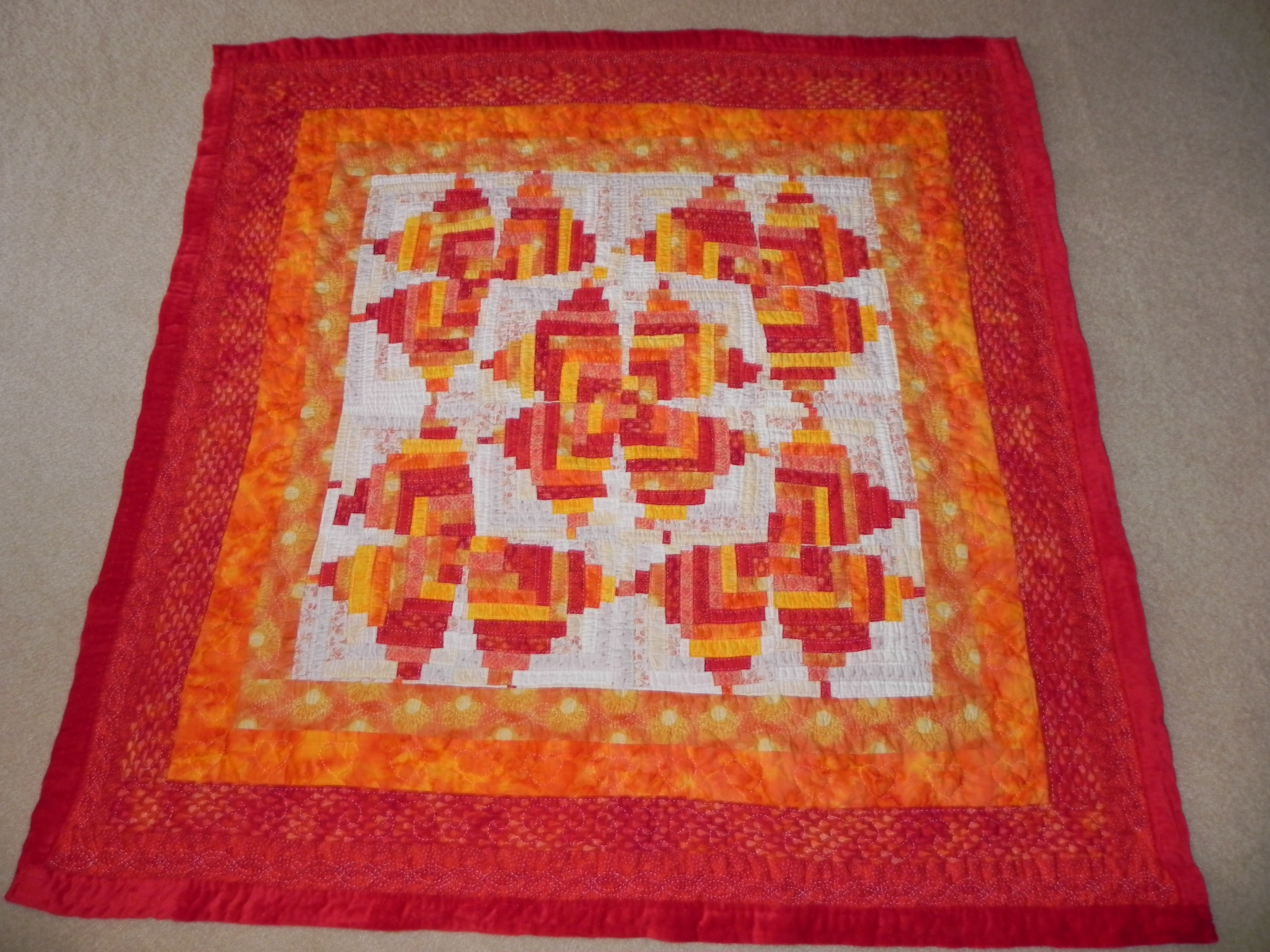
From flowers to email, we have many ways of sending a message to a loved one. If you want to be clever, you might even send a message in a bottle. But I have another idea for you. How about a quilt? Yes, quilts are more than bedding.
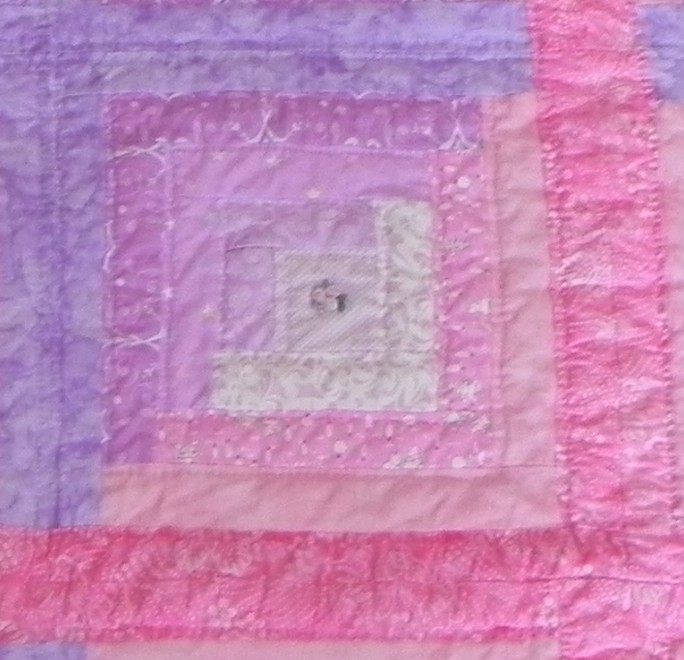
Quilters use patterns, colors, and embroidery to send thoughts of love, family, faith, and culture. An old standard pattern still seen today is called log cabin (as shown above).
The design indicates love and warmth in the home. Narrow pieces of fabric are sewn around a center square. The outside strips represent the logs of a cabin while the center square is the fire in the hearth.
Since Colonial times, women gathered to work on large quilts. The activity offered social opportunity for the women with an important outcome. Each member of the group would sew a section incorporating patterns and embroidery that symbolized their best wishes for the newly married couple. These quilts were given to brides to show the group’s support, but also were a vital piece of survival through bitter cold winters. They were used until they were worn thin, patched, and used some more.
During the years of slavery in the United States, guides ushered southern enslaved black people to northern free states. Legend says that quilts hanging on clotheslines held messages for commuters on that underground railway. Guides worked with homeowners who would shelter the groups along the route to freedom. Specially designed or colored quilts hanging on clotheslines indicated if the safe house was indeed safe at that time to enter.
Church groups continue making quilts for the homebound, caregivers, and members of the parish who need a hug. Upon completion, priests bless the quilts and notes are included to inform the receivers that their blessed gift was made for them with love and prayer.
Quilts have been a favorite bedding option because they are soft, warm, and cozy. They originally were made from scraps of cotton, flannel, wool, or old clothes.
Stuffing also consisted of scrap materials. In the 1950s and 60s, lightweight, washable, and inexpensive polyester batting became popular. Today, quilters use cotton, wool, bamboo, silk, and polyester blends to fill their quilts.
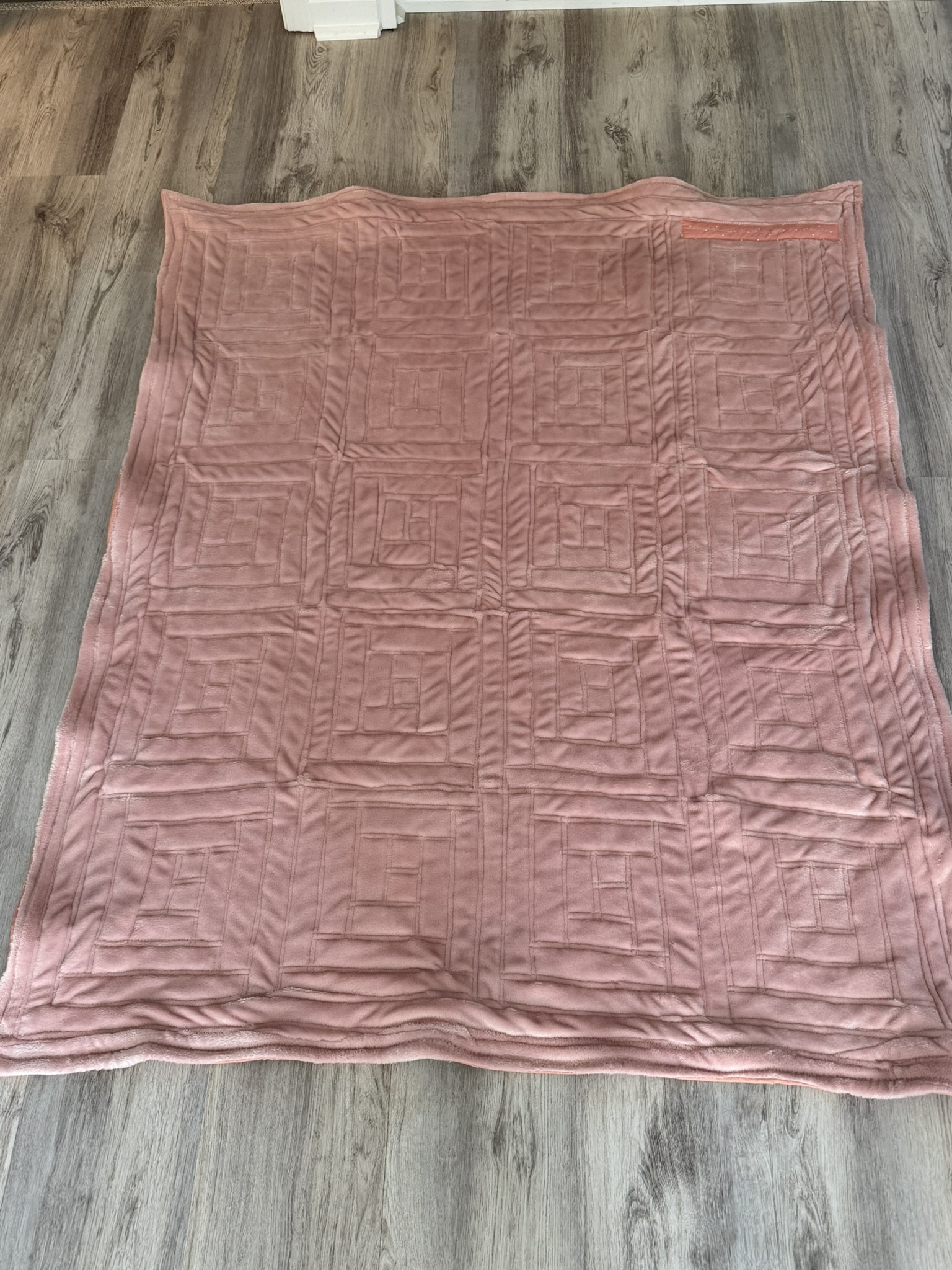
My preference is to use 100% cotton for the top, cotton or a soft product called Minky (see above) for the bottom layer, and 100% cotton batting. I used to do the piecing by machine and the actual quilting by hand. Arthritis prevents the handwork today, so I piece and quilt on my sewing machine.
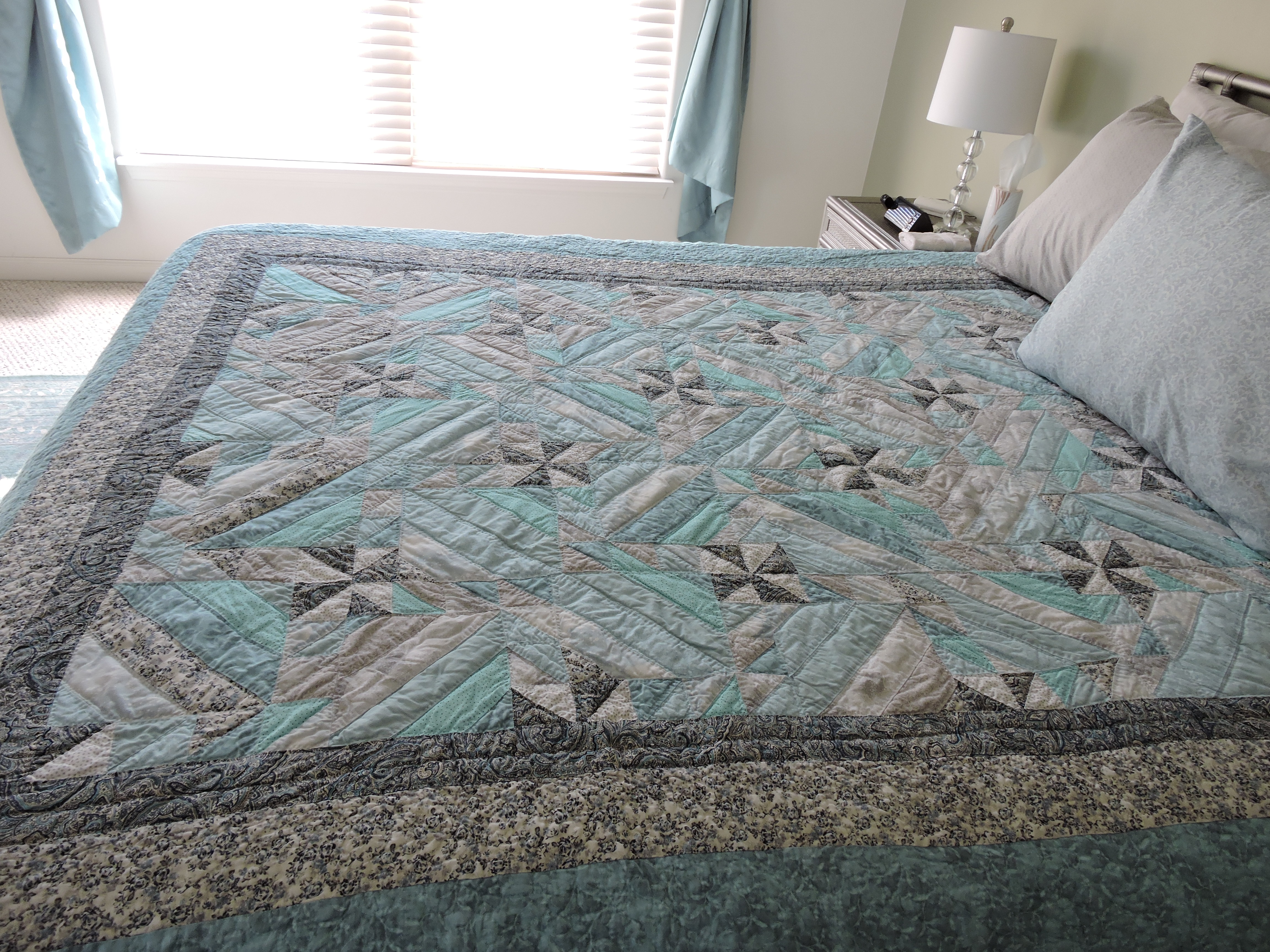
Most of the quilts I make are lap size. It’s difficult to move a larger quilt through my machine. Here is a pattern I’m working on now. The colors are soft and muted, as my daughter requested.
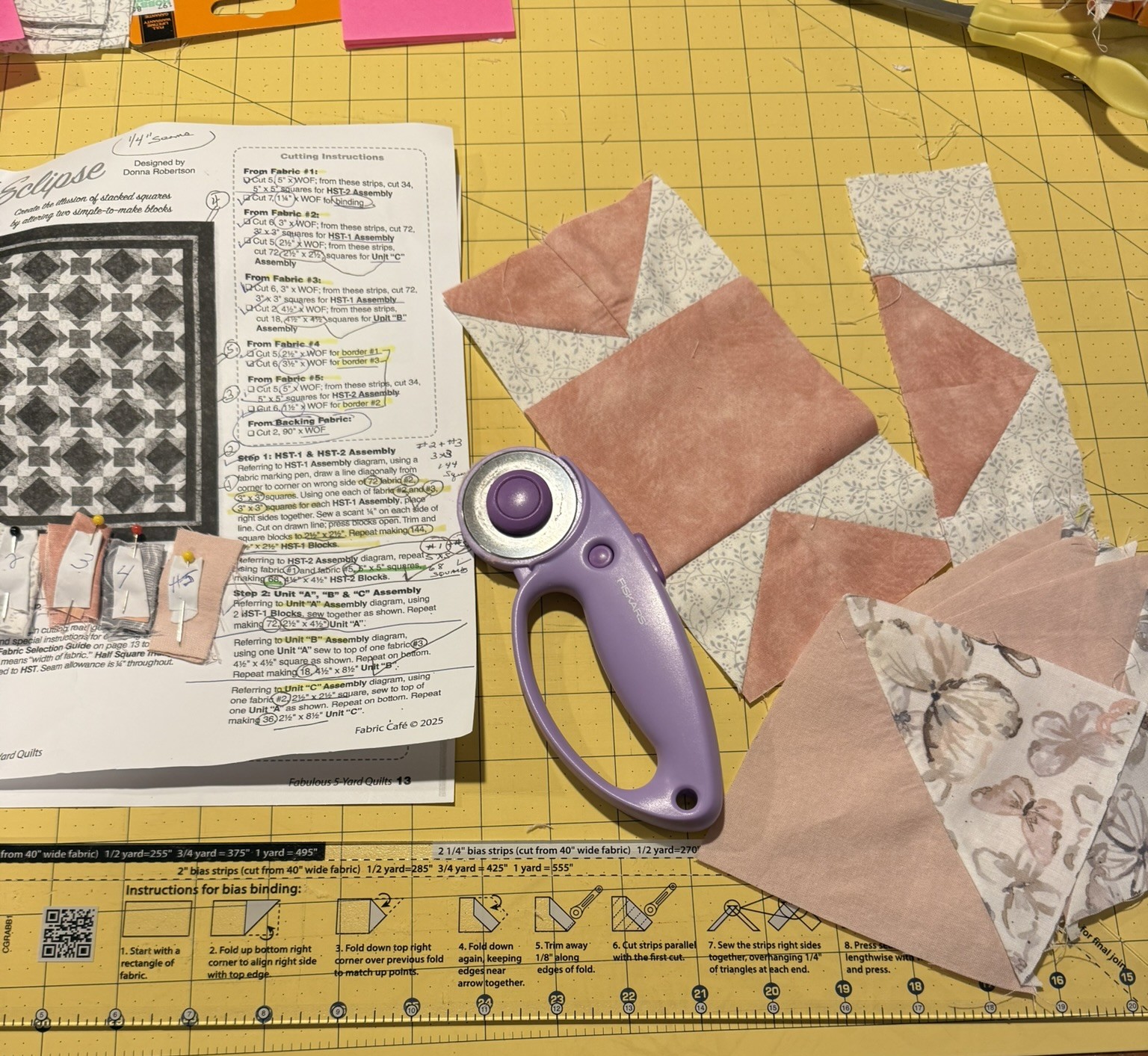
I usually have a sewing project going on at all times, but I only have time to complete two to three quilts a year. I have too many other activities I enjoy, like other sewing projects, gardening, writing and reading, going out with friends, swimming, and hiking. The quilts I do make are for family, and I pray for these people while cutting, ironing, piecing, and quilting. My hope is that they feel wrapped in my love and prayers.
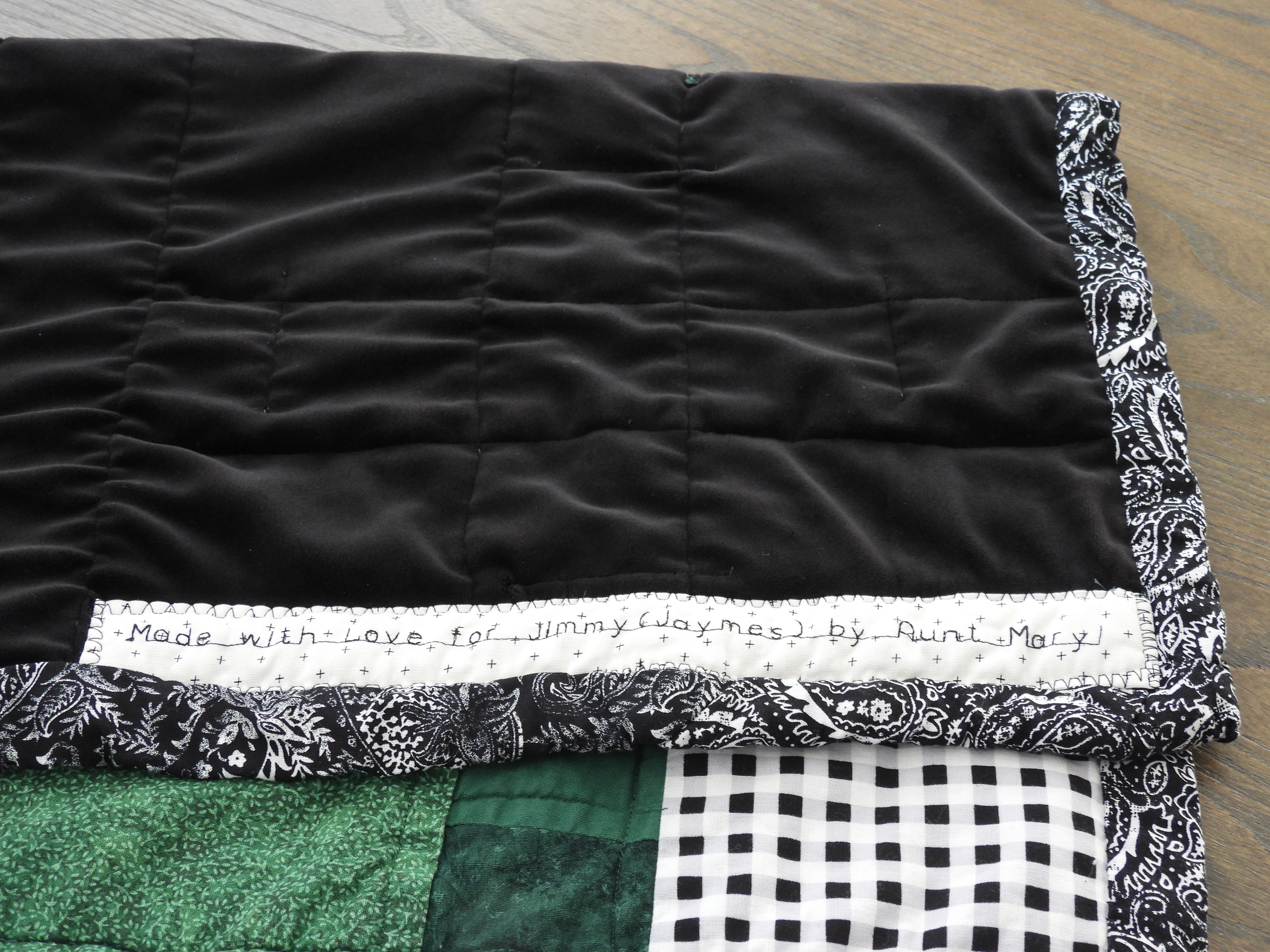
For more information on quilt messages, see the Smithsonian Center for Folklife and Cultural Heritage, Public!Sale, and the book, Hidden in Plain View by Jacquiline L. Tobin, which I have not read.
©Mary K. Doyle, 2026


Talk to me. I’m curious about your thoughts and comments.