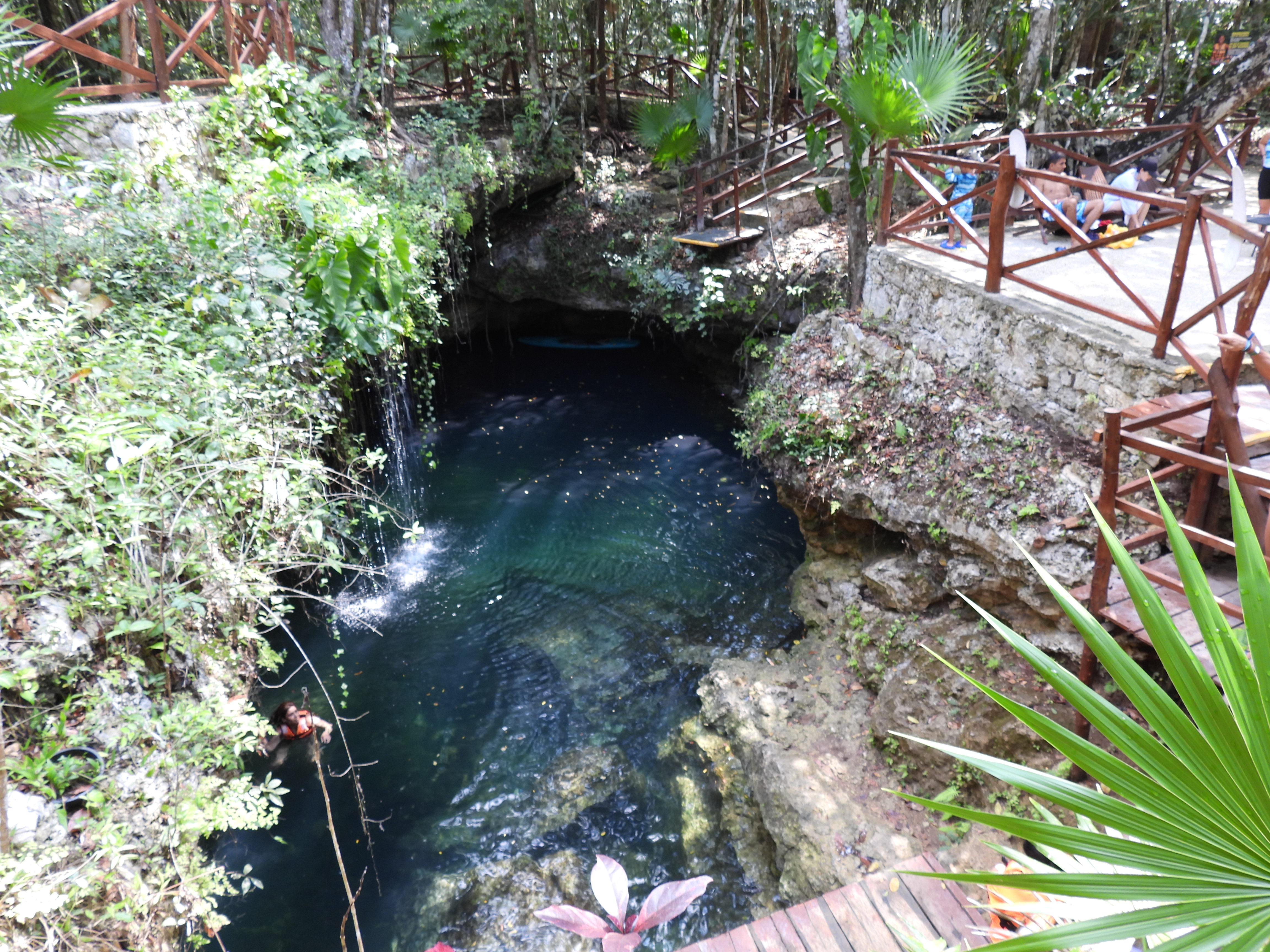
If you’re a traveler, is a trip to the underworld on your bucket list? According to the ancient Mayans, that opportunity may be possible in Mexico via sacred portals known as cenotes.
Cenotes, which come from the Mayan word ts’ono’ot meaning “hole filled with water,” are exactly that. Cenotes are water-filled sinkholes formed by collapsed limestone bedrock and believed by ancient Mayans to be sacred avenues to the underworld. Perhaps these passages remain open today, although, I don’t recommend the excursion.
Mexico has more than 7,000 cenotes, three of which I recently visited. They can be found near Tulum, Cancun, and Playa del Carmen in the Yucatan Peninsula.
The area is composed predominately of porous limestone. More than 65 million years ago, the entire area was submerged under the sea. According to a report on the BBC site, the Chicxulub asteroid shifted the underlying tectonic plates upon impact and lifted the reef out of the water.
Rain and seawater then carved through the bedrock creating aquifers below the ground. When the ground collapsed, it created sinkholes. Sometimes, it also exposed the aquifers in the form of natural pools.
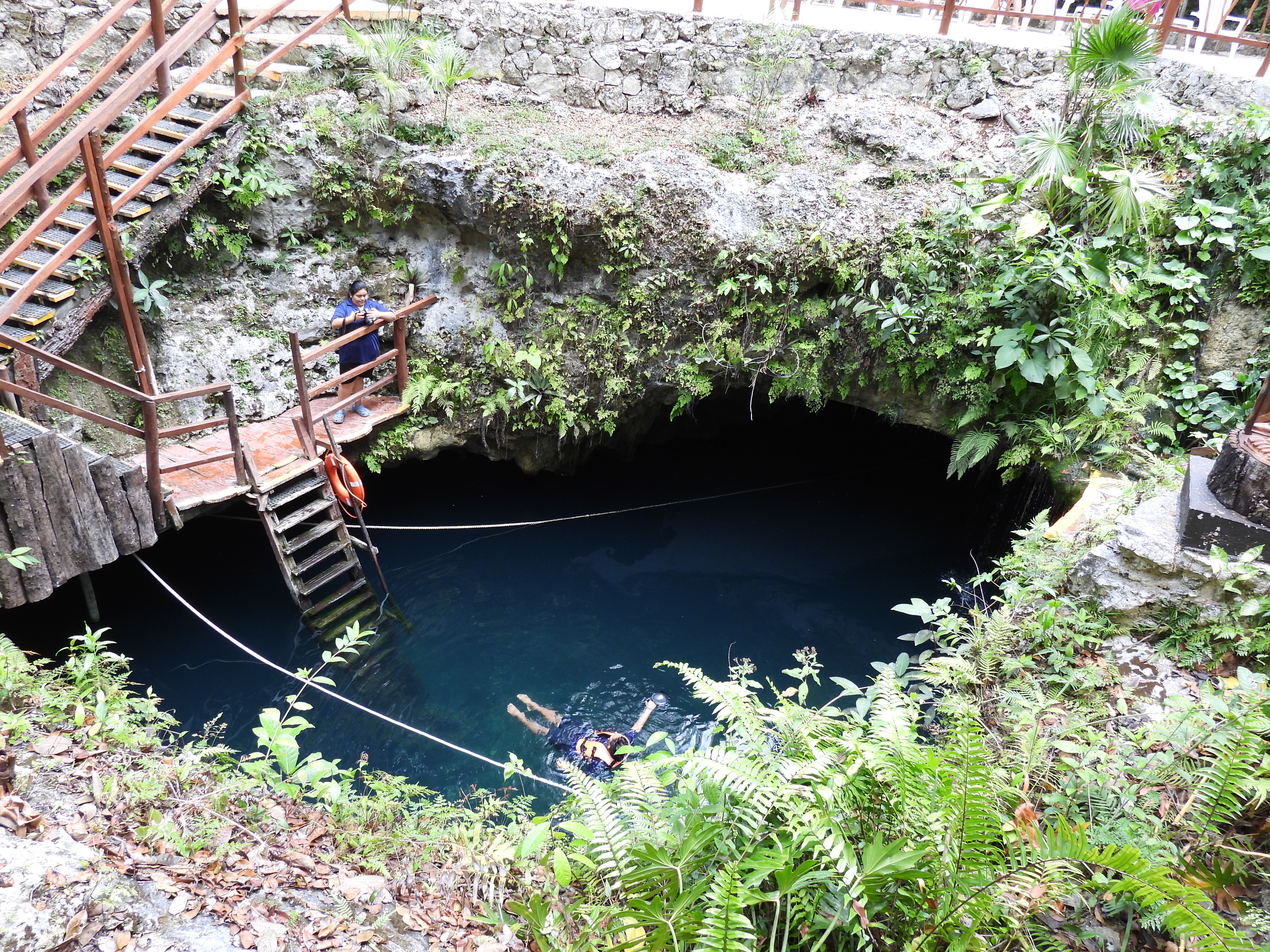
Mayans used these pools as their water source. They also offered gifts of gold, jade, copper, and even live humans to the rain gods. Today, offerings consist mainly of copal (tree resin), cacao, seeds, corn, flower petals, sugar, and other small objects.
Cenotes are now popular tourist sites for swimming, snorkeling, and cave diving. Some cenotes have platforms from which to jump or zipline across.
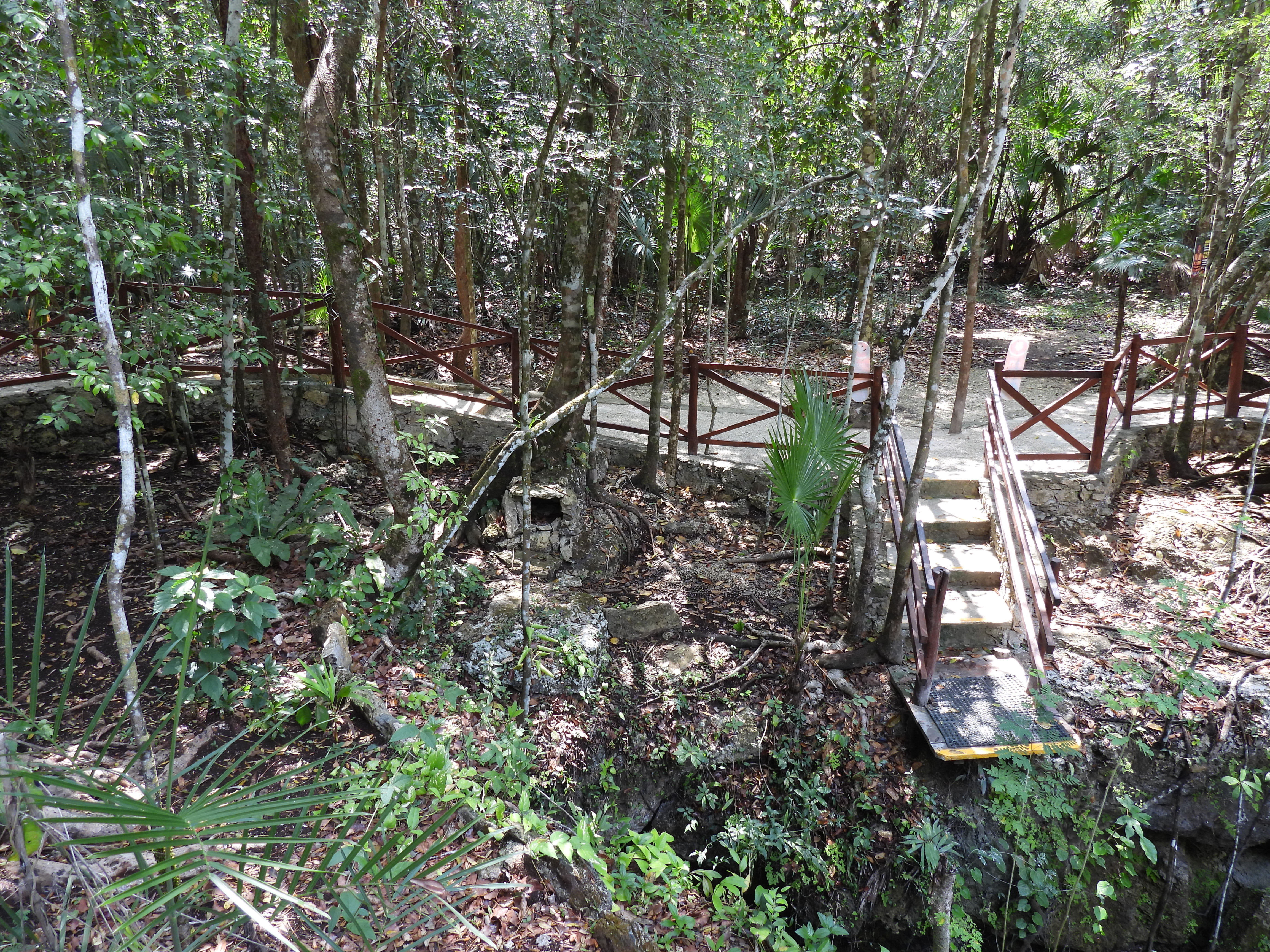
We chose cenotes that were within an hour from our hotel. They were considerably more shallow than Mexico’s El Zacatón which plummets to a staggering 1,112 feet (339 meters).
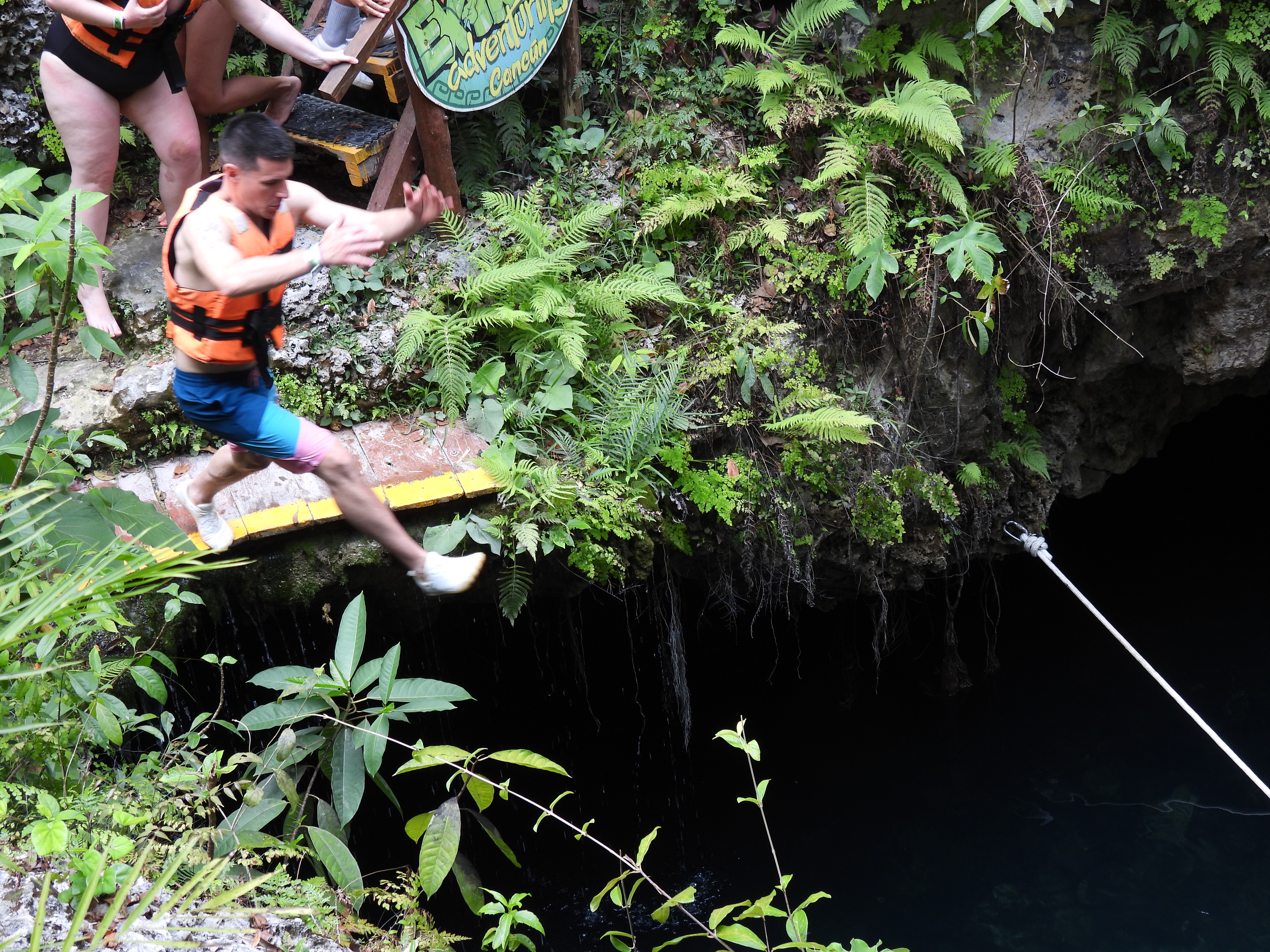
Regardless of the depth, tour groups require swimmers, jumpers, and divers to wear life vests.
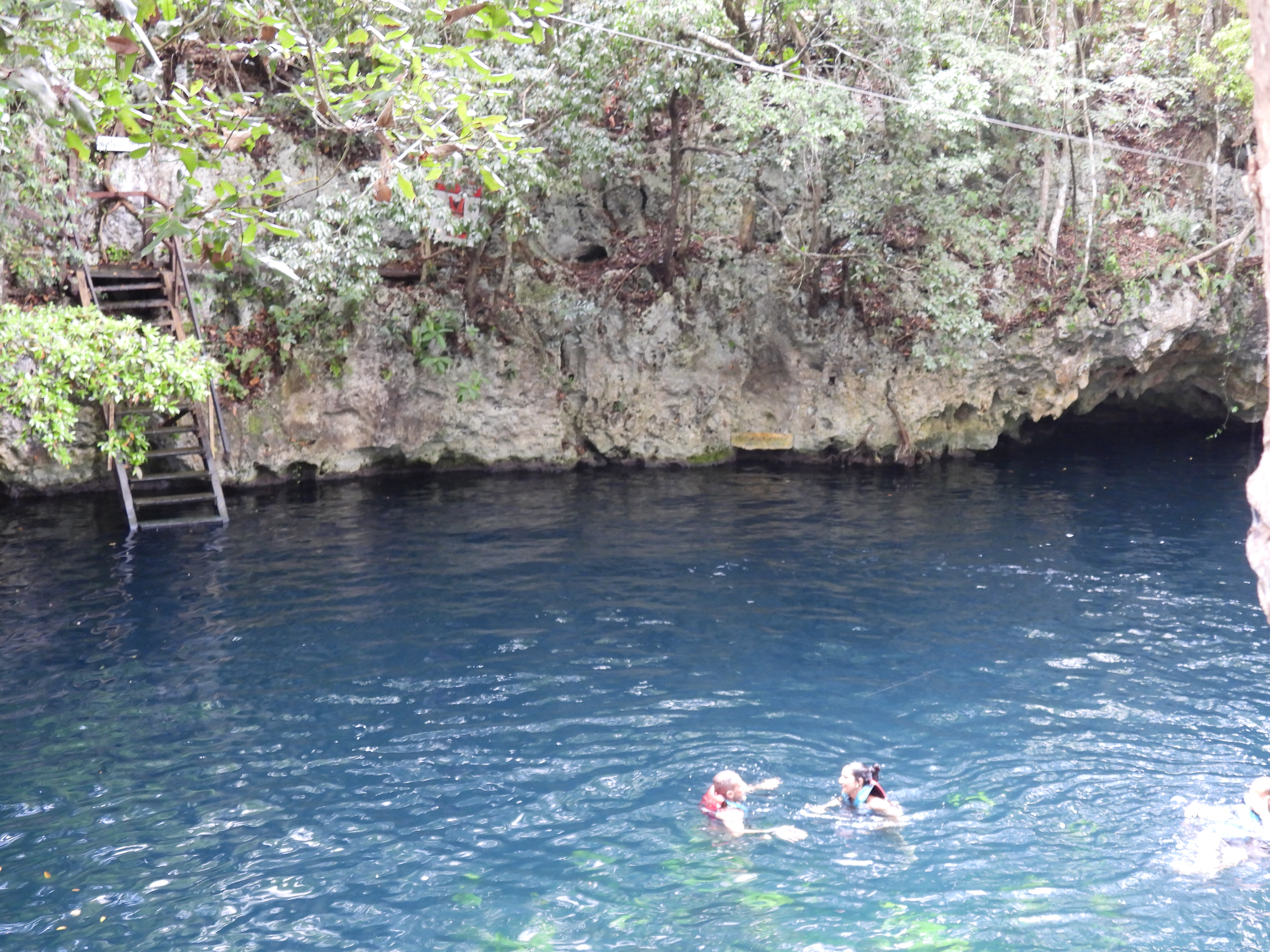
The water was thought to be cold by locals, but my Midwestern family found it refreshing. Perhaps we are used to cold water lakes such as our Lake Michigan.
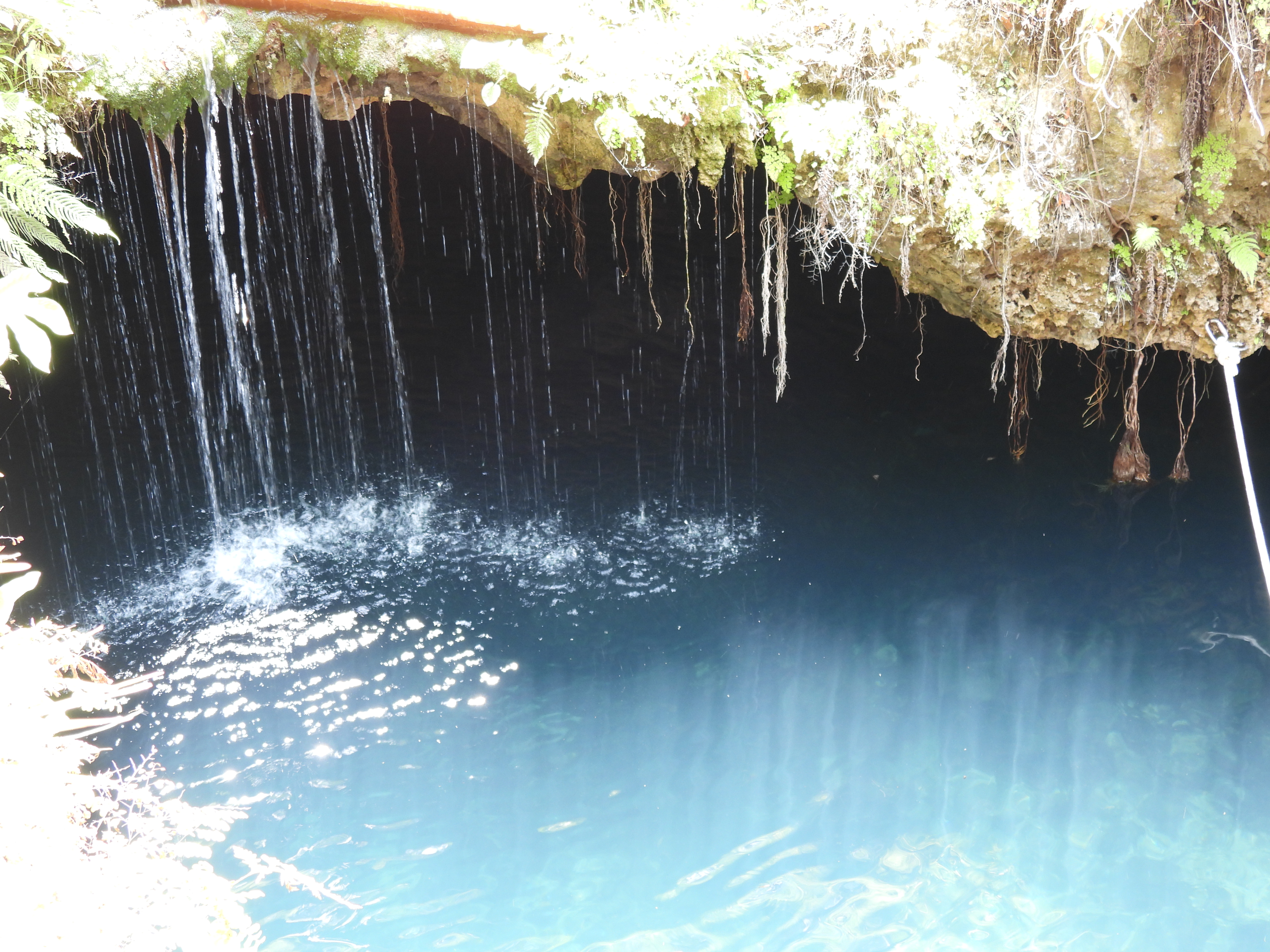
I was intrigued with the cenotes that had caves with stalagmites and stalactites that date back millions of years.
Some also had waterfalls that were fun to swim under. Even the bats that hung from the roof of the caves fascinated me, although other swimmers screamed when the winged creatures flew across our heads.
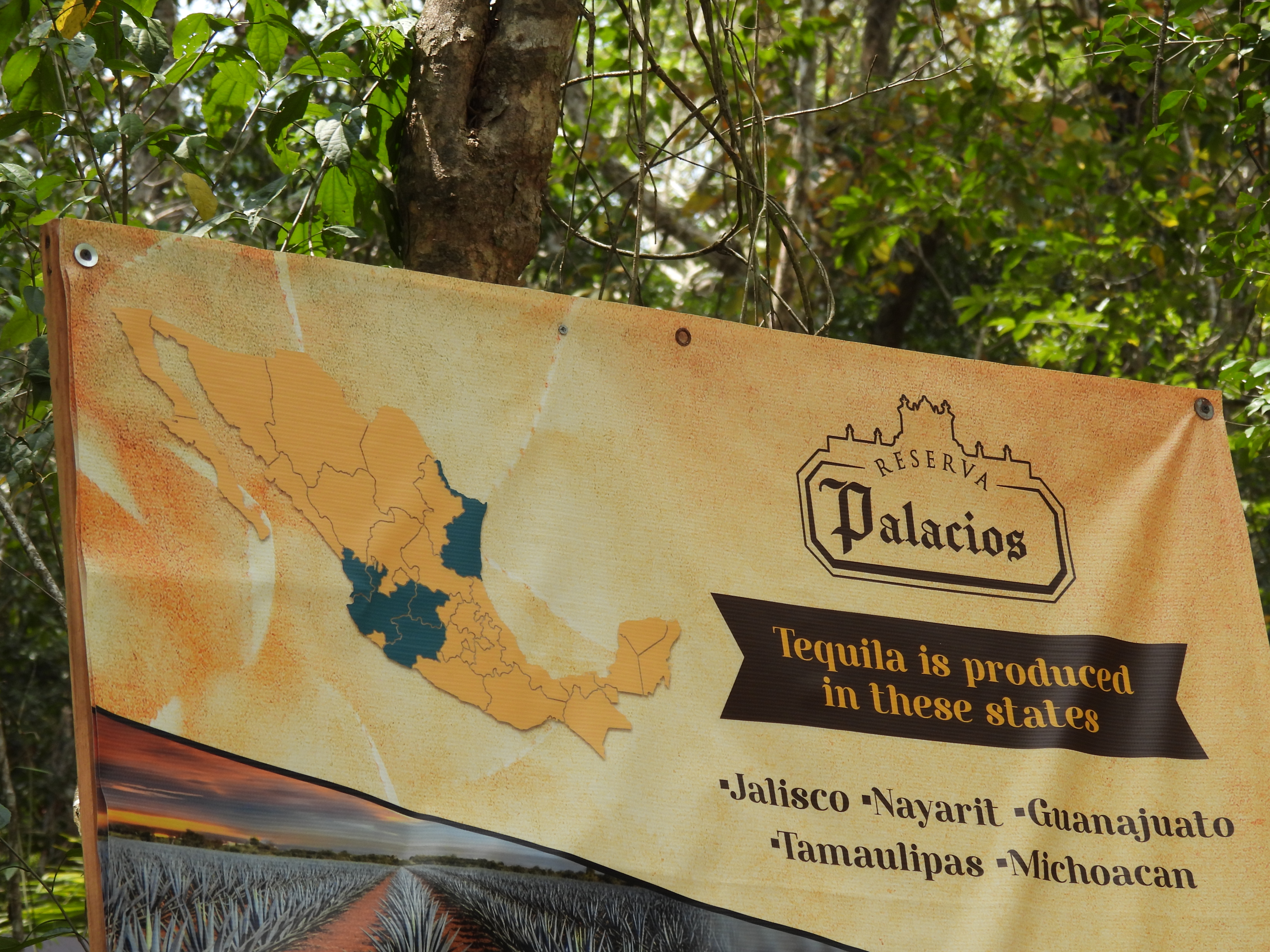
I hoped to spot wildlife on our excursion, such as monkeys and crocodiles. But the most exciting creatures we witnessed were a group of young men who presented on Mexico’s authentic tequila with free samples, as well as bottles for sale.
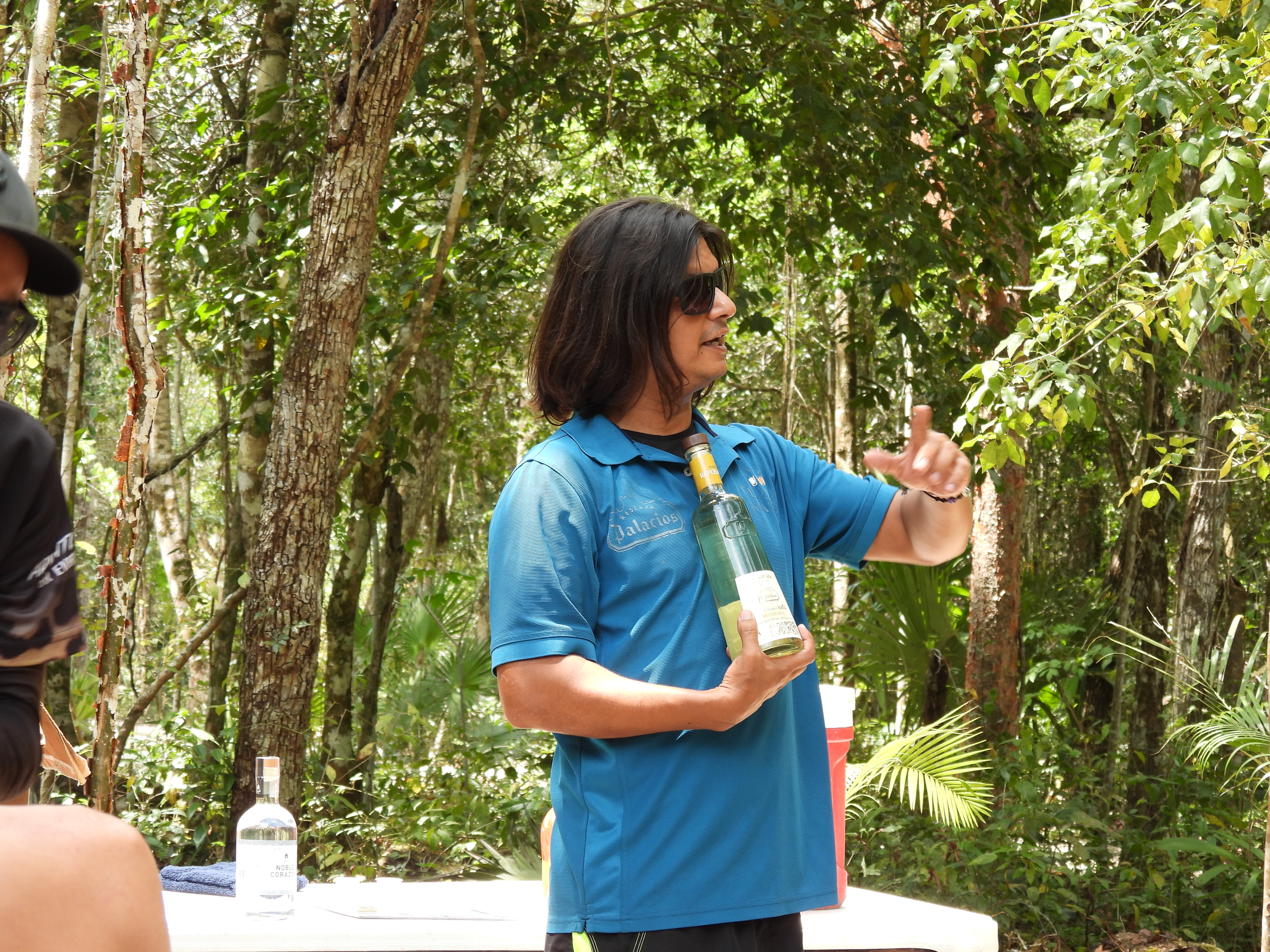
We quickly learned how delicious real tequila is and how much more could be consumed without feeling over-served in comparison to what we typically find with additives and alternative ingredients.
©Mary K. Doyle, 2026


Talk to me. I’m curious about your thoughts and comments.