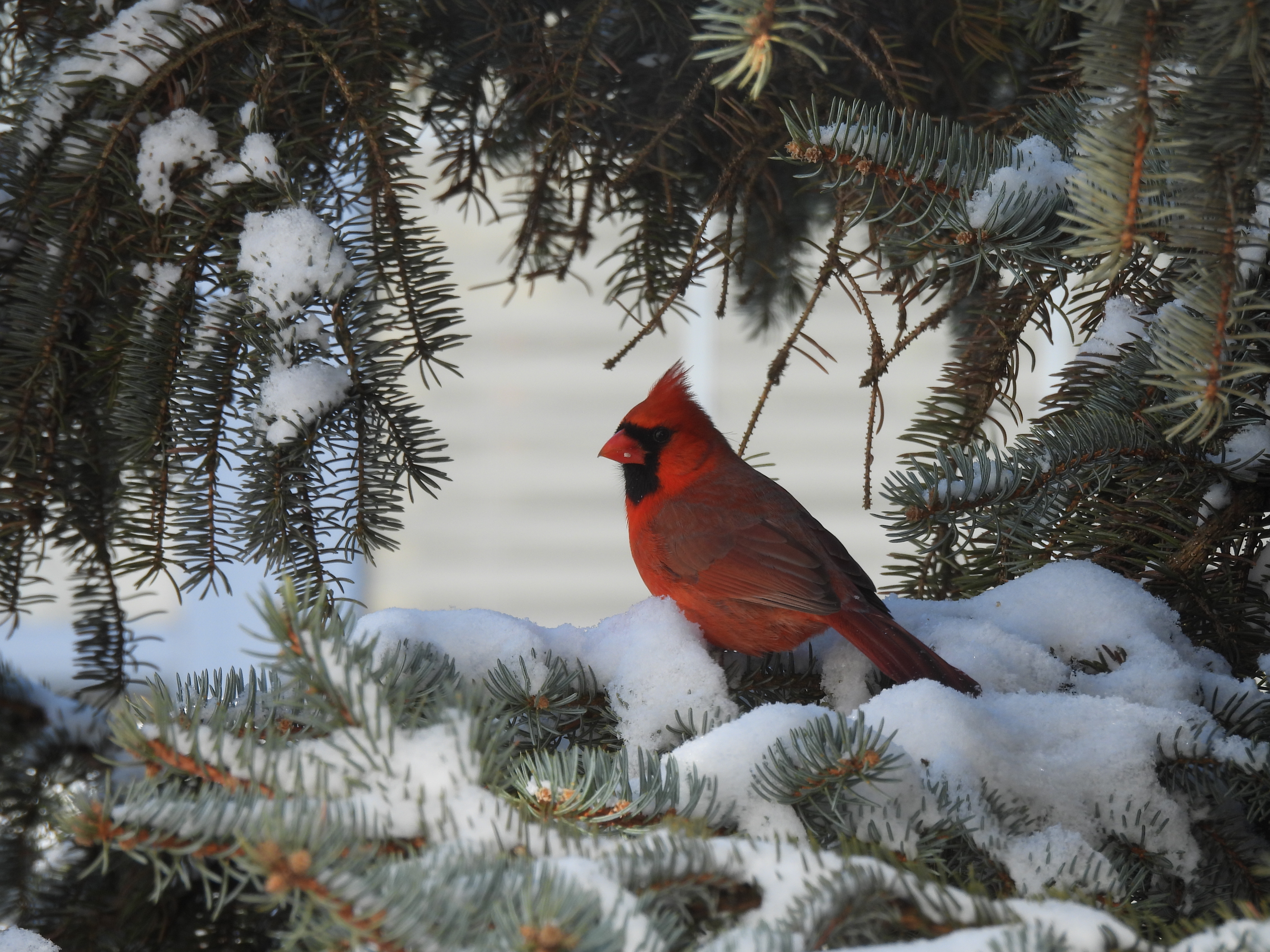
Whether it’s cold and dreary or warm and bright, spotting a bright, red cardinal uplifts the spirit. Cardinals are believed to symbolize hope, spirituality, and a sign from a deceased loved one.
One day while spotting a cardinal, my daughter was explaining this belief to my granddaughter who was about 6 years old at the time. My granddaughter responded that then the cardinal they were looking at must be a sign from either Papa Marshall or Florence Nightingale.
The Northern Cardinal is one of North America’s most popular birds numbering more than 130,000,000 and spanning from southeastern Canada down through southeastern United States in addition to the southwestern desert.
Scientifically known as cardinalis, cardinals belong to the Cardinalidae Family and Aves Class. Adults range from 8 to 9 inches in length and weigh about 1.5 ounces. Males proudly sport their red feathers while females are lighter in color with a pink bill and a long tail.
These delightful creatures are not picky about their habitat. They can be spotted in thickets, gardens, forests, swamps, city parks, and even deserts.
The cardinal diet consists mostly of seeds but also includes insects and berries. They are attracted to garden feeders, especially when they contain sunflower seeds.
Male cardinals sing to defend their territory and nests that are well-hidden in dense shrubs or low trees, and they will attack intruders. Males feed females early in the breeding season, and females sing in the spring before nesting. Their nest design is open and includes twigs, weeds, grass, bark, leaves, and fine grass or hair.
Cardinal eggs are white to pale blue or green with brown, purple, and gray marks. The females incubate their eggs for 12-13 days. Once hatched, both parents feed their young for the next 9 to 11 days. Females typically have 2 to 3 broods per year.
*Most of this information was gathered from the Audubon site.
**ACTA Publications, the publisher of Tranquility Transformation Transcendence, is currently offering this book at a special price of $10. This is a great book to bring a hostess, someone who is not feeling well, or to add in a gift package such as with a little plant.
©2026, Mary K. Doyle
 Midwest Mary
Leave a reply to Stephanie Cancel reply