
The day was a busy one. I worked in the morning, hurried to the gym for a special class at noon, ran some errands, and went back to work.
One of the errands was to pick up a medication at a special pharmacy called a compounder which was ordered by my functional medicine doctor. I have no sense of direction, and it was my first time at the compounder, so I put the directions in my phone before going there.
I ran into the compounder and spoke with one of the employees. While I asked questions about the business, I noticed the employee watching my hands. I speak with my hands, and his staring made me self-conscious causing me to be even more animated.
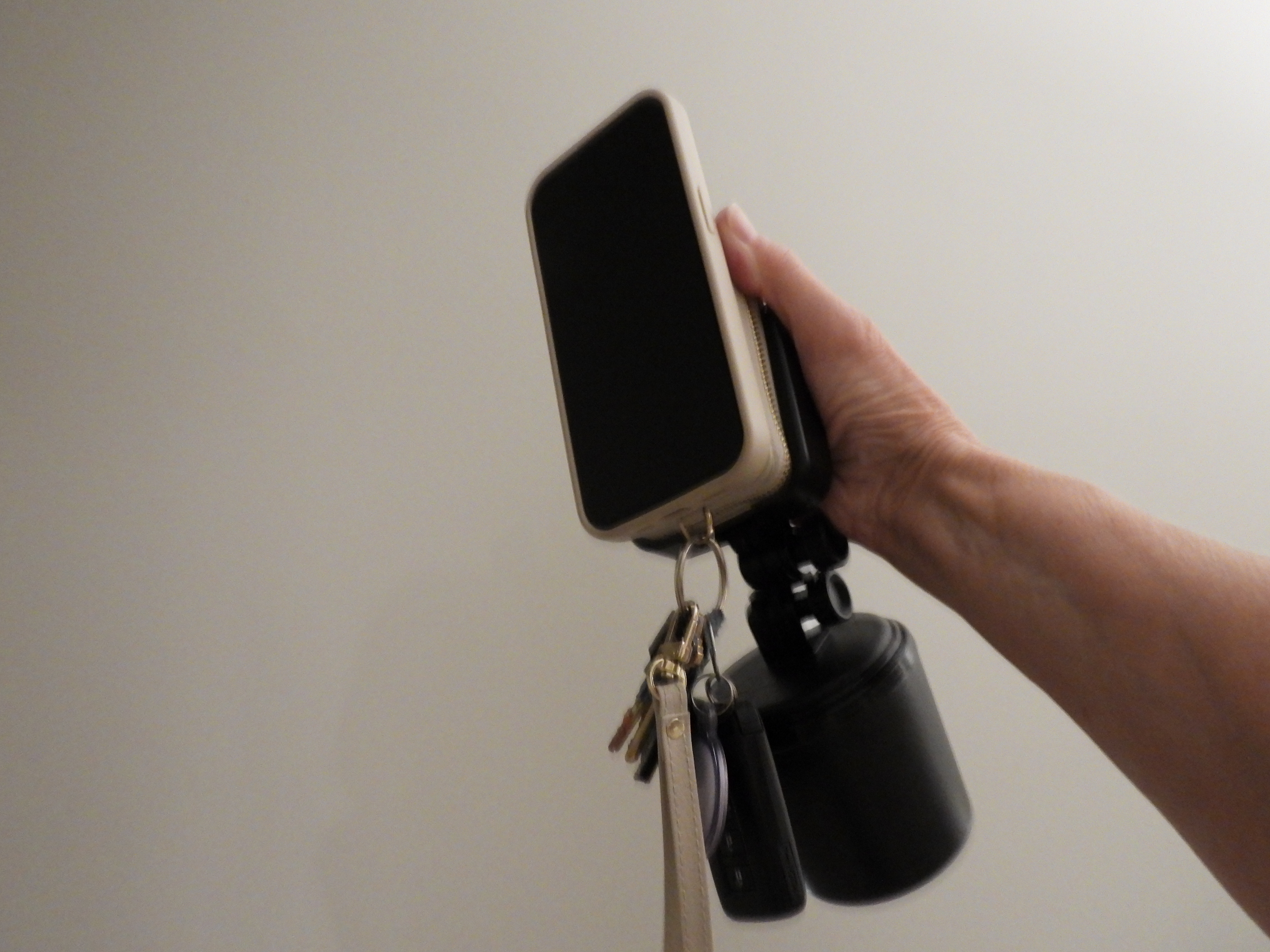
When I returned to the car, I went to set my phone back into the Weather Tech phone holder only to find that the holder was still attached to my phone. I’d been waving the phone, my attached keys, and the cup holder while speaking with the employee, hence him watching me. I was a seemingly crazy lady with all of this stuff in her hand.
I do a lot of weird things like this. I can give you a list of occasions. I’d like to say that I’m experiencing senior moments, but honestly, I’ve always been a bit quirky. However, let’s get on to a question I’m often asked about such incidents.
–
A common concern as we age is how to tell the difference between normal memory issues and dementia. We wonder if an odd moment here or there is an indication of something serious.
One of the main differences between what is normal and what may be a sign of dementia is whether or not we remember what we were trying to recall a few hours earlier. For example, if we find our keys in our coat pocket and remember that we were looking for them earlier in the day, that is normal. If we have dementia, it isn’t likely we’d remember ever searching for the keys.
Or, if we encountered a neighbor in the grocery store and couldn’t remember their name until we returned home, that is normal. If we had dementia we wouldn’t remember the need to recall their name previously.
Typically, moments of forgetfulness, such as the inability to remember why we walked into a room, happen when we are distracted, tired, stressed, or multitasking. If these episodes occur regularly, we can’t retrace our steps when searching for something, or we forget so often it is interfering with our lives, it’s time to check with a doctor. We can also ask close friends and family members if they notice any changes in our memory such as repeating stories or questions.
Following are the ten main signs of possible dementia as listed by the Alzheimer’s Association. I also included a short description.
- Memory loss that disrupts life—such as the inability to remember new information, repeating the same question, or forgetting important events or dates
- Challenges in planning or problem-solving—such as trouble following a familiar recipe, forgetting to pay bills, or challenges with concentration
- Difficulty completing familiar tasks—such as forgetting how to drive to a familiar location or play a familiar game
- Confusion with time or place—such as the inability to understand how long an hour is or clues of a season such as snow in the winter, changing colors of leaves on trees in the fall, or what happens in a particular space such as a doctor’s office or grocery store
- Trouble understanding visual images and spatial relationships—such as visual changes that disrupt balance, difficulty reading, judging distance, and determining color contrast
- New problems with word usage in writing or speaking—such as difficulty following a conversation, unable to recall desired words, calling something by the wrong word
- Misplacing things and inability to trace steps—for example, putting items in odd places such as a wallet in the refrigerator or not being able to recall what took place before losing an item
- Decreased or poor judgment—such as paying less attention to grooming, buying expensive items without thought, behaving inappropriately
- Withdrawal from work or social activities—such as no longer remembering how to do an activity, poor concentration, and the inability to remember peers which then results in less desire to engage in social activities
- Changes in mood and personality—such as becoming confused, suspicious, depressed, fearful, or anxious
***For information on caring for loved ones with dementia, see Navigating Alzheimer’s, The Alzheimer’s Spouse, and Inspired Caregiving. Books are also available from my website (shipping is free).
©2024, Mary K. Doyle
 Midwest Mary
Leave a reply to LoveLifeHappiness&More💙💙 Cancel reply