, , ,

Cicada Invasion

The current buzz around my part of the US centers on the incoming invasion of cicadas. This is the first time since 1803 that we will have three types of cicadas over the summer. The next overlap won’t be until 2245.

Fortunately, we won’t see all three at the same time. In fact, most of us will experience only one of the periodicals and the dog day cicadas and not in the same months. Still, we will have tens of thousands of these little creatures singing their song and dropping from the trees.

Brood XIII (17-year periodical cicadas) and Brood XIX (13-year periodical cicadas) will be emerging any day now through June and last four to six weeks. Dog-day cicadas will arise in Illinois sometime between July and September.

Brood XIII will be seen mostly in northern Illinois, Indiana, and possibly Wisconsin and Ohio. At the same time, Brood XIX will emerge across a larger area including southern Illinois, Missouri, Louisiana, North Carolina, Virginia, and Maryland.

A few counties around Springfield, Illinois will see both periodicals emerging at the same time. Estimates say that there could be anywhere from 50,000 to 1.5 million cicadas per acre.

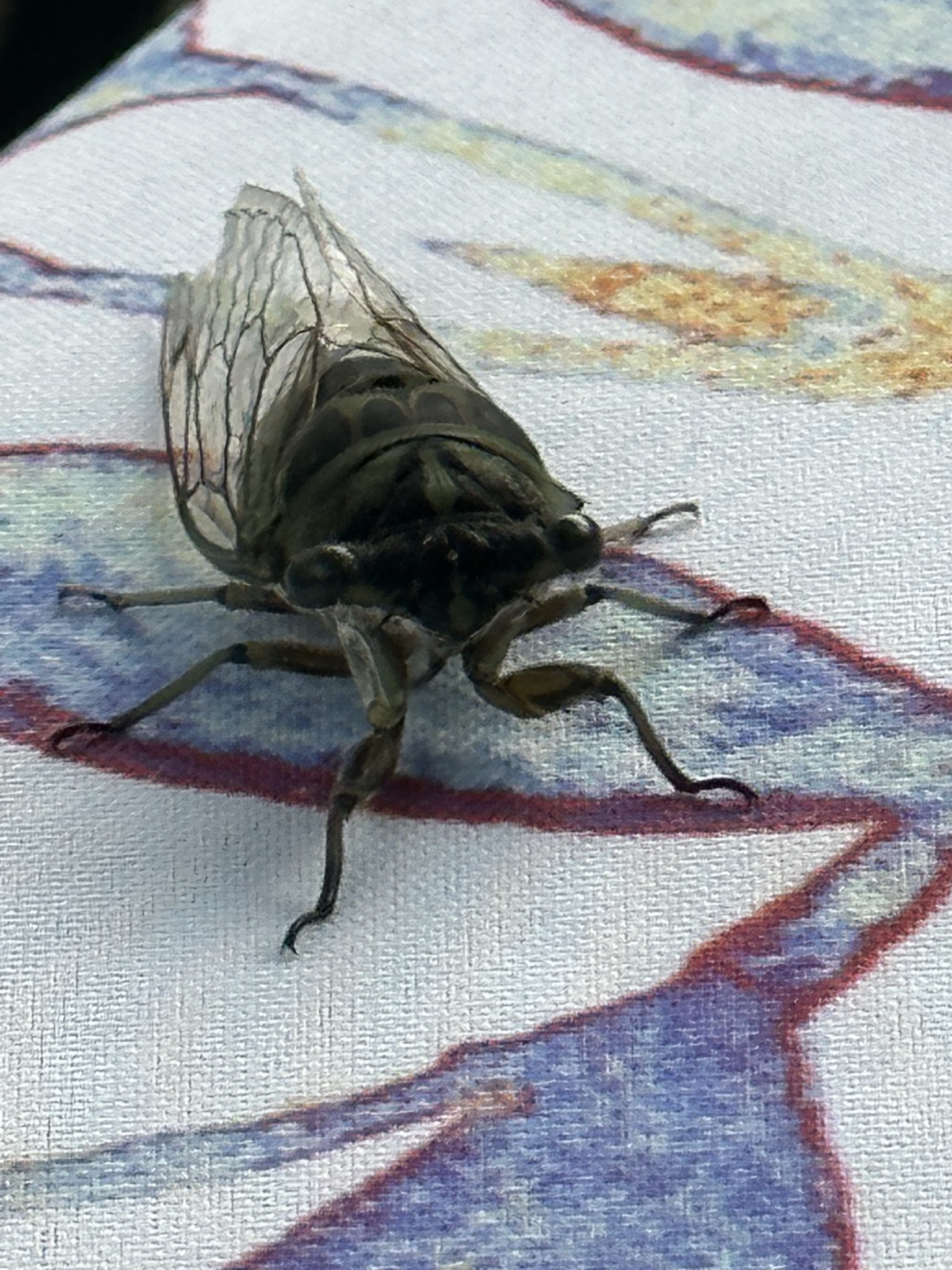
The two periodical cicadas are dark black with red eyes, transparent wings, and red veins. The annual dog-day cicadas are typically green to black with transparent wings and green veins.

Cicadas emerge from the ground as full-grown nymphs losing their exoskeleton and spreading their wings. They crawl up trees, bushes, and other vertical objects such as signposts reaching for young twigs to feed on sap.  

Females do cause some damage to young trees and shrubs because they make small slits in branches in which to lay their eggs. This can weaken these trees and open them to disease.  Little can be done to prevent damage other than to avoid planting new shrubs or trees right now or placing netting over vulnerable ones.

The eggs hatch after about six to seven weeks. The new nymphs fall to the ground and burrow into the soil eating roots and other nutrients found there. The annual nymphs remain in the ground for six years. The periodical cicadas remain there for 13-17 years.

Cicadas prove no harm to humans other than emitting a buzz, which in large numbers can be as loud as a lawn mower. Most of this noise is made by the males.

Here is a good YouTube video with cicada sounds and information.

Cicadas are large, slow-moving, and do not bite. They do not transmit disease. Nor are they poisonous to cats and dogs. However, veterinarians advise against pets making a steady diet of cicadas. Too many wings, legs, and exoskeletons can cause blockage.

Once the majority of cicadas have completed this part of their life cycle, we may have enough wings, molts, and decomposing bodies that leave an odor and need to be shoveled off the ground. It’s a good idea to clean out gutters, as well. We can add these remains to a compost bin.

As weird as these insects appear, they do offer some benefits. They are a valuable food source for predators, aerate lawns, and add nutrients to the soil.

Get your earplugs ready.

*PhotoΒ©2024, Mary K. Doyle
Dog-Day Cicada

Responses to “Cicada Invasion”

  1. Kevin

    I don’t envy you that pleasure, Mary. Good luck!

    1. Mary K. Doyle

      Thanks, Kevin. They’re supposed to take like shrimp. Should I save some for you?

      1. Kevin

        Hell yes πŸ˜„πŸ˜„

  2. Dawn Pisturino

    During normal monsoon weather, we get cicadas, and the buzzing can drive you nuts! I feel for you, I really do!

    1. Mary K. Doyle

      Thank you, Dawn. I guess we will just have to turn up our own music.

  3. luisa zambrotta

    I like the sound of cicadas, it really gives the idea of summer, but enough is enough

    1. Mary K. Doyle

      That’s right, Luisa!

      1. luisa zambrotta

        (❁´◑`❁)

  4. Indira

    Informative article with an excellent macro shot of the bug, Mary!

    1. Mary K. Doyle

      Thank you, Indira. I’m sure I’ll be able to capture more in the coming weeks. That one was from last year.

  5. Rosaliene Bacchus

    I’m so glad that they don’t come our way, Mary.

    1. Mary K. Doyle

      Hahahaha. Thank you for commenting, Rosaliene.

  6. Looking for the Light

    I really love them in small amounts, it reminds me of spending weekends at my Grandparents house as a child.

    1. Mary K. Doyle

      Small amounts are the key words, Melinda.

  7. Pooja G

    The cicadas look a little creepy but seem mostly harmless. Interesting post.

    1. Mary K. Doyle

      Exactly, Pooja. Thank you for commenting.

      1. Pooja G

        My pleasure.

  8. Nancy Homlitas

    I remember a summer during my youth being serenaded by cicadas while waiting for other children to come out and play. The sounds of the cicadas would wax and wane. It was the music for that particular summer. πŸ™‚

    1. Mary K. Doyle

      It’s interesting how we associated sounds and memories. Thank you for chiming in, my friend.

  9. mistermaxxx08

    always something from the past or unknown creeping around and this is very interesting, cicadas almost sounds like a free health drink however it won’t feel healthy upon up close and personal. very interesting creature

    1. Mary K. Doyle

      They are edible, but I won’t be trying any, Mister Maxx πŸ™‚

      1. mistermaxxx08

        Rump roo scooby doo rump roo

  10. Tabby

    very interesting article, thanks for sharing. Apparently Cicadas are also referred to as one of natures rain detectors. Like ants mounds, the constant noise from Cicadas means rainy days are coming.

    1. Mary K. Doyle

      I didn’t know that, Tabby. Thank you for commenting.

  11. Edward Ortiz

    Great post, Mary. Let’s get ready for some cicada noise.

    1. Mary K. Doyle

      I don’t think you’ll be adding the cicada music to your list, Edward. Have the best day.

      1. Edward Ortiz

        πŸ˜‚ definitely not going to be part of Rockin’ Thursdays for sure.

  12. Jack Benton

    Shared with my readers Mary! Great information for us Chicagoans!

    1. Mary K. Doyle

      Thank you, Jack. I appreciate your support.

      1. Jack Benton

        You’re very welcome as always Mary!

  13. Joseph Glidden

    Very interesting.

    1. Mary K. Doyle

      Thank you, Joseph.

  14. J M Negi

    πŸ‘πŸ‘πŸŒΉ

  15. Dorothy’s New Vintage Kitchen

    Oh my! Get out the earplugs!

    1. Mary K. Doyle

      Yes! Where are you located, Dorothy?

      1. Dorothy’s New Vintage Kitchen

        We are in Vermont, so we are going to miss the show!

  16. Amy

    What a closeup image, Mary! Thanks for the info. Good to know the benefits. 😊

  17. alteredreality45

    I know they’re harmless, but their size freaks me out. Growing up, we had a family dog that would regularly pick them up in his mouth and bring them to you. He would have loved this summer!

    1. Mary K. Doyle

      Pets are so generous that way. LOL. Thank you and welcome to Midwest Mary.

  18. Chuckster

    Ladies and gentlemen, gather ’round,
    For a tale of jazz where magic’s found.
    It’s the story of Eunomos and a cicada’s flight,
    A symphony of improvisation, pure delight!

    Now Eunomos, he played the horn so fine,
    But he longed for rhythms, outside the line.
    One day a cicada joined him in his song,
    With its buzzing beat, they couldn’t go wrong.

    Eunomos, he started with his smooth melody,
    But the cicada, oh, it played so freely.
    Its chirps and trills, like notes from the sky,
    They danced together, reaching so high.

    They riffed and they jammed, in perfect sync,
    Eunomos’s horn and the cicada’s wink.
    Each note they played, a story to tell,
    In the language of jazz, they cast their spell.

    And as they played on, into the night,
    They showed us all the power of flight.
    For in jazz, like in life, we find our way,
    Through improvisation, come what may.

    So let’s embrace the chaos, let’s take a chance,
    And let our souls dance in the jazzman’s trance.
    For in the music of life, we find our flow,
    Just like Eunomos and the cicada’s show.

    1. Mary K. Doyle

      The cicada circus! Thank you, Chuckster.

  19. The Cicada Buzz – Midwest Mary

    […] Chicago area was prepared for the Brood XIII cicada invasion, but we are surprised at how and where that invasion is occurring. Housing in my area is about […]

Leave a reply to luisa zambrotta Cancel reply