
For the eighth and final post on my travels to Greece, I take you to scenic Santorini in the turquoise waters of the Aegean Sea.
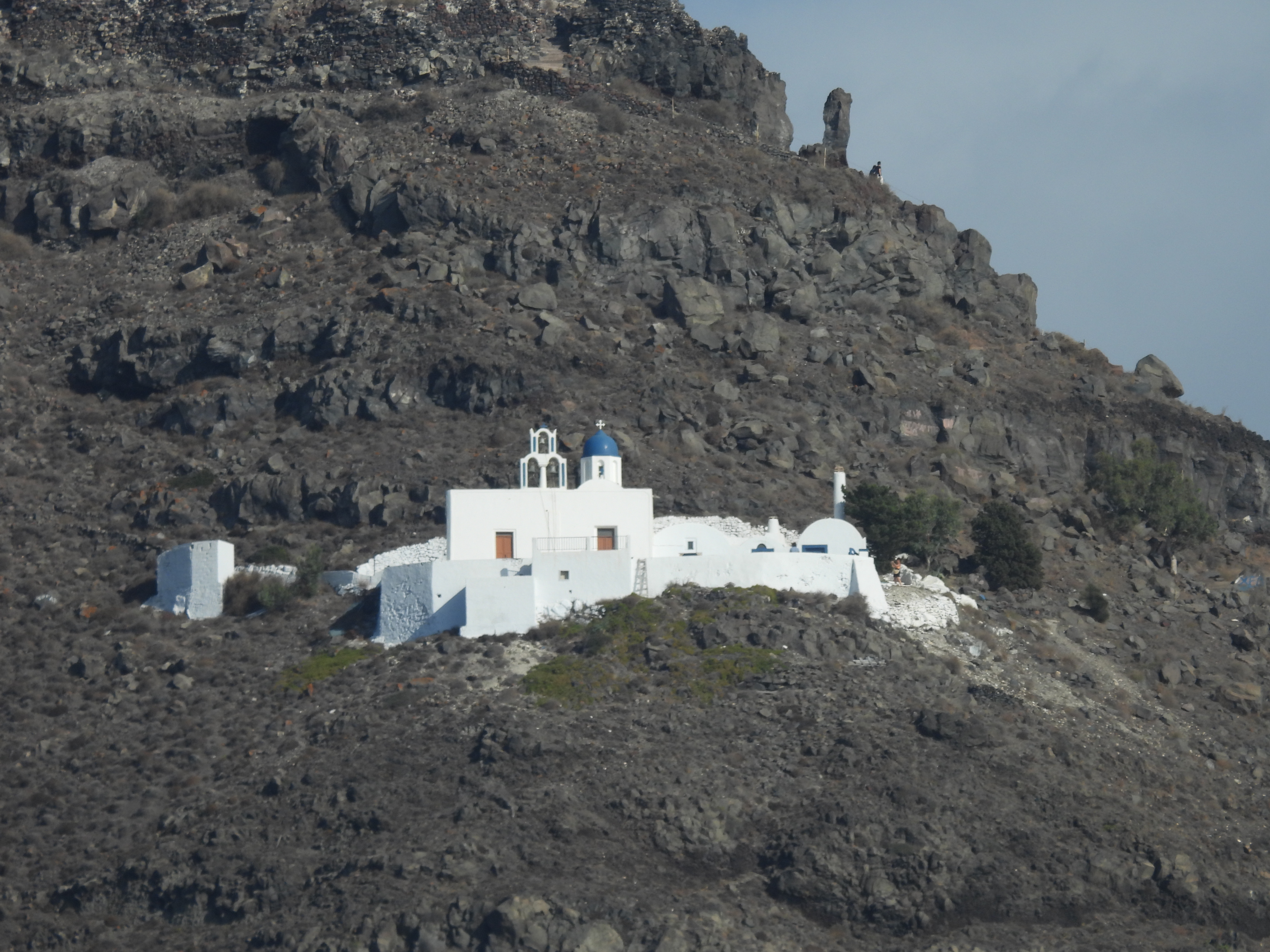
Santorini is the largest of five visible islands that make up the group of islands known as Santorini caldera. (Most of the caldera is submerged.)
These islands were formed by numerous volcanic eruptions, some of which were severe. The last eruption occurred in the 1950s. Currently, the volcano the islands rest on is considered dormant but still active.

Islanders persevered and rebuilt after each devastating eruption.

Although, some buildings are left in ruins. This one was obviously beautiful at one time.
The Latin Empire named Santorini in honor of Saint Irene. However, Santorini’s official name is Thira after Theras, a Spartan leader.

The islands of the Santorini caldera are rugged and steep. Donkeys are still used to transport goods in many areas because they are the safest and most economical method of transportation up and down the rugged terrain.

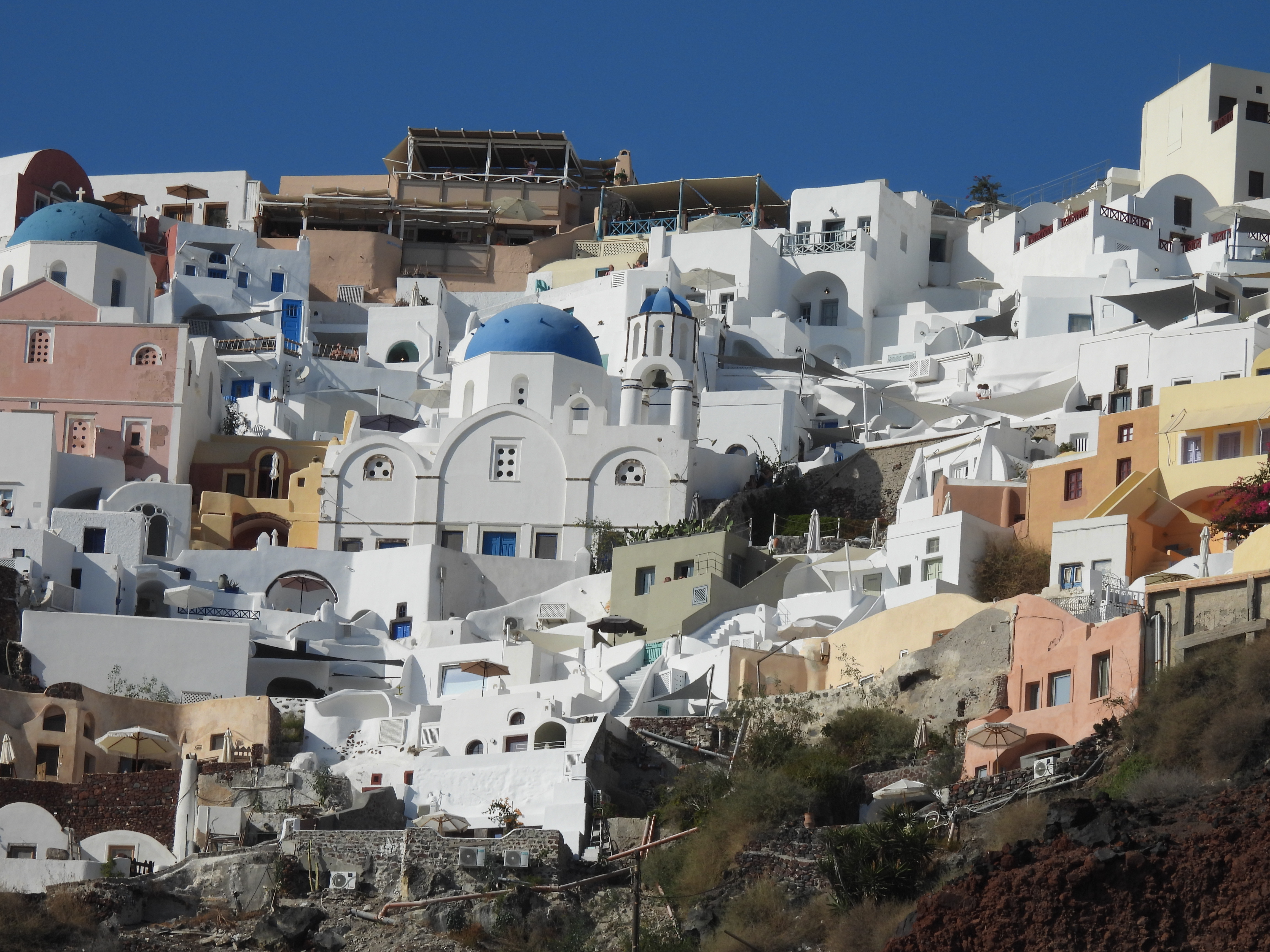
When we think of the country of Greece, most of us think of the blue-domed and white-washed buildings of Santorini, and most specifically, the town of Oia on that island.
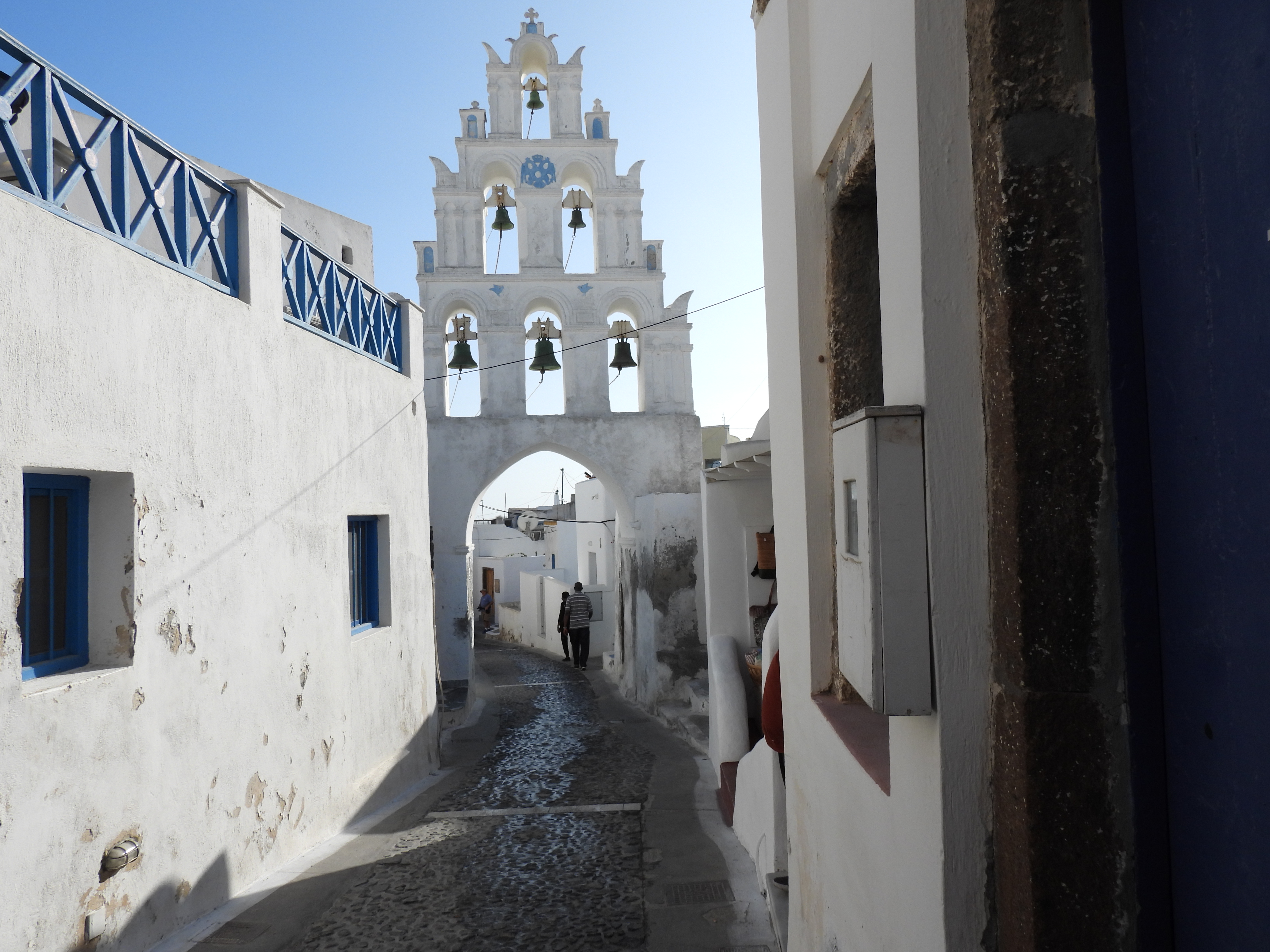
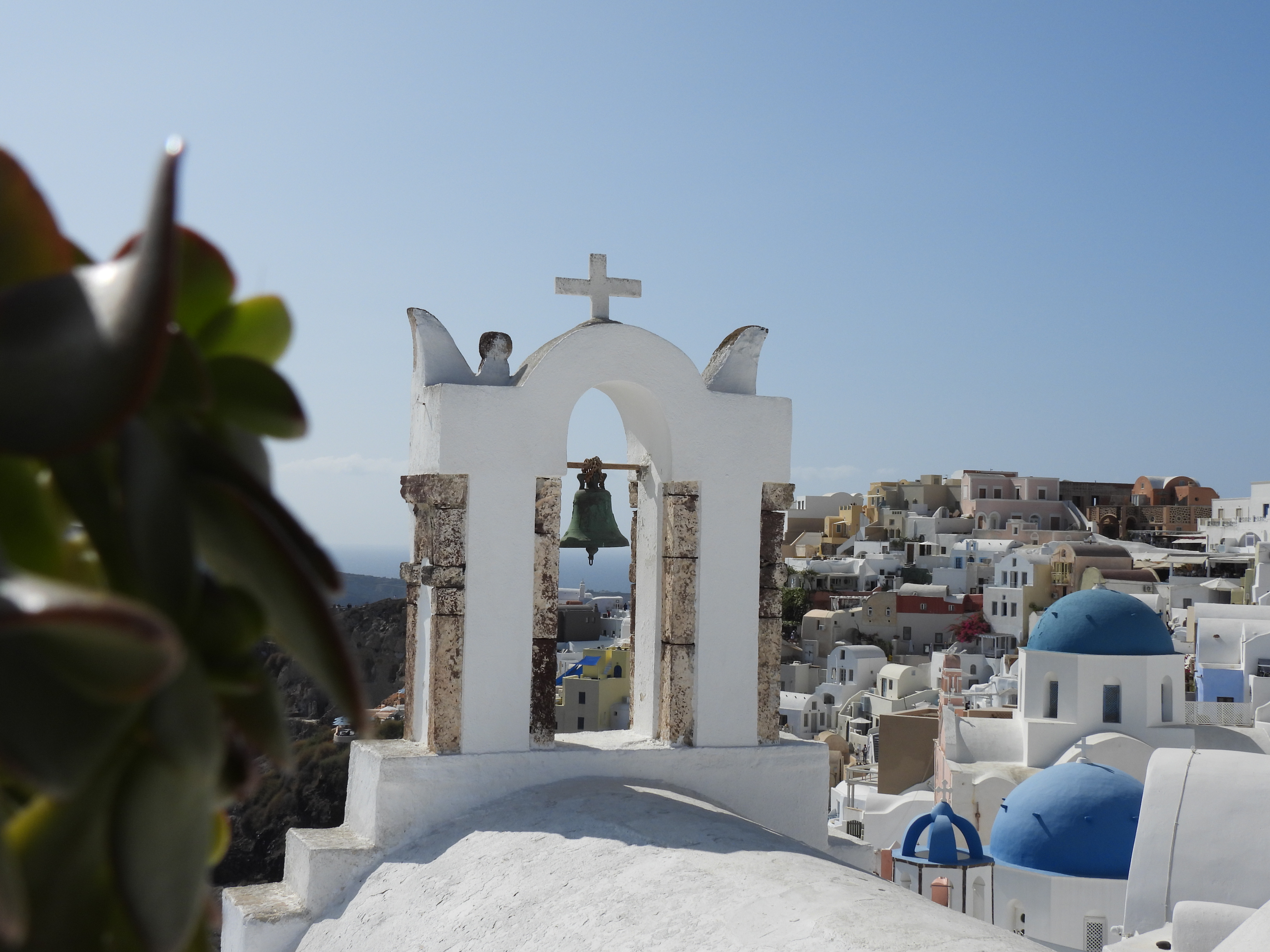
Bell towers and church domes can be sighted not only in Oia but throughout the main islands.

A popular stop in the Santorini caldera is the uninhabited island of Nea Kameni.
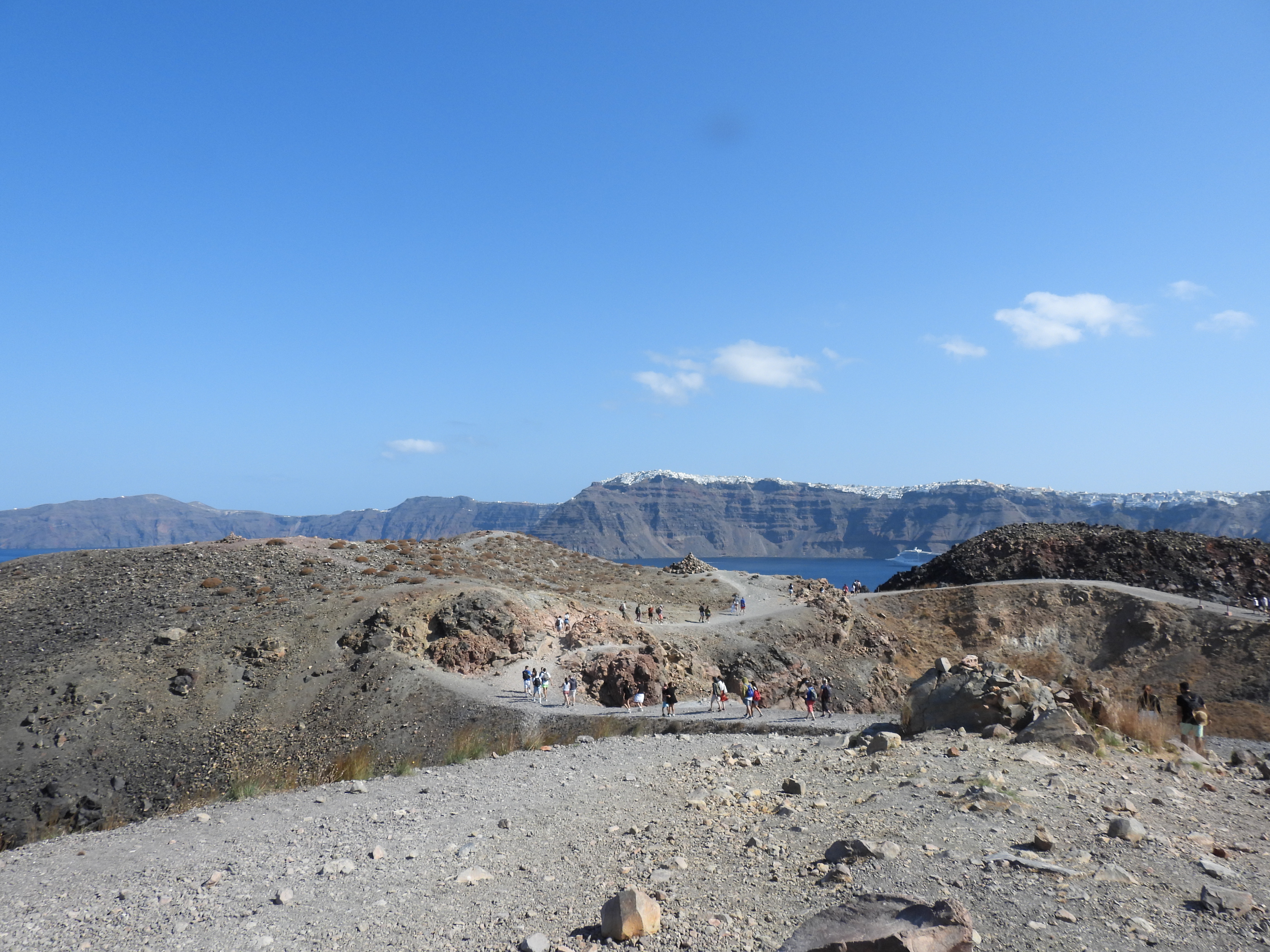
Most of our tour group ventured the 130 meters of gravel and rugged black volcanic rock path in the heat to the top of the crater.
I needed to stop a few times, and admittedly, my young guide carried my camera bag for some of it, but I was able to make it all the way.
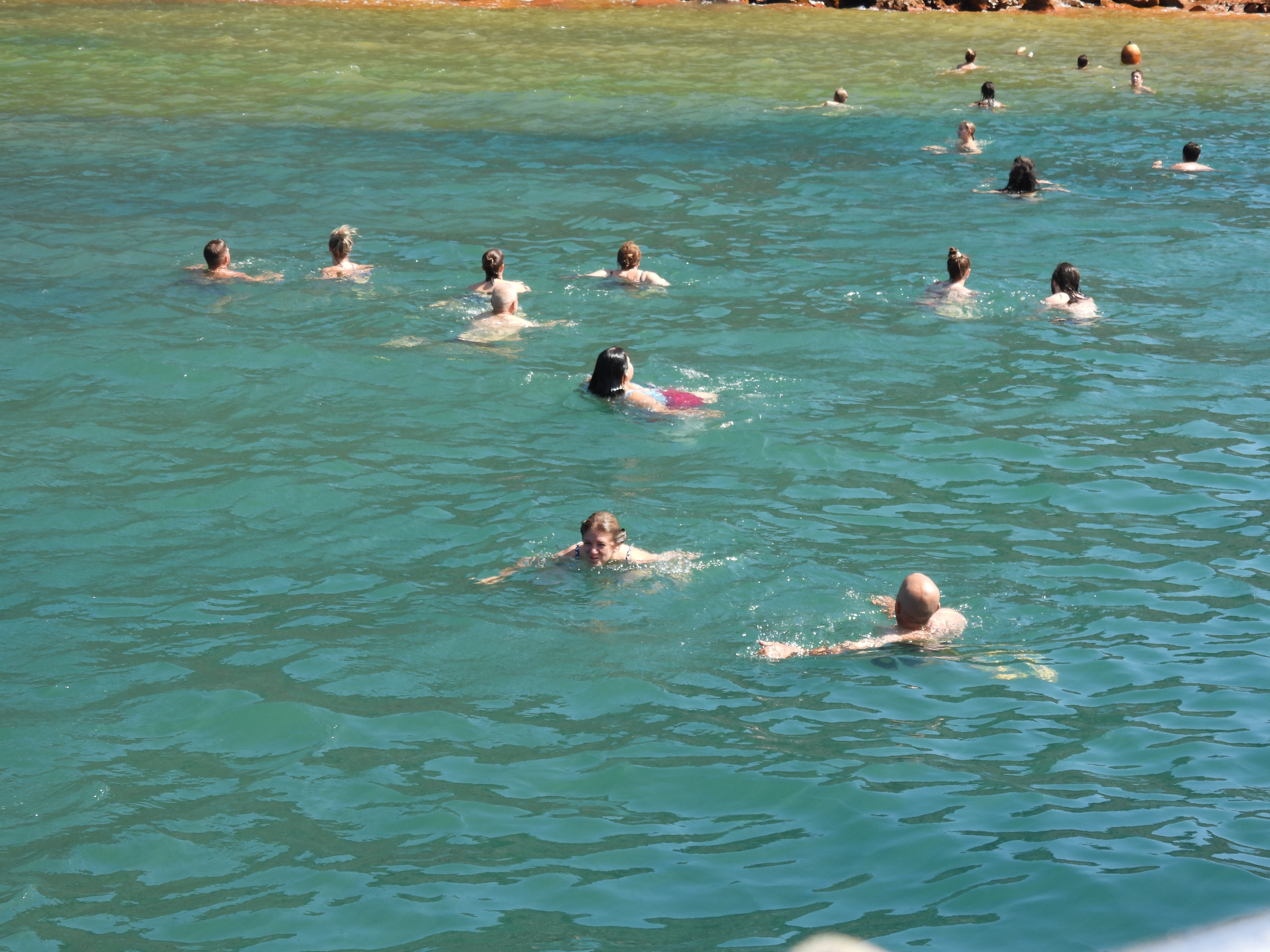
Members of our tour group also enjoyed a swim in the therapeutic hot springs off of that island. We were asked not to jump into the waters unless we were strong swimmers and in perfect health because of the rough current and high sulfur content, so I did not participate. I longingly watched others in the water and captured the moment with my camera.

Wineries are sprinkled across the islands. These farms produce grapes and vegetables that are enhanced by the rich volcanic soil and dry air.
Rather than staking the grape vines as is customary, vines in Santorini are rolled on the ground into shapes that look like wreaths. This helps the grapes get the most amount of moisture in the dry terrain.
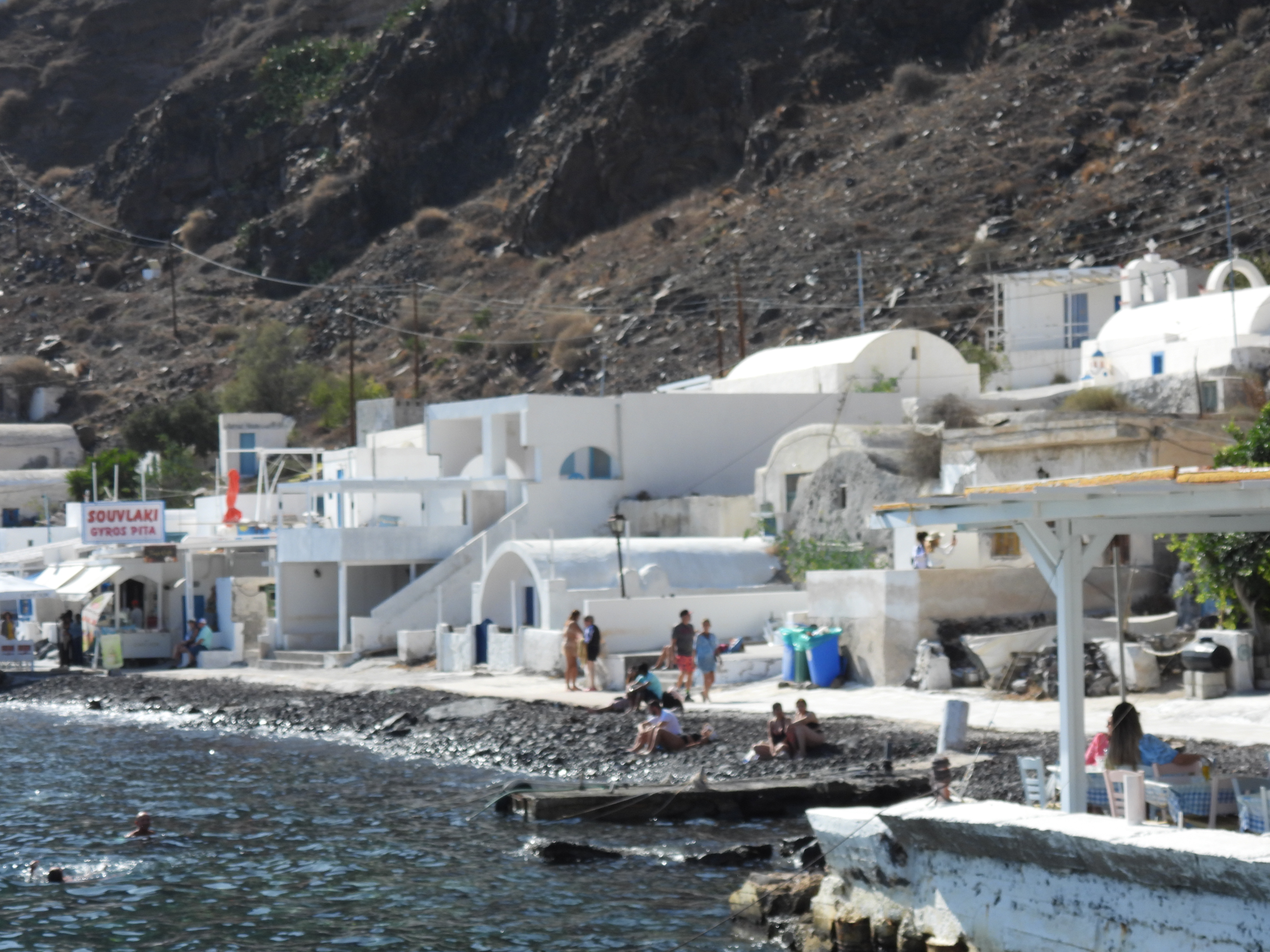
Theresia is the second largest island of the caldera. Like Santorini, it also offers picturesque villages with white-washed houses off of narrow roads.
After ten days in Greece, it was evident that there was much more to see. The country is rich in history and offers plenty to explore. From ancient temples and diverse islands such as Crete, Spinalonga, and Santorini to pristine beaches and active cities such as Athens, a travel itinerary can be as full as you choose.
Of course, there also is the food. The fish is fresh and fabulous and I had no idea tomatoes and potatoes could have so much flavor. Then, there are all the pastries.
Plus, travel from island to island is easy via high-speed ferries, sailboats, and other vessels.
*Photos and Post©2024, Mary K. Doyle
**In addition to several Friday Photos that feature Greece, experience this Mediterranean country with me through my past posts, “The Plight of Lepers,” “Minoan Palace of Knossos,” “The Ancient City of Athens,” “Theater of Dionysius,” “The Athenian Acropolis,” “Temples of Athena and Poseidon,” “Athens Central Market,” and “Grecian Get-Away.”
 Midwest Mary
Talk to me. I’m curious about your thoughts and comments.