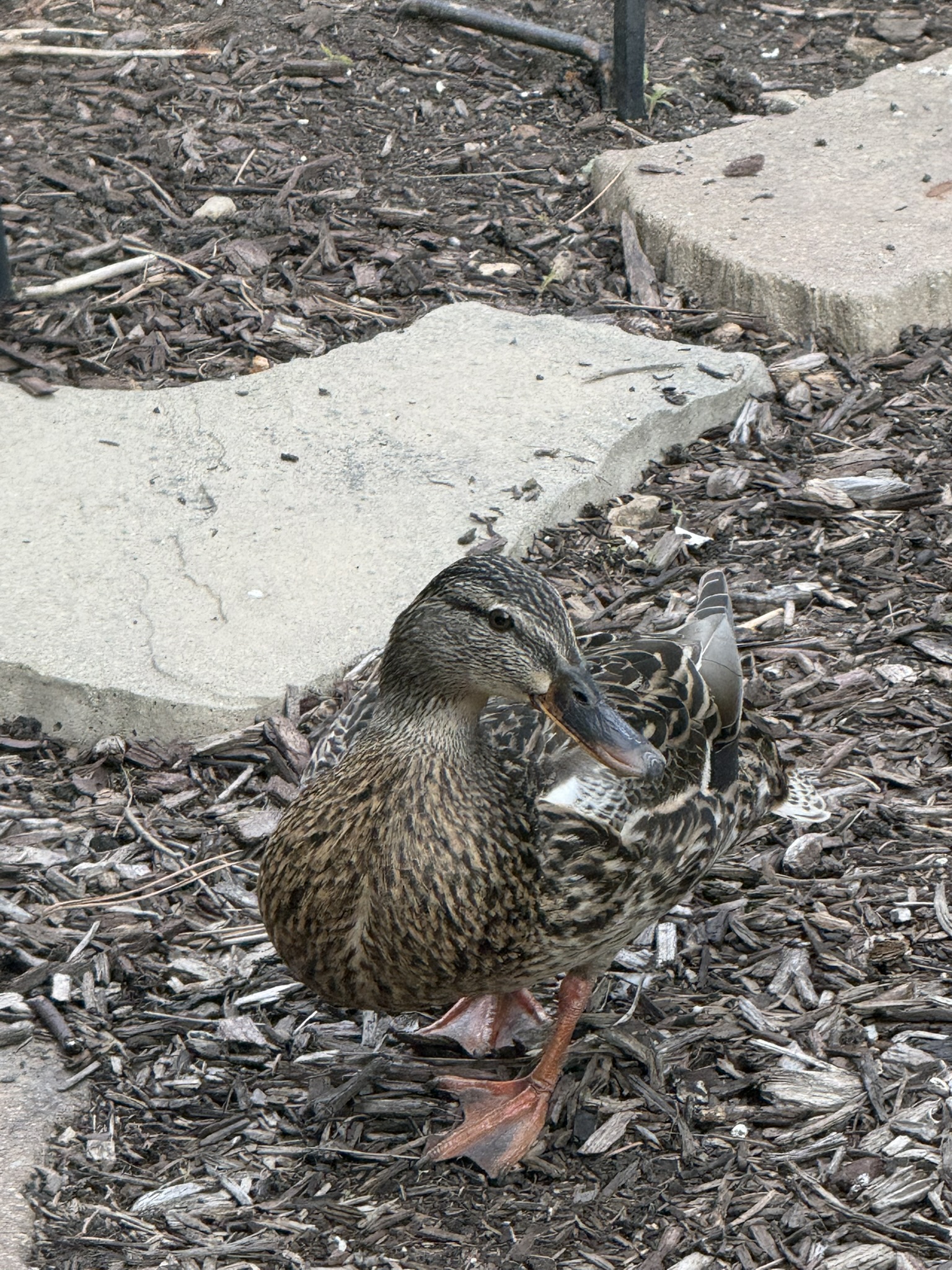
In urban areas, we often spot birds and other animal nests in inconvenient locations. This spring, a mama duck decided to lay her eggs next to my back step, under a narrow bump-out of my house, and behind a metal shelving. It’s also under a dryer vent.
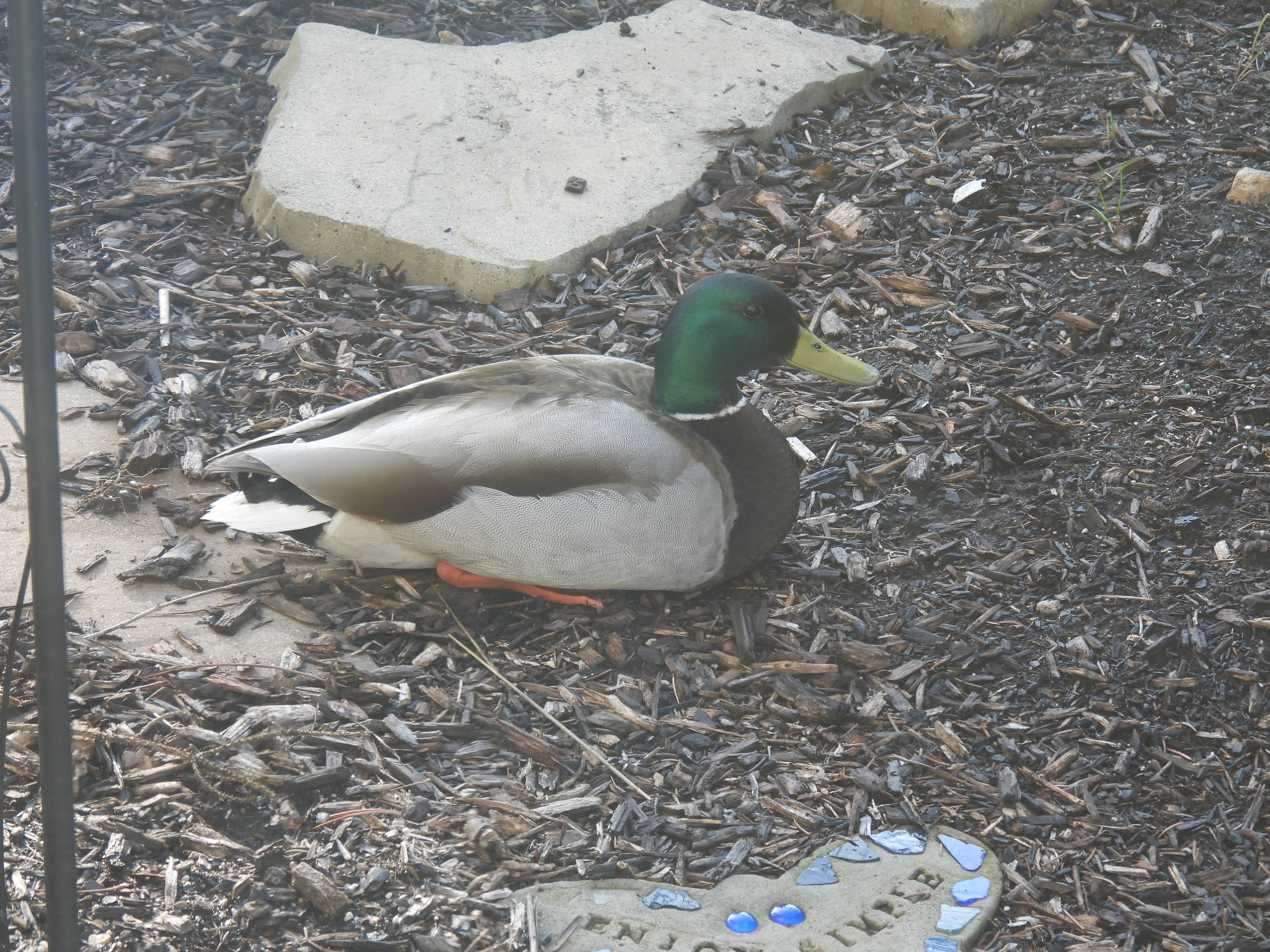
On April 6, I noticed a male duck in the garden. It’s unusual to see ducks here so far from the ponds. I didn’t notice the female in the bump-out until April 17. Although she may have been there earlier, as it isn’t somewhere I would normally look.
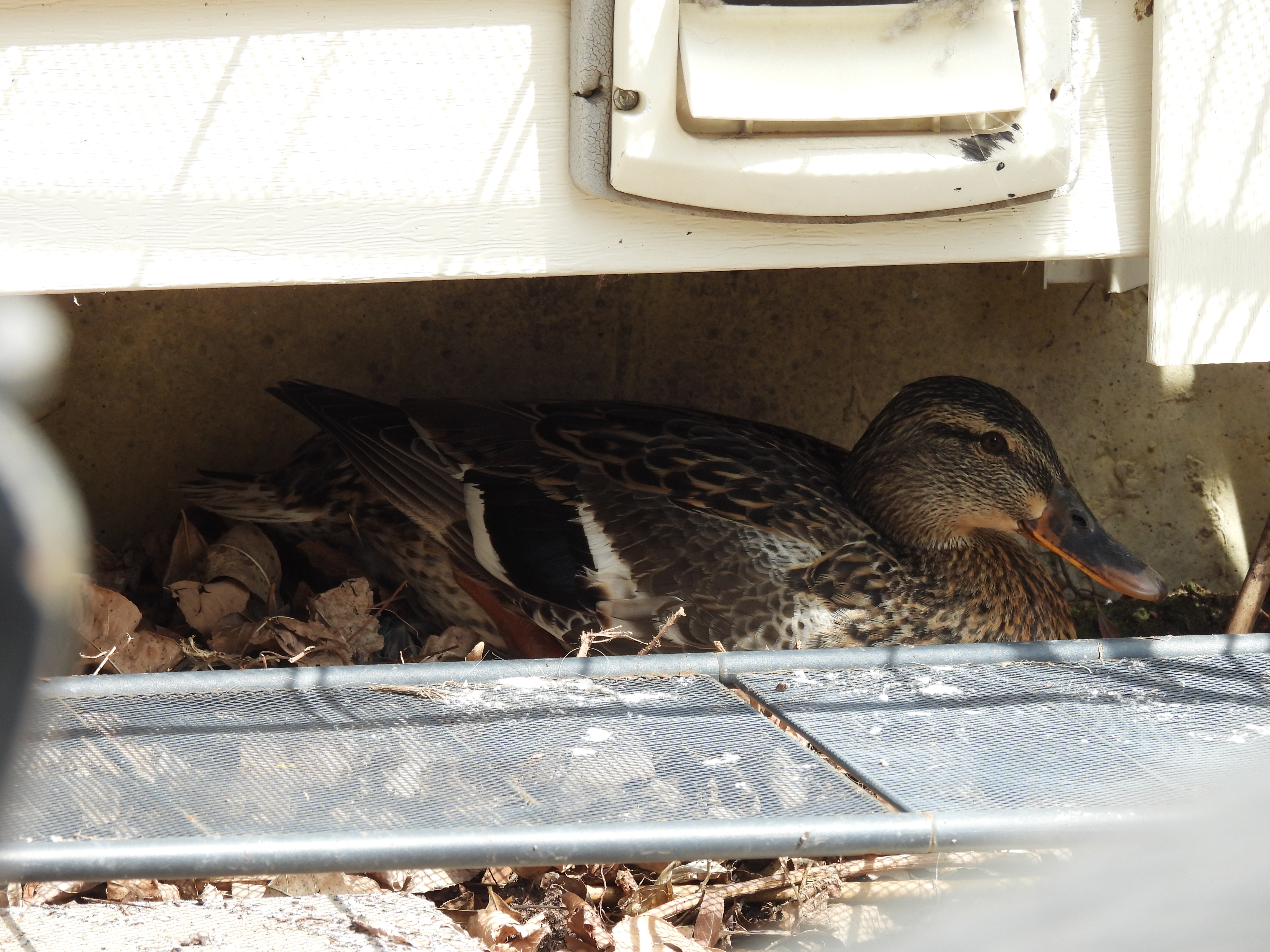
I sit outside on my patio and work any day the weather is acceptable, and the hen didn’t seem to mind. Perhaps I was far enough away from her and her nest. However, this is an area I often cross and work on plants on the shelves.
Mama Mallard Duck’s patience was impressive. Day and night for nearly a month, she sat in that cramped little space—waiting, waiting, waiting.
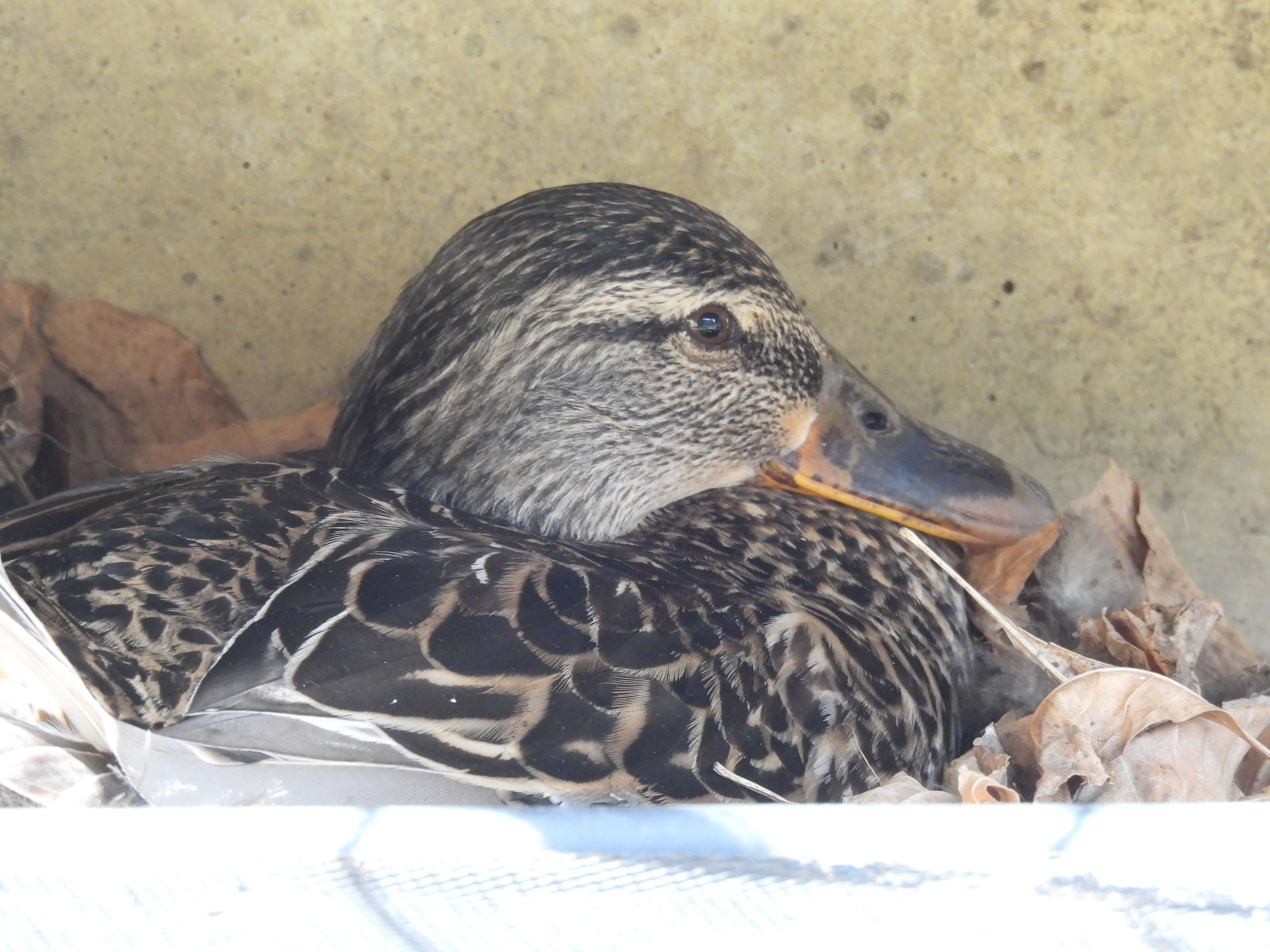
Mama Duck left the nest a couple of times a day for short periods. She’d crawl out and shake her legs like someone stiff from remaining in a position too long.
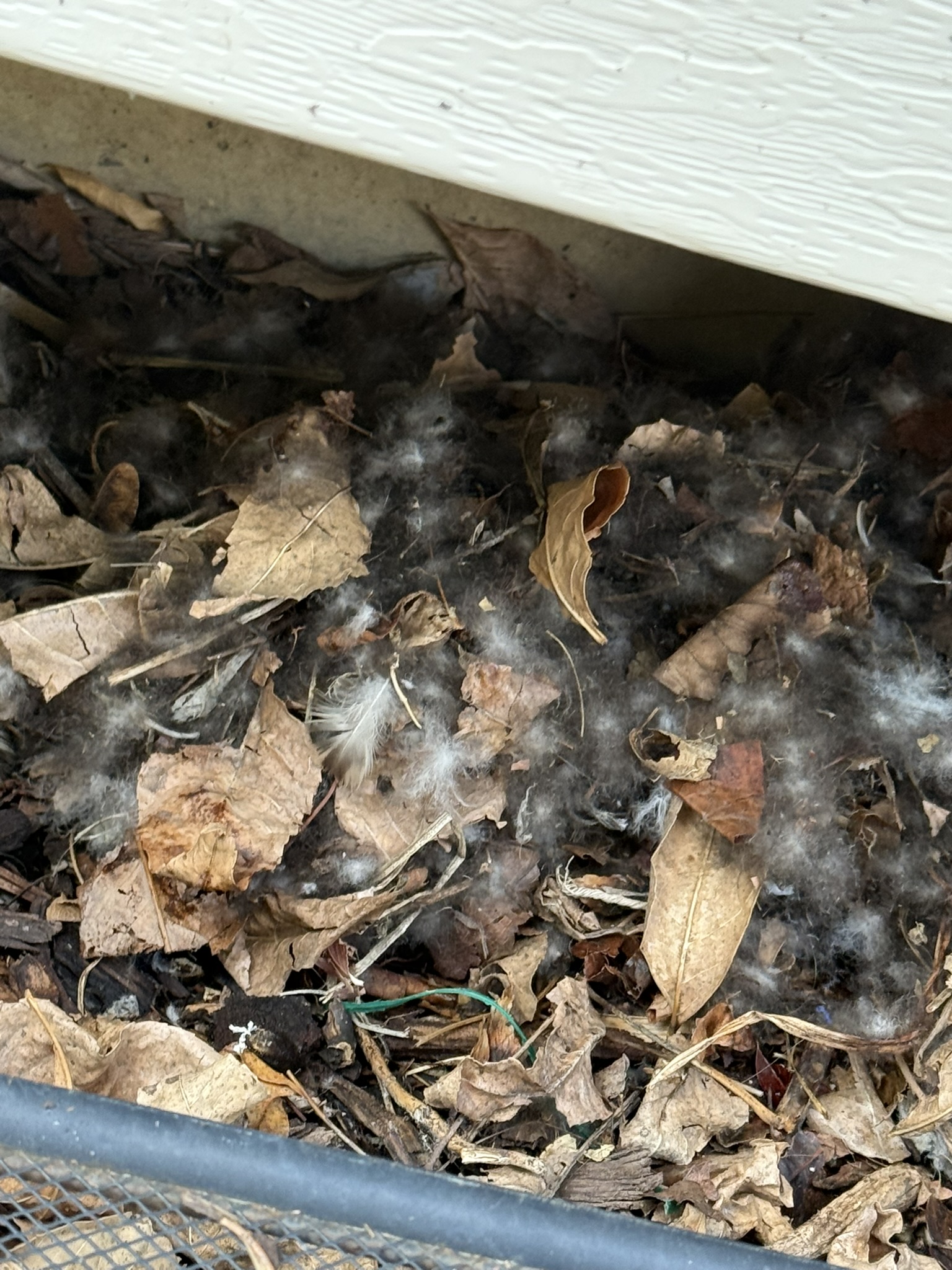
Her nest appeared comfy. An area was hollowed out and lined and covered with down feathers and leaves. Incubation felt so long to me, I became concerned that the eggs were not fertilized. How sad that would be, after all the time she cared for her nest, if there were no babies.
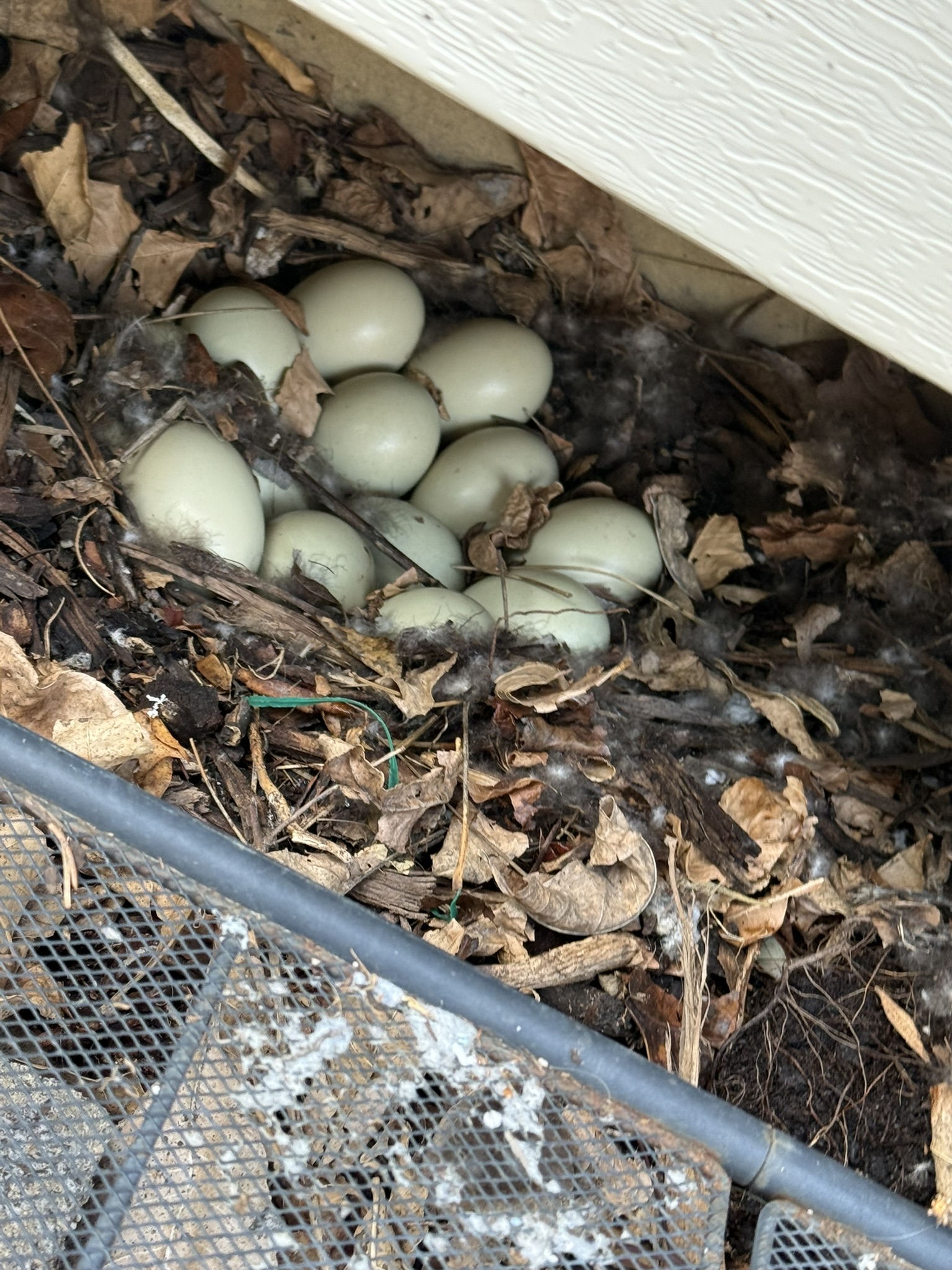
I was surprised to see how large the eggs were and how many there were. Ducks lay about 12 or 13 eggs.
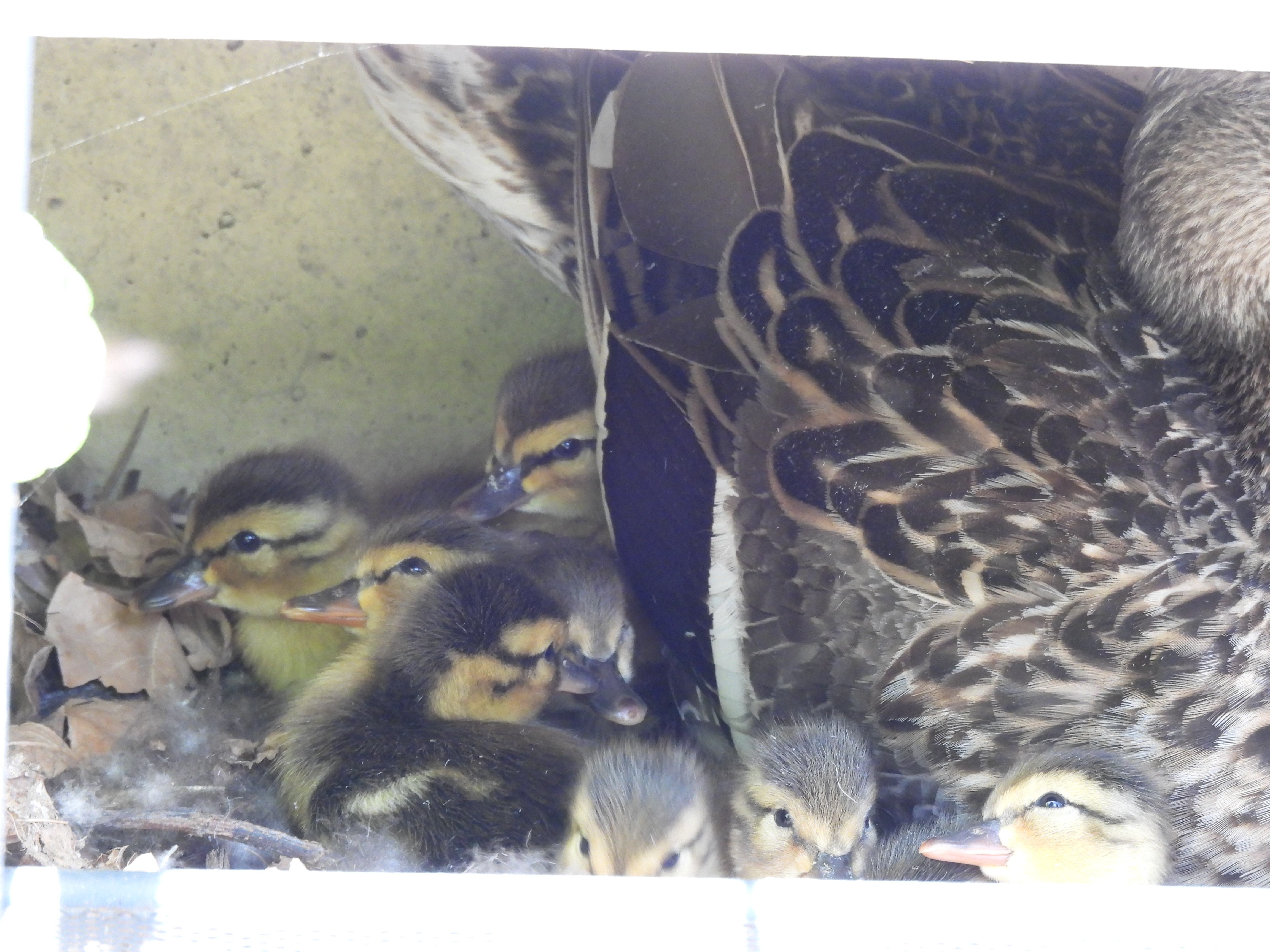
Finally, on May 14, I was delighted to find Mama surrounded by ducklings. I’m happy to have seen her and the little ones, because I went into the house for about an hour, and when I returned outside, she had left with her babies.
Female and male ducks typically pair during the fall and winter. Mating may occur on land, but most often in water, and can be aggressive.
Eggs are laid over a few days, with the mother periodically sitting on them to keep them viable. Once all eggs are laid, incubation is believed to begin.
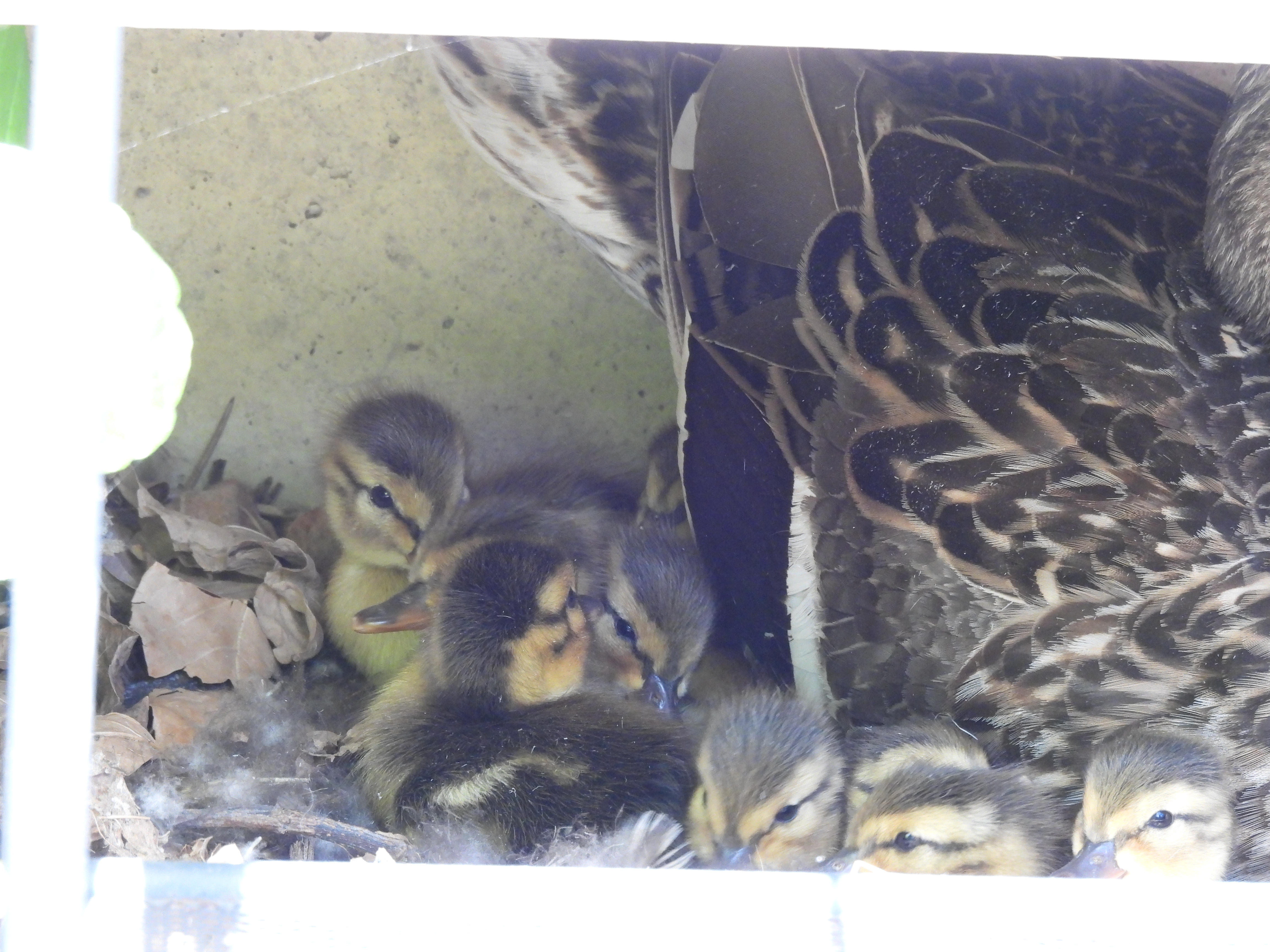
The mother duck incubates the eggs for about 28 days to provide the heat needed to develop the ducklings. She also covers the eggs with down that she plucks from her belly, resulting in an area that is bare and known as a brood patch.
It’s fascinating to note that females adjust the temperature of the eggs by altering how often the brood patch comes in contact with the eggs and how long the ducks are in the nest. Females turn eggs and move them within the nest so that all eggs receive adequate heat. They also monitor weather conditions, incubating longer on cooler days and less on mild ones.
Older females tend to spend more time on nests than younger ones. During the last few days of incubation, Mama Duck left for longer periods. She either was less experienced, the weather was warm enough for her to do this, or she thought I would babysit. At one point, a squirrel sauntered over to the nest. I told it, “No.” It looked at me as if to say, “I’m just curious,” and walked away.
Waterfowl rely on stored fat and protein during incubation periods. They may lose up to one-third of their body mass during this time. Some females actually starve to death on the nest, sacrificing their own need to eat for the sake of their babies’ survival.
When ducklings are close to hatching, clicking and peeping sounds may be heard within the eggs. Then, the little ones crack the shells with their egg tooth, which is a little growth on their bill that falls off after hatching.
Hatchlings emerge after about 3 to 24 hours and dry in a few additional hours. Mama duck preens oil onto her breast, belly, and flanks and then spreads this oil on her offspring.
Ducklings are “precocial,” meaning they are born mobile, covered in down, and able to swim and forage shortly after hatching. They consume a high-protein diet including insects, aquatic plants, algae, seeds, and grains.
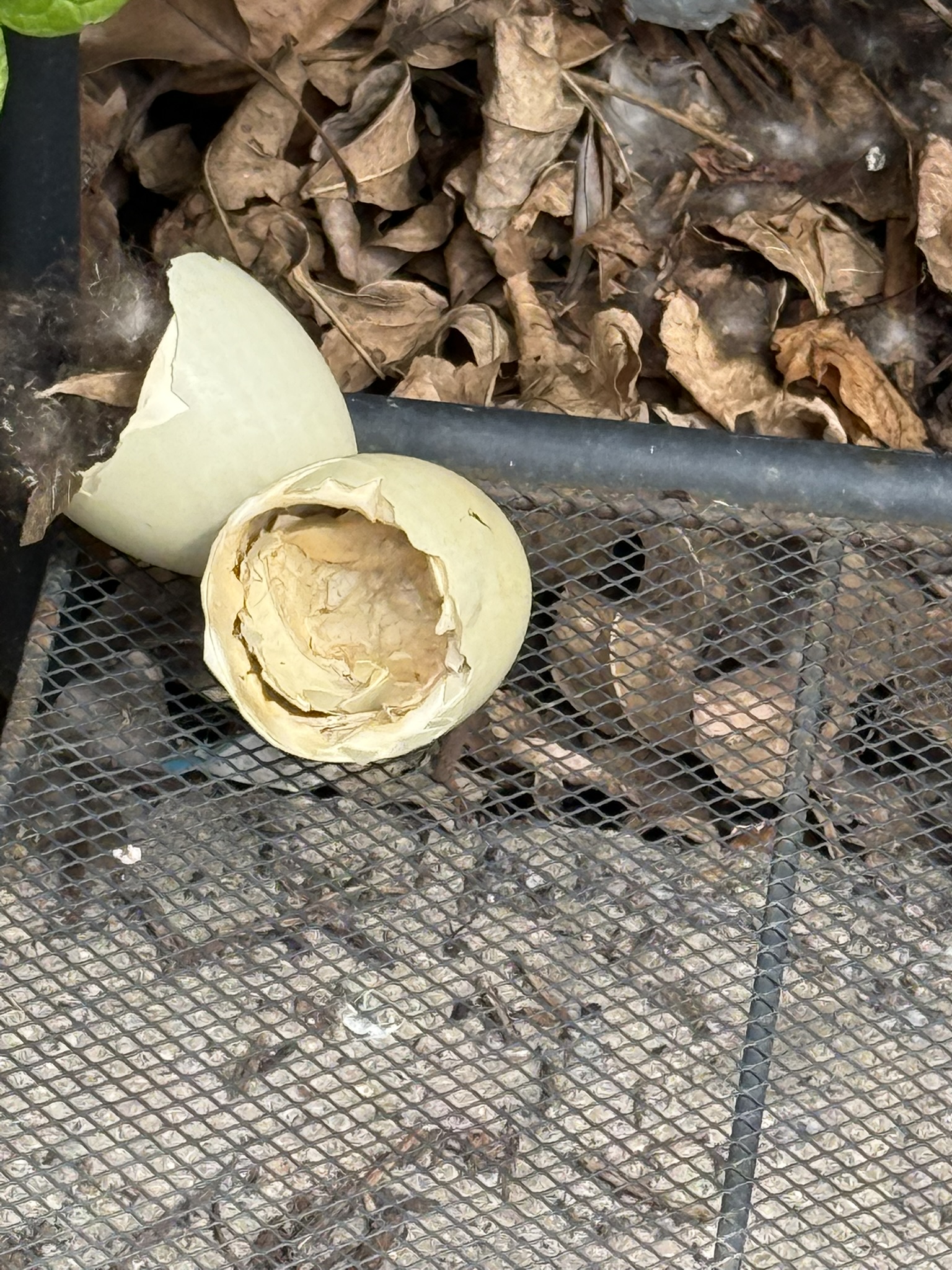
Duck nests and eggs should not be moved until the nest is obviously abandoned, as they are federally protected by the U.S. Fish & Wildlife Service.
For more information, see Ducks Unlimited.
©Mary K. Doyle, 2026


Talk to me. I’m curious about your thoughts and comments.