
The residents of Pompeii, Italy were not concerned about the quakes on the days leading up to the eruption of Mount Vesuvius on August 24, 79 A.D. They were accustomed to the rumbling earth. In 62 A.D., a major earthquake caused widespread destruction, a less significant one occurred two years later, and smaller quakes were ongoing.
However, no one expected the seemingly sudden massive eruption of the volcano, Mount Vesuvius, that towered over them. Residents had no knowledge of previous eruptions much less the possibility of it happening again.
On that infamous day in 79 A.D., a cloud of super-heated tephra and gases mixed with molten rock, pulverized pumice, and hot ash violently spewed across Pompeii, Herculaneum, and several other smaller towns and settlements across a 10-mile span. The onslaught lasted about 12 hours.
The more than 20,000 residents had no time to escape. They either died from asphyxiation from the pileup of debris, the depth of which was up to 16 feet, or from the toxic gasses.
The Museum of Science and Industry in Chicago, Illinois recently featured an exhibit that included a video, information boards, artifacts, and casts of human and animal remains from that famous volcanic eruption. (The actual human remains are stored in Pompeii.) Because of the type of eruption, items are curiously intact.
Prior to the eruption, the city was a thriving commercial center with restaurants, bars, theaters, brothels, gambling halls, and public bathhouses. Elaborate frescoes, mosaics, statues, and columns adorned the homes, public buildings, and streets, many of which have been excavated by archeologists.
Following are a few of the displays of items and beings that were found.

Statue of Aphrodite, the goddess of love. Marble, 1st Century A.D.
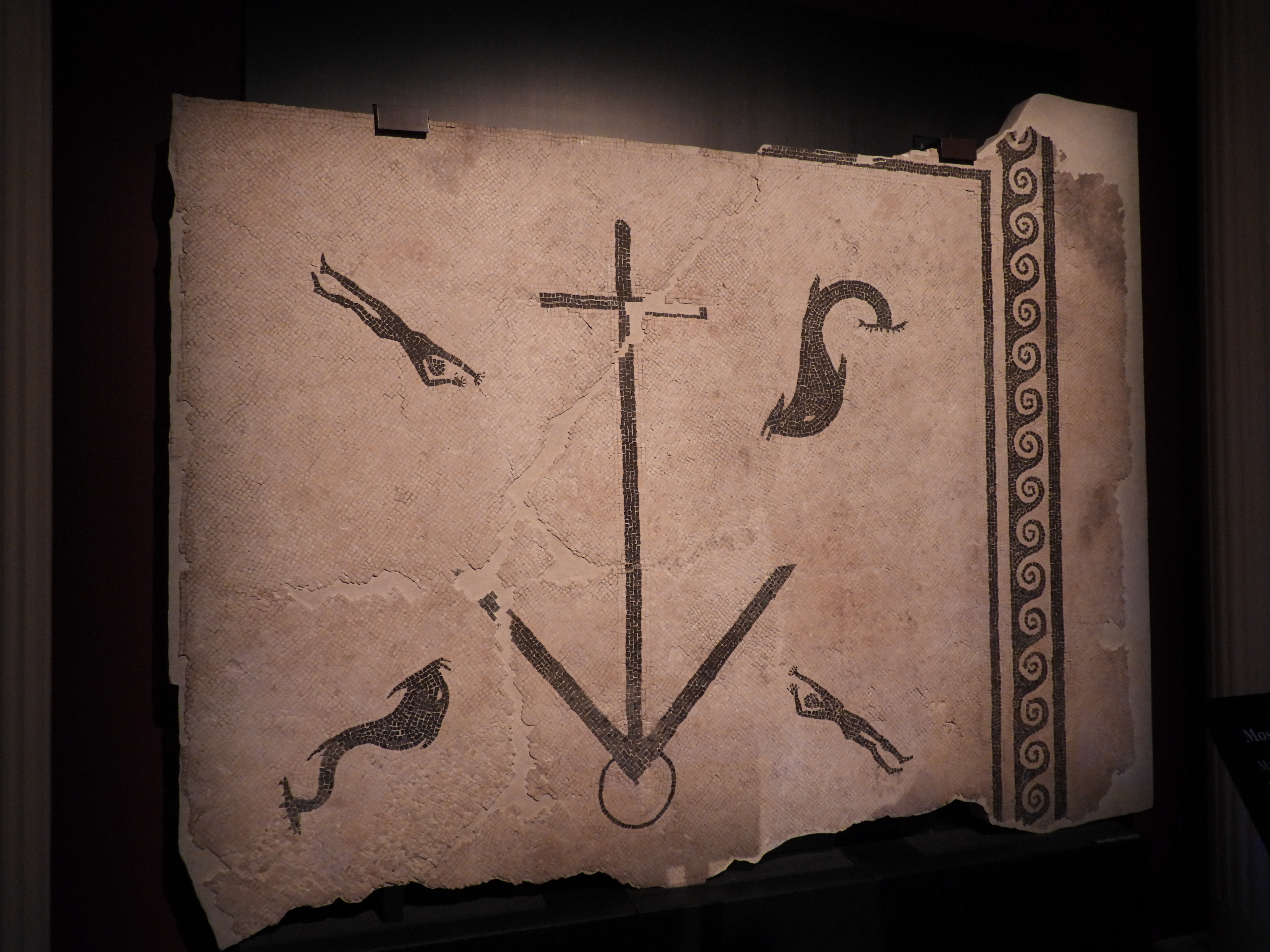
Mosaic with a marine scene.
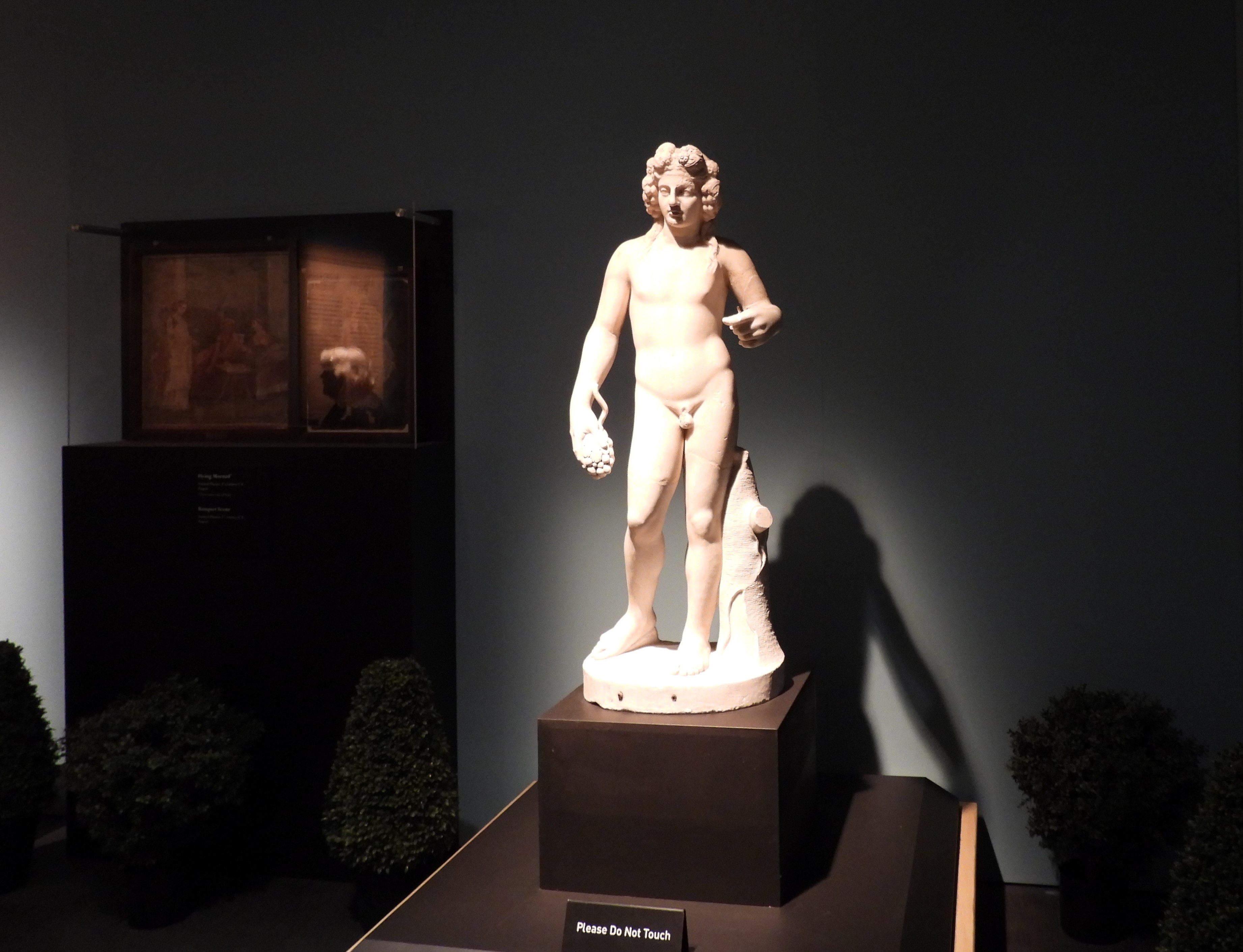
Statue of the Greek god, Dionysus, also known to the Romans as Bacchus. Marble, 1st Century A.D.

Mosaic table.
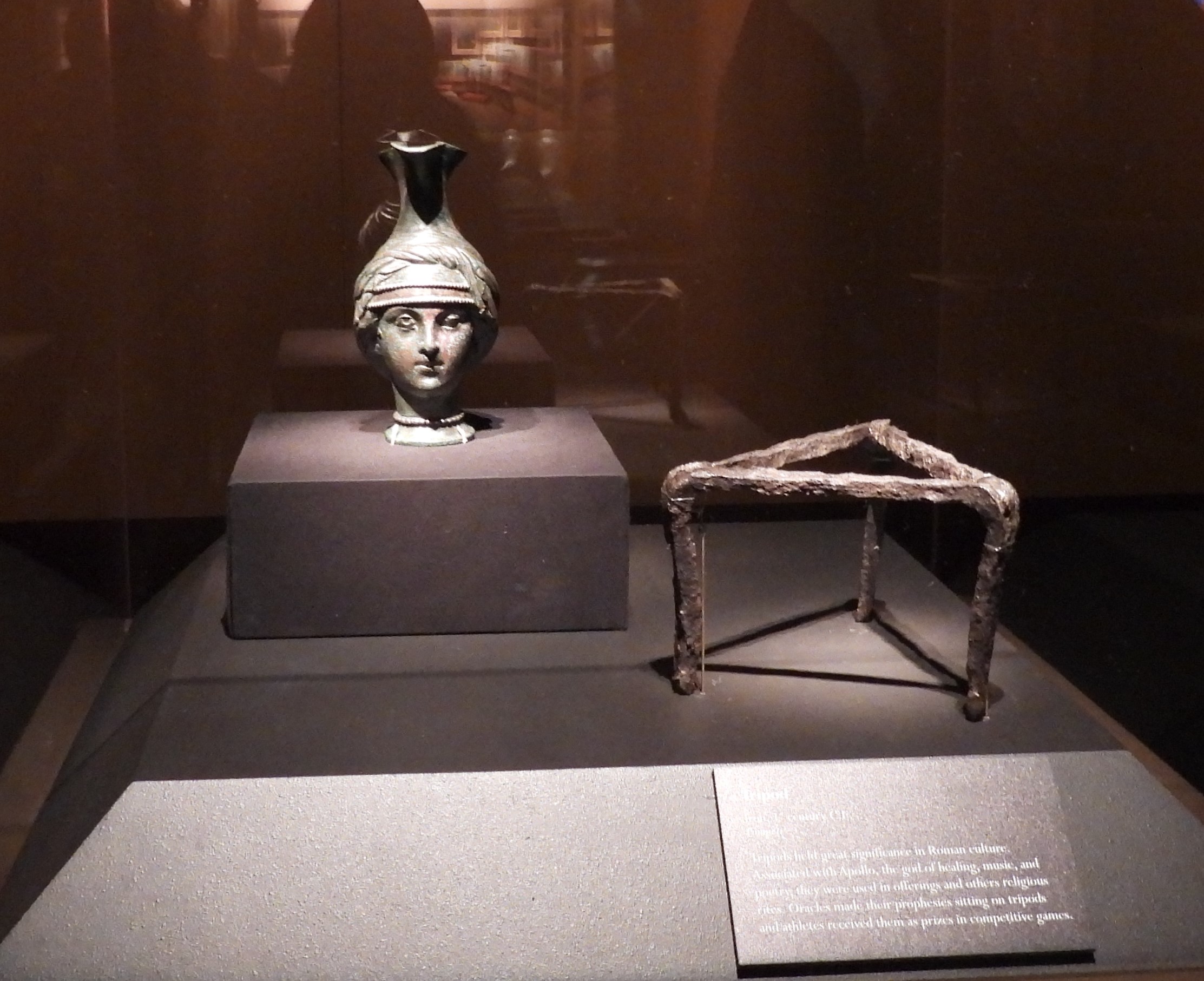
Elaborate pitcher.

Glass bowls.
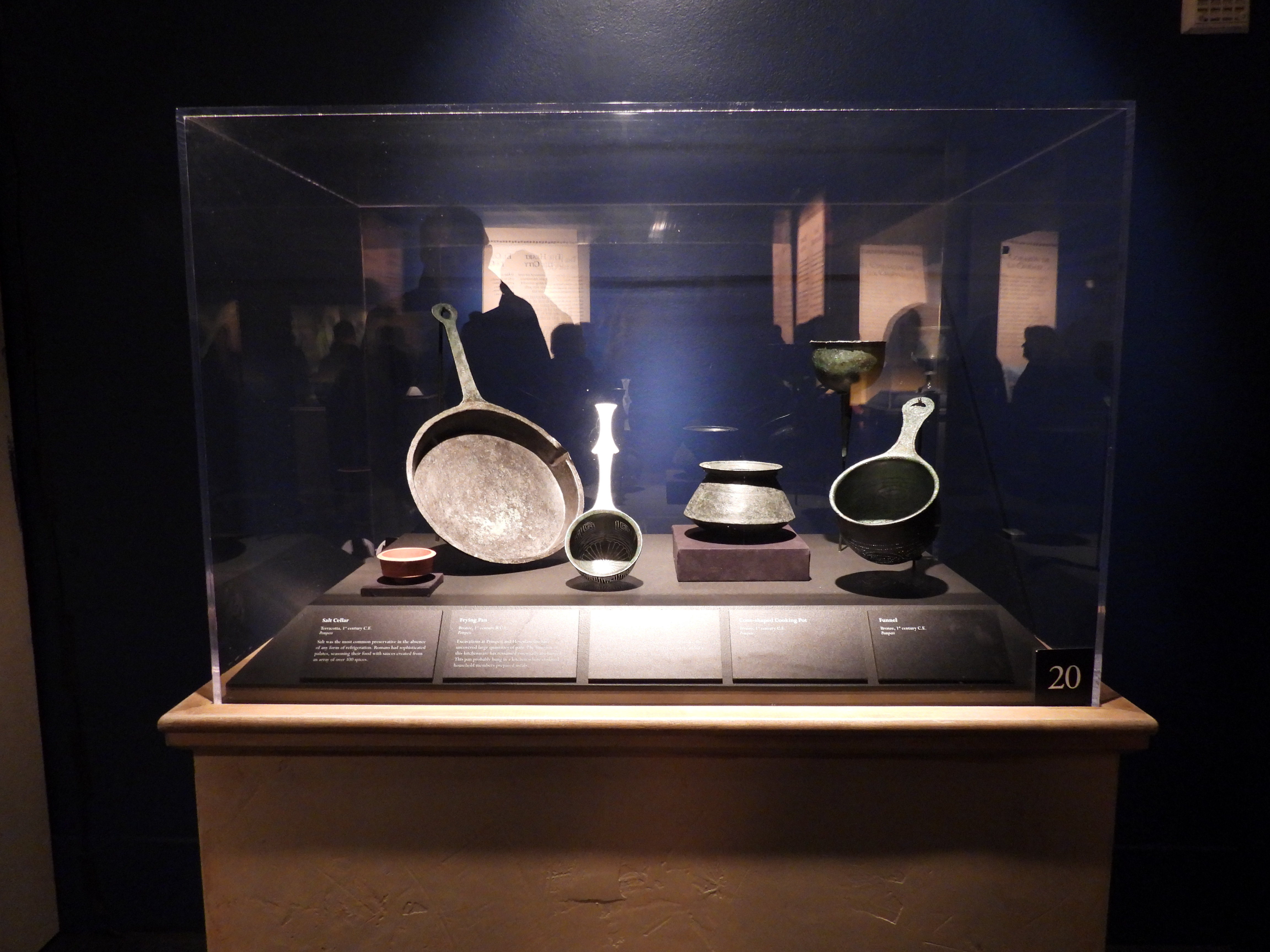
Cooking utensils.
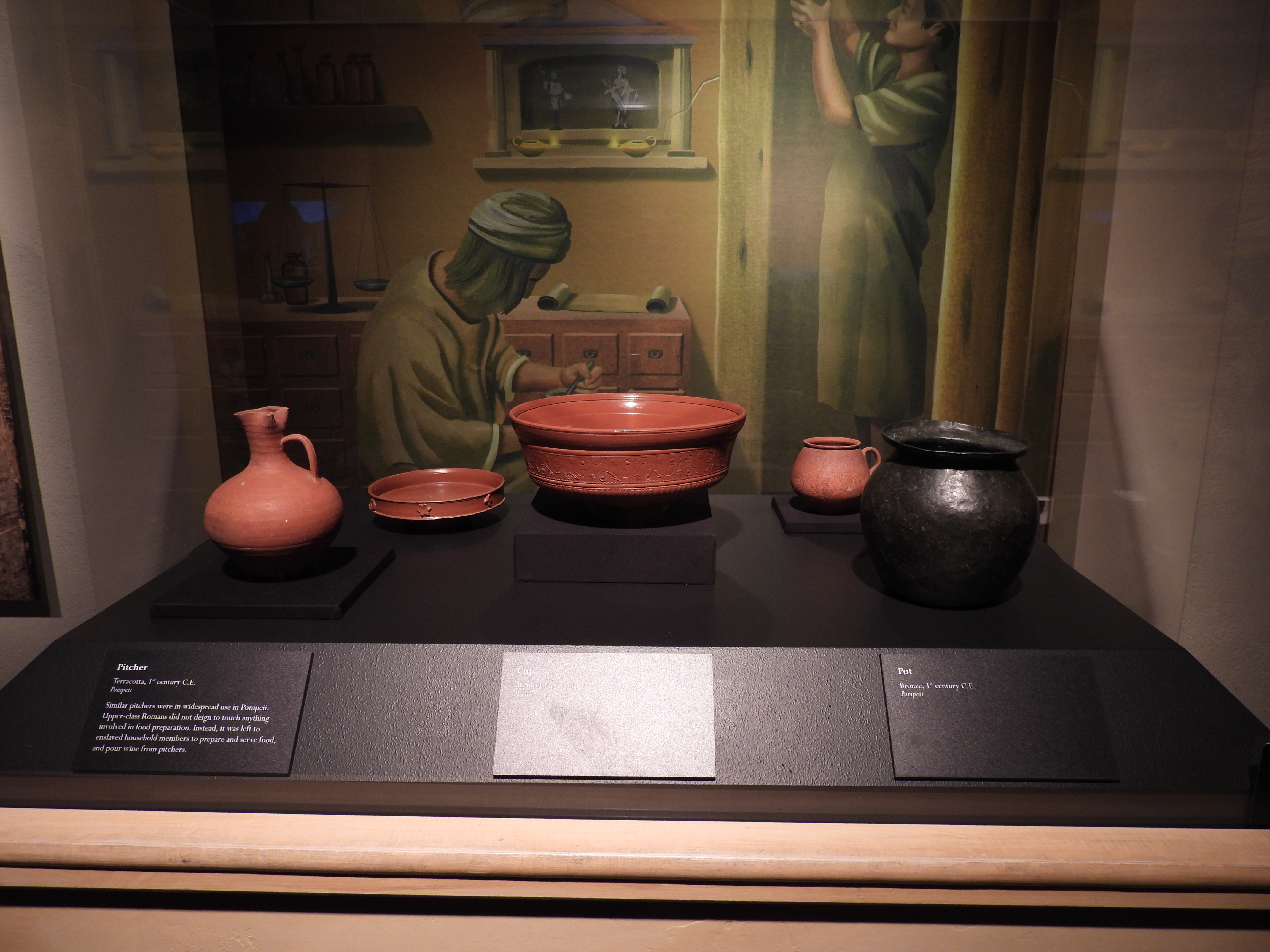
Terracotta pitchers and bowls.

Large terracotta vases, called amphoras, used in restaurants and bars for hot soup and mulled wine. Jars also contained garum, a fish sauce for flavoring food.
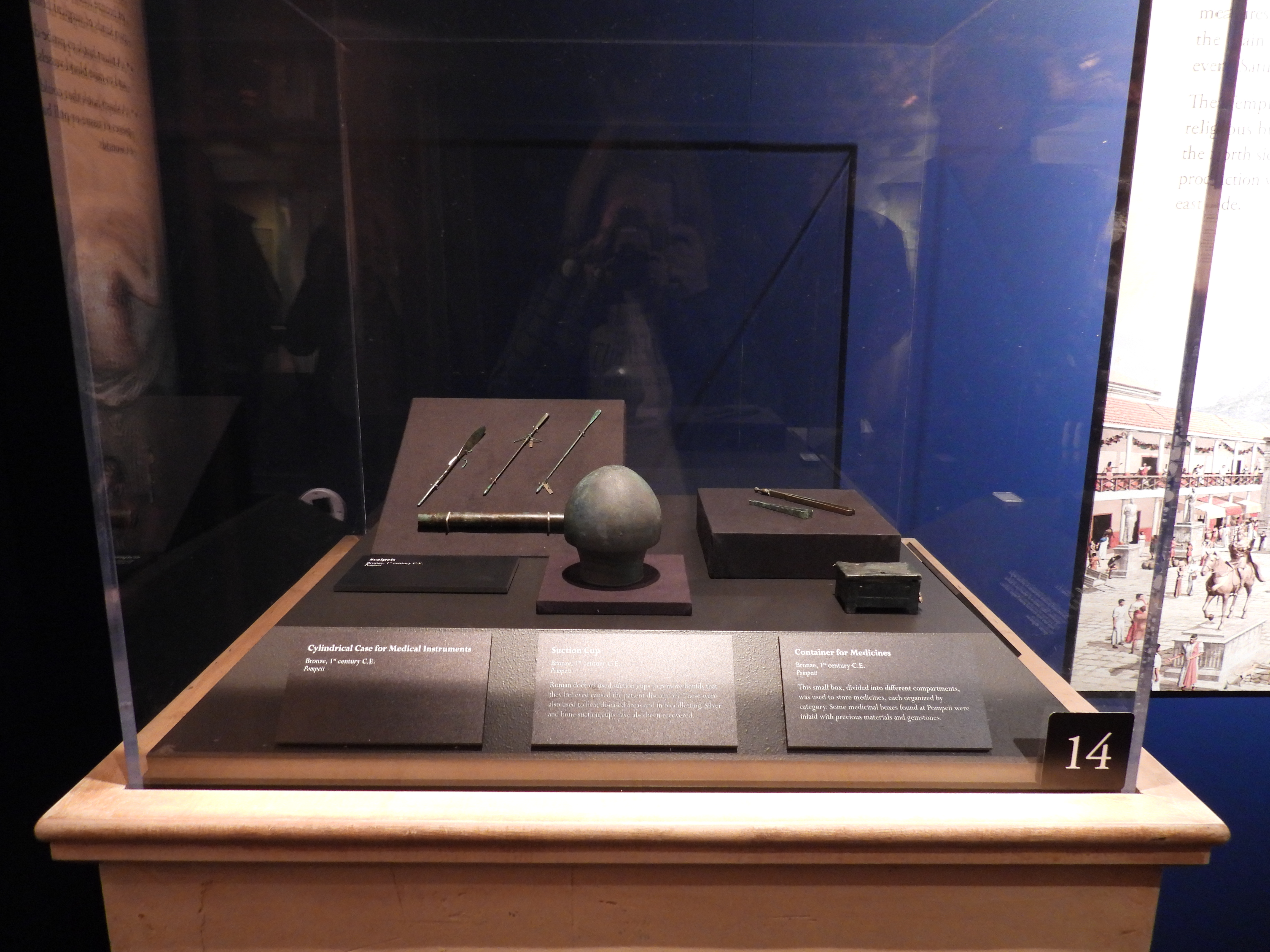
Medical instruments.
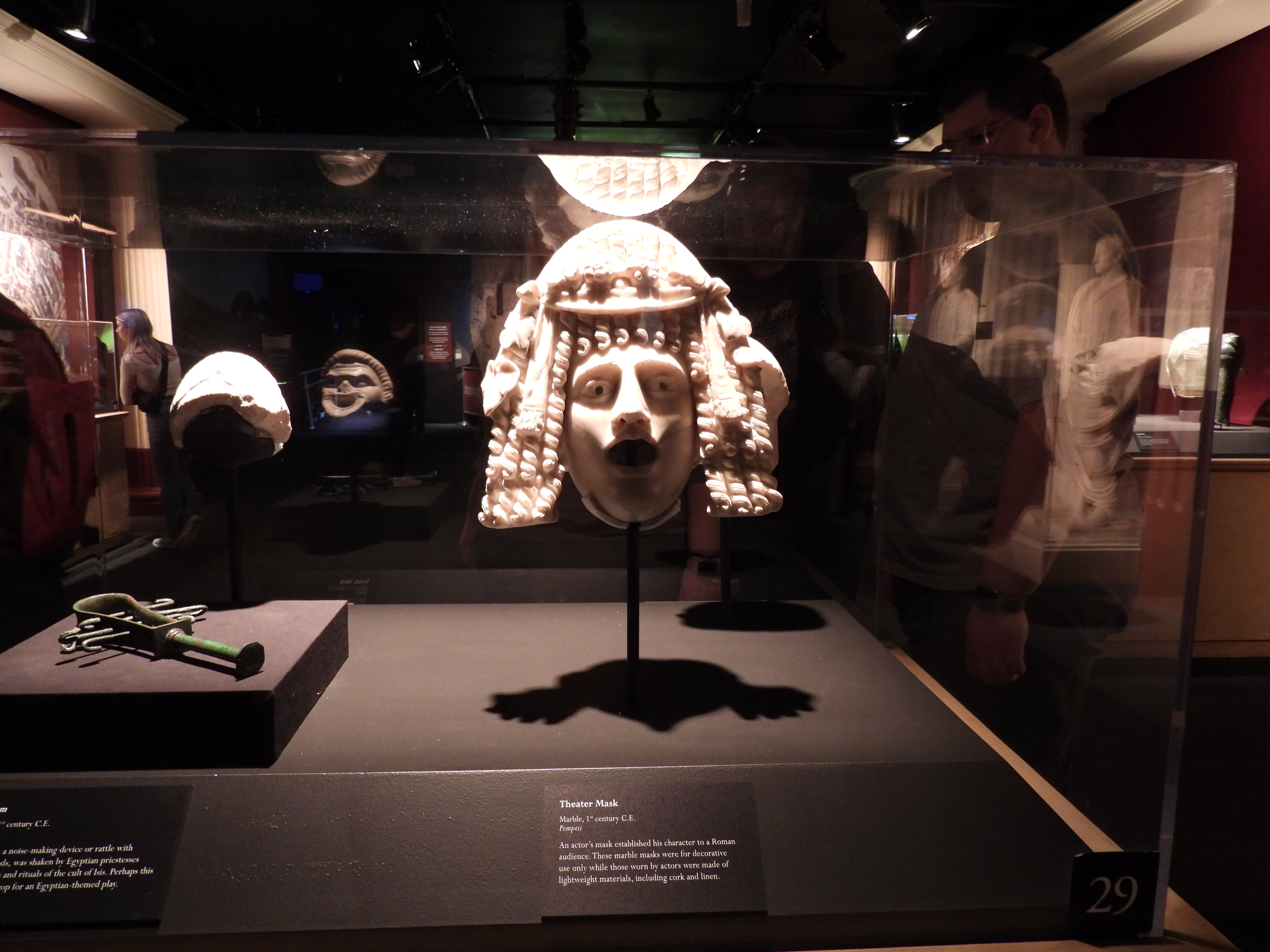
Theater mask.

Casts of some of the 2,000 human remains that have been found.
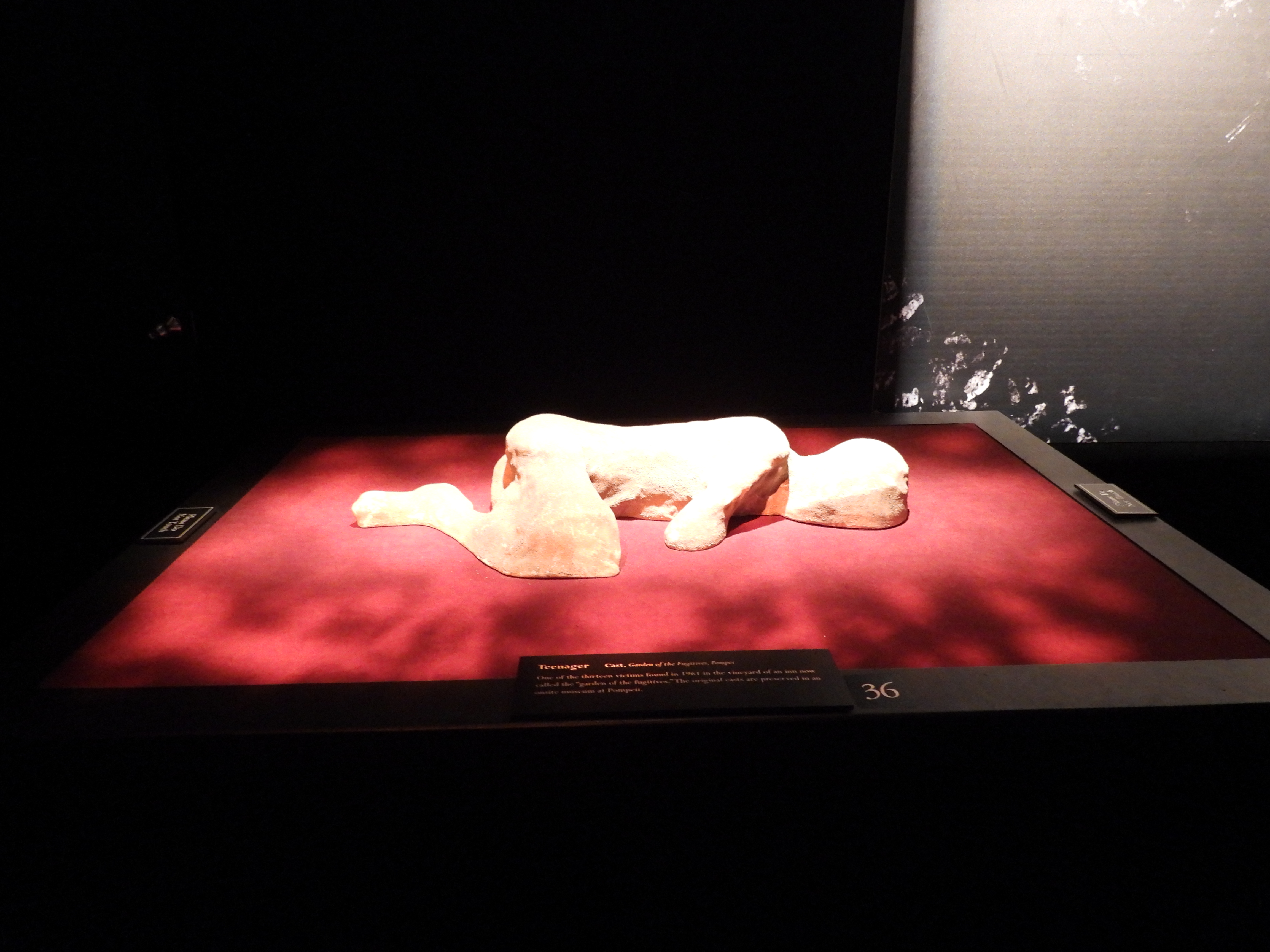
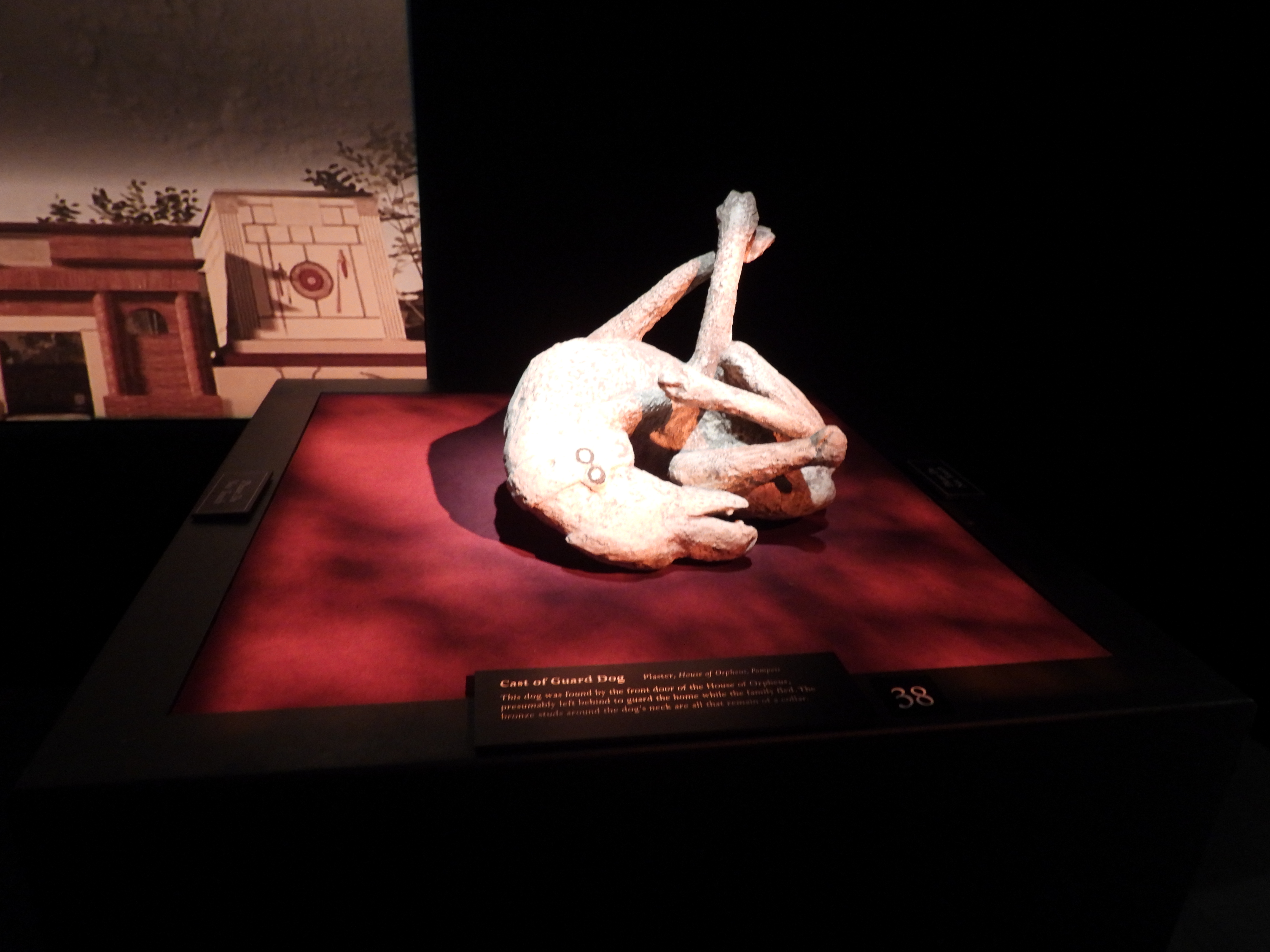
And finally, the remains of a dog.
Pompeii: The Immortal City exhibit is scheduled to open on March 30, 2024, at the Arlington Museum of Art, 1200 Ballpark Way, Arlington, Texas 76011. For more information contact the museum at 817-275-4600 or info@arlingtonmuseum.org.
*Photos and post©2024, Mary K. Doyle
*Prayer is powerful. The Rosary Prayer by Prayer, Grieving with Mary, Young in the Spirit, Fatima at 100. Fatima Today. Saint Theodora and Her Promise to God.
 Midwest Mary
Talk to me. I’m curious about your thoughts and comments.