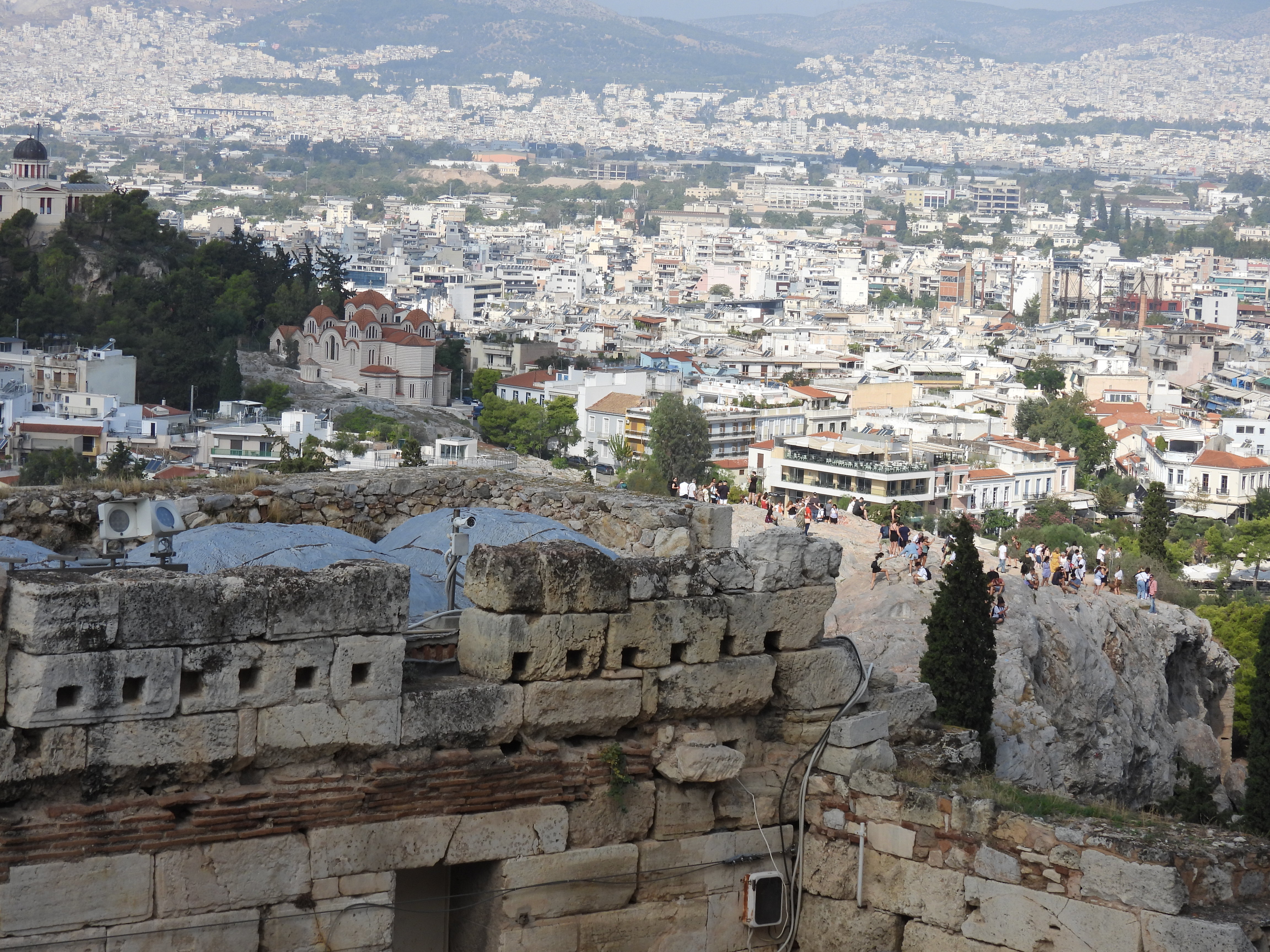
Visit the Acropolis and we gain entrance to sites revered for thousands of years. We walk in the steps of ancient Greeks from servants to royalty and people from differing cultures honoring their gods.
There are four remaining temples at the Acropolis. They include the Parthenon, Erechtheion, Propylaea, and Athena Nike.
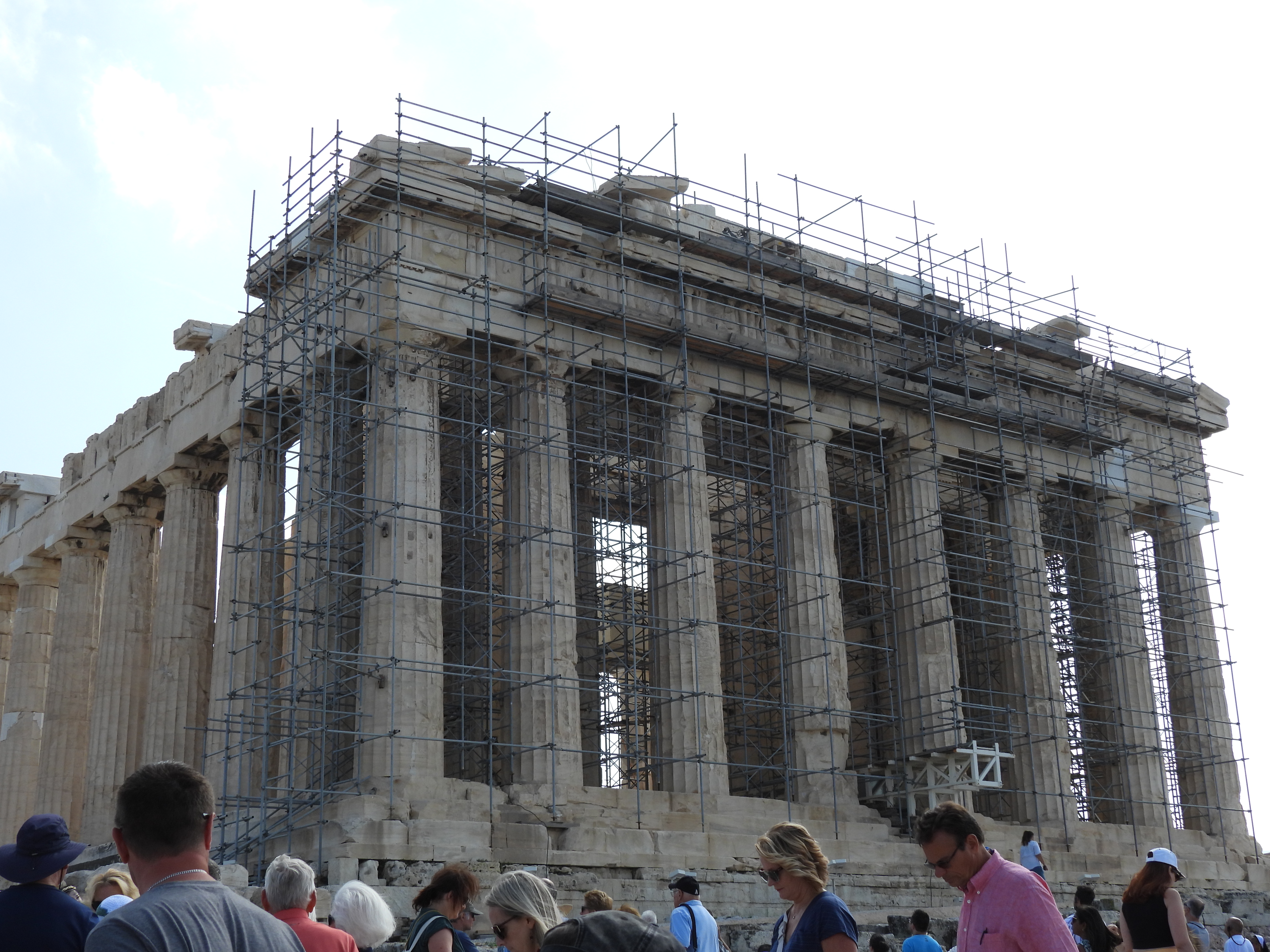
The Parthenon is the most outstanding structure at the Acropolis. Built in 447-432 BC, the initial intention for the structure was to be a temple dedicated to the Greek goddess, Athena Parthenos—Athena the Virgin and guardian of the city of Athens.
Constructed from marble from Mount Pentelikon, the Parthenon was built in the Doric and Ionic styles and features 17 columns in length and 8 columns in width. (Two other temples were previously on the site before they were destroyed. In 480 BC the Persians leveled almost every structure at the Acropolis, including the Parthenon.)

Patrons entered the Parthenon through the eastern central door. The temple featured three types of architectural sculpture—the metopes, which are rectangular slabs with reliefs from mythological Athens; the pediments, which are triangular-shaped gables featuring statues of gods and deities; and the frieze, which is the zone of relief near the main interior of the monument that depicts the procession of the Panathenaic procession.
The most important artifact inside the Parthenon was the statue of the Virgin Athena. This incredible sculpture was made from gold and ivy and stood more than 39 feet high.

However, the Greeks were unable to maintain control of the Parthenon as a temple throughout its history. At one point, the structure served as a Christian church dedicated to the Wisdom of God. Later, in the 5th century AD, it was dedicated to the Virgin Mary. It also was used as a mosque under the Ottoman occupation and then a Catholic Church during the 13th-14th centuries. In 1687, the Venetians decimated the Parthenon. After that, looters took many of the remaining artifacts.

The Erechtheion temple was constructed from marble and primarily dedicated to Athena and secondly to Poseidon. The building housed the statue of Athena Polias.
The current name refers to the sanctuary of Erechtheus. This is in reference to the Greek myth about King Erechtheus of Athens who was affiliated with Poseidon.
During the Mycenaean period, a palace stood on the location, and also, a temple which was destroyed by the Persians in 480 BC, repaired, and then again destroyed by fire in 406 BC.
The ionic style of this site is debated due to its unique features which do not conform to Greek classical architecture. This may be a result of the changing and complex nature of the cults that used it or damage incurred through the centuries.

Most noticeable about this temple are the columns carved in the form of maidens. The columns are known as the Caryatids, or Karyatids, after the young ladies from the village of Karyes who performed an intricate worship dance called the Caryatis.

The Temple Propylaea’s name comes from the word “propylaea” which refers to a monumental gateway in Greek architecture. The Athenian Propylaea is the entrance to the Acropolis. It has two side wings and five doors. The wider entry in the middle of the temple allowed chariots and sacrificial animals to pass through. This building was constructed during Pericles’ rebuilding in 437 BC.
The horizontal beams across the roof were unique for its time. The beams were supported by marble girders which were supported by iron bars.
As with all the structures at the Acropolis, the Propylaea Temple was utilized in differing ways over time. The south wing of the temple was converted to a Christian Basilica in the 6th century AD. Then the Franks altered the design with plans to use it as a palace. Gunpowder was stored there during the Ottoman rule which resulted in destruction after being struck by lightning. And Lord Elgin removed precious artifacts during the 19th century.

The Temple of Athena Nike is the smallest temple, but it is often considered the most elegant because of its former interior décor. The temple is believed to have been completed in 420 BC and dedicated to Athena Nike–Athena goddess of victory.
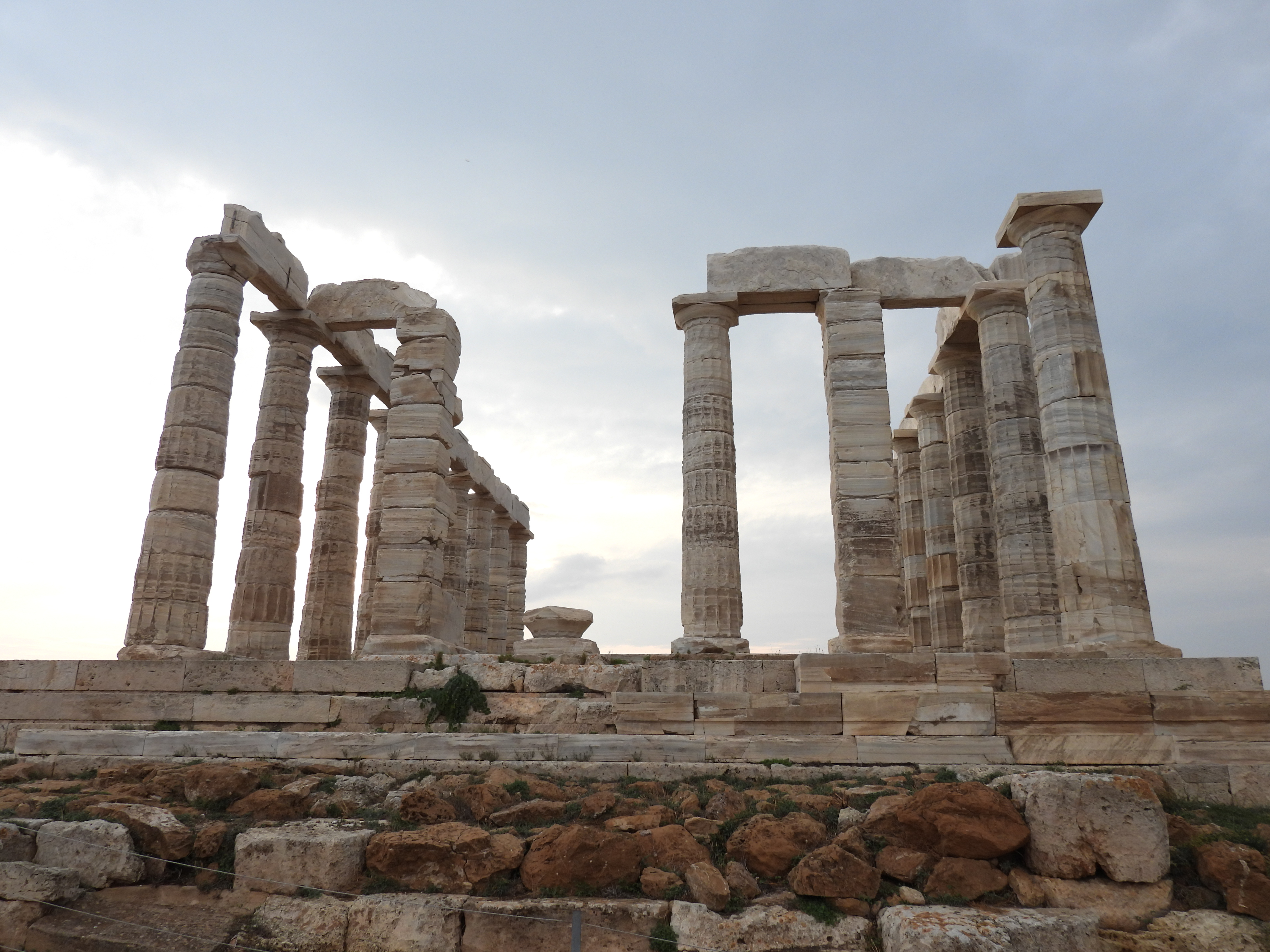
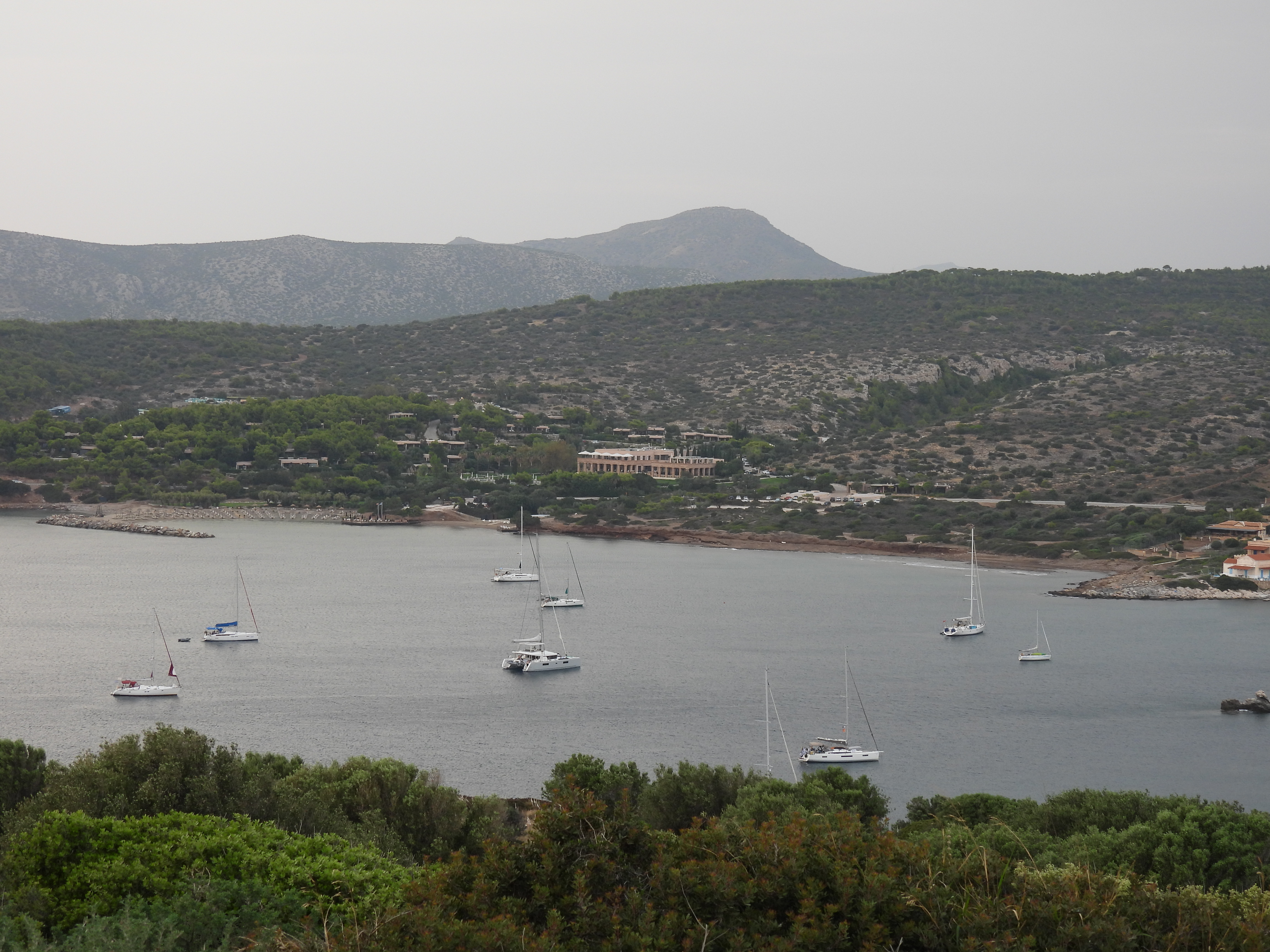
In addition to these temples, we also visited the Temple of Poseidon located on Cape Sounion. The holy site is at the edge of the cape on the southern coast of Attica. Surrounded on three sides by the Aegean Sea, the views from the temple are spectacular.
This Poseidon Temple was constructed sometime between 444 and 440 BC on the site of ruins dating from the Archaic period. Greeks consider the god Poseidon to be the ruler over the sea, storms, earthquakes, and horses as well as Plato’s legendary Atlantis.

Due to the types of offerings found on the grounds, aristocrats are believed to have frequented the Poseidon Temple.

Sadly, not everyone respects the historic value of these temples. Visitors, including some who are well-known such as the poet, Lord Byron, have found the need to carve into the stones leaving their names as evidence of their ignorance and insensitivity.
*Photos and Post ©2023, Mary K. Doyle
**Don’t miss a post on Midwest Mary. Click on “Follow” and you will receive posts from my blog directly to your inbox.
 Midwest Mary
Leave a reply to Amy Cancel reply