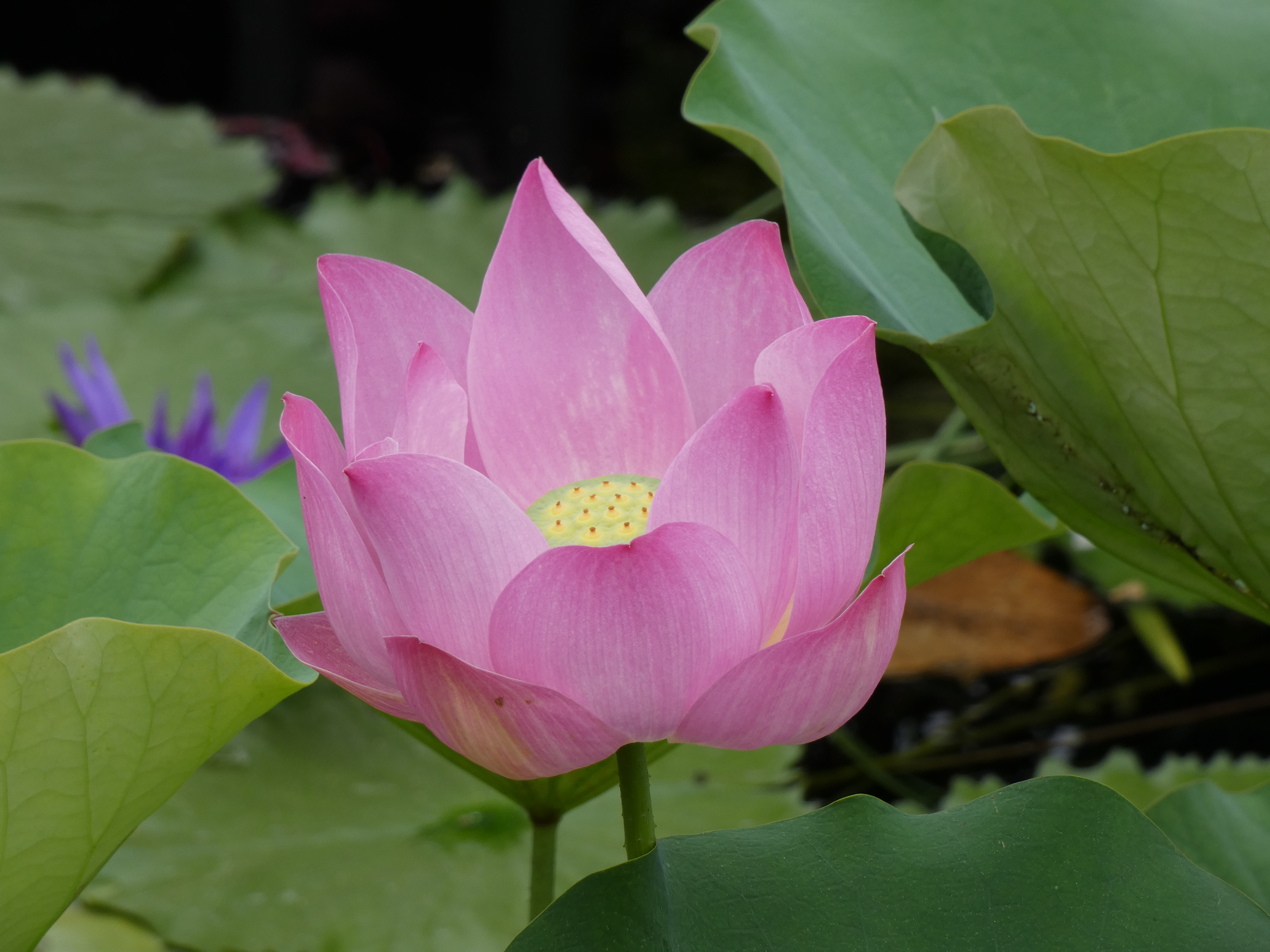
Tall, elegant, enduring, and even nutritious, the intriquing lotus has been revered since antiquity. The delicate lotus flower can emerge from the murkiest waters and purify its environment, is tolerant of extreme temperatures, and resistant to pollution. Having survived the Ice Age and depicted in ancient hieroglyphics dated more than 145 million years ago, its beauty is associated with gods and goddesses.
Chicago Botanic Garden had a captivating garden of lilies and lotus this past summer. Visitors were visibly drawn into the garden’s beauty and sense of peace. They smiled and hummed their way around the display. Even the children were calm and quiet.

The lotus, also called sacred lotus, is the National flower of India and Vietnam. The Chinese regard it with longevity because seeds have germinated after as long as 1,300 years of dormancy.
Prominent in wetlands, the flower typically grows in flood plains of slow-moving rivers. Hundreds of thousands of seeds drop every year. Interestingly, the lotus has the remarkable ability to regulate the temperature of its flowers within a narrow range, as do warm blooded animals.
The names lily and lotus are commonly interchanged. However, they are not the same. Water lily flowers and leaves grow on the surface of the water, are only about 8 inches tall, and are more widespread than lotus. Lotus leaves and flowers grow above water and may reach up to 6 feet in height.
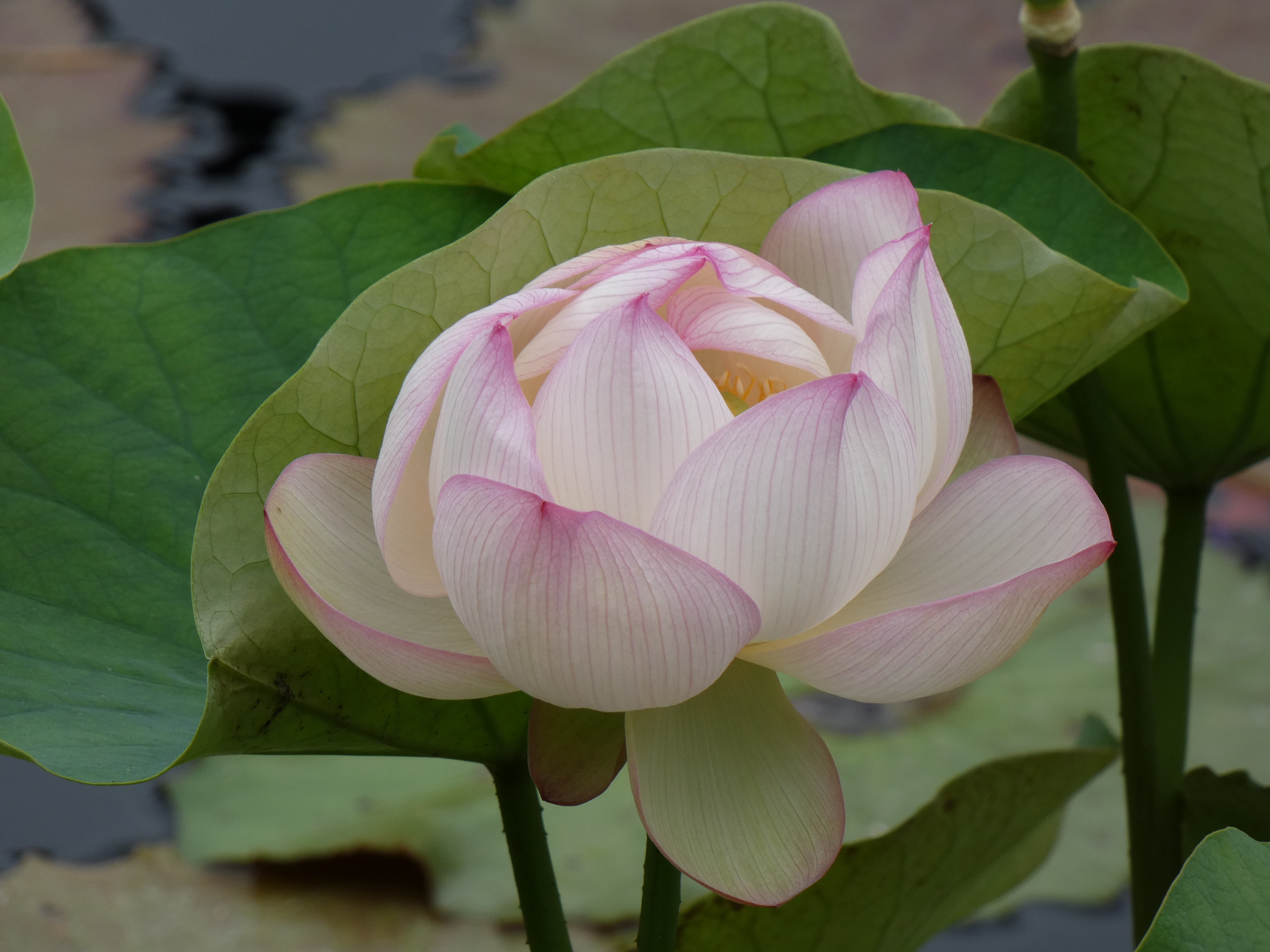
There are three varieties of lotus–rhizome lotus, seed lotus, and flower lotus. Rhizome lotus produces a high yield, grows tall, and produces few to no flowers. Seed lotus produce a large number of carpels and seed sets. Flower lotus are grown exclusively for ornamental purposes. They have many flowers but little seed production.
Lotus plants offer numerous nutritional and health benefits. The rhizomes of rhizome lotus are boiled and sliced in Asian cuisine. Sold whole, or cut in pieces; fresh, frozen, or canned, lotus rhizomes may be deep fried, cooked in soups, soaked in syrup, or pickled in vinegar with sugar, chili, and garlic.

Fresh lotus seeds are nutritious but perishable. For longer shelf life, seeds also may be found sun dried and freeze dried. Seeds may be used as a main ingredient in moon cakes, lotus seed noodles, fermented milk, rice wine, and ice cream.
Young lotus stems are used in Vietnamese salads and soups and curry in Thailand. Leaves can be found in Chinese and Korean teas and used as wraps for steamed rice.
*Photos by Mary K. Doyle
 Midwest Mary
Leave a reply to vermavkv Cancel reply