
The topic of fungus may not be the most entertaining one you read about today, but it is fascinating. And if you read this post through to the end, you’ll find fungi can also be scary.
Fungi include microorganisms such as yeasts, molds, mushrooms, rusts, smuts, and mildews. They are not plants or animals. They belong to their own kingdom. However, they are more like animals than plants because they gather their food. Most fungi are so small they are invisible to the human eye, yet they play a significant role in our health as well as the environment’s.
Although often thought to be interchangeable with the word mushrooms, mushrooms are actually a small percentage of fungi. Fungi live everywhere including soil, sand, air, on rocks, and on plants. It’s estimated that there are more than 5 million species of fungi. They are adaptable little things, sitting dormant for decades and growing when exposed to prime conditions.

Fungi play an important role in medications such as antibiotics, anticancer drugs, and cholesterol inhibitors. They are significant in cleaning up the environment, decomposing carbon-based materials that have died. In addition, they can absorb and digest environmental contaminants such as petroleum and pesticides. Fungi also are used to make yeasts for alcohol, bread, and cheeses and can be consumed as a meat substitute and protein source.
Depending on our location, we may breathe in up to four spores with every breath and as many as 92,000 each day. This can be a problem for people like me who are allergic to several forms of fungi.
One type of fungi is the stuff of horror movies. The zombie fungi, fungal genus Ophiocordyceps unilateralis, can infect ants and take over their behavior. It directs the ants to move to a location that is best for the fungus and then consumes the ant from the inside out while spreading spores to infect more ants so that the cycle continues.
For more information see this page on the University of Oklahoma’s website where much of this information comes from.
*Help your caregiver friends with loved ones with dementia with the books that will answer their daily questions: Navigating Alzheimer’s, The Alzheimer’s Spouse, and Inspired Caregiving.
*Have you read my last post on Mary K Doyle Books, “Eat Well. Live Well“?
*Photos: 1. Giant Puffball, 2. ?

Impressionist painter Claude Monet loved water lilies so much he painted more than 250 works of art featuring this aquatic plant. The delicate blossoms transform a pond, shallow and still freshwater, and slow-moving streams into fragrant, colorful gardens.
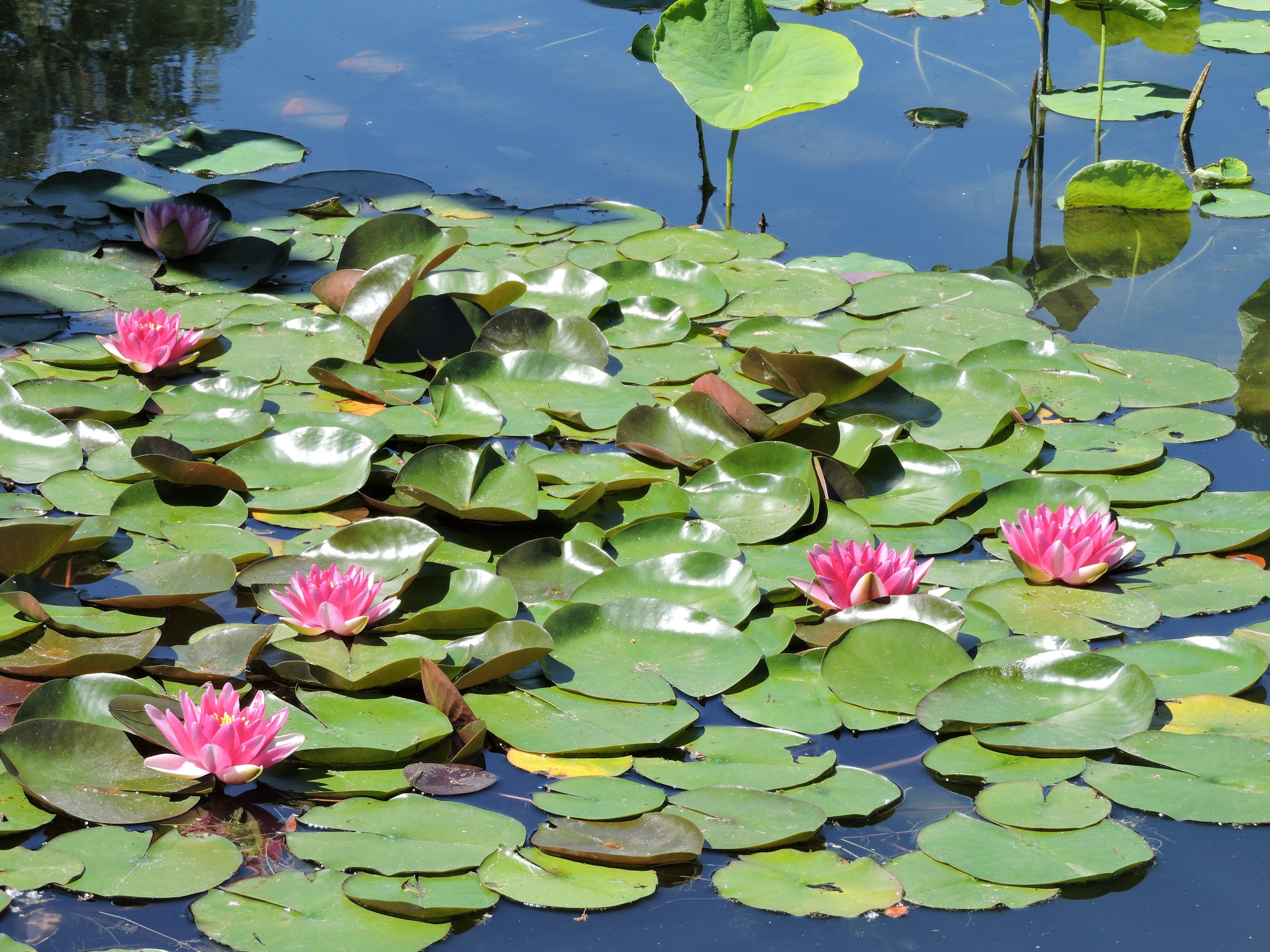
Water lilies are important symbolically for several reasons. In the Hindu and Buddhist traditions they represent resurrection because many of the lilies close their flowers at night and reopen at sunlight. The bright aquatic flowers rising from the dirty mud symbolize enlightenment. Their association with water is also symbolic of birth.
There are more than 50 types of water lilies found in a wide range of colors including white, pink, red, orange, yellow, purple, and blue. Tropical varieties typically have brighter shades. They also have variations of leaves including star-shaped, cup-shaped, smooth, and jagged.

Although water lilies are in the same family (Nymphaeceae) as lotus, they are somewhat different. Mainly, the leaves and flowers of water lilies (Nymphaea species) float on the water’s surface. The leaves and flowers of the lotus (Nelumbo species) rise above the water’s surface.

These aquatic plants are an important player in the ecosystem. The flowers and leaves provide shade which keeps the water cooler and prevents algae from growing. They also offer fish beneath the lily pads refuge from the hot sun and covered shelter from predatory birds.
*See “Visiting Memory Care Homes” on my other blog.
Do you know that I’ve written books on caregiving for loved ones with dementia, how our faith changes as we age, the rosary, praying with Mary in times of grief, and Saint Theodora/Saint Mother Theodore Guerin? You can see all of my books on my website or Amazon.
 Midwest Mary
Talk to me. I’m curious about your thoughts and comments.