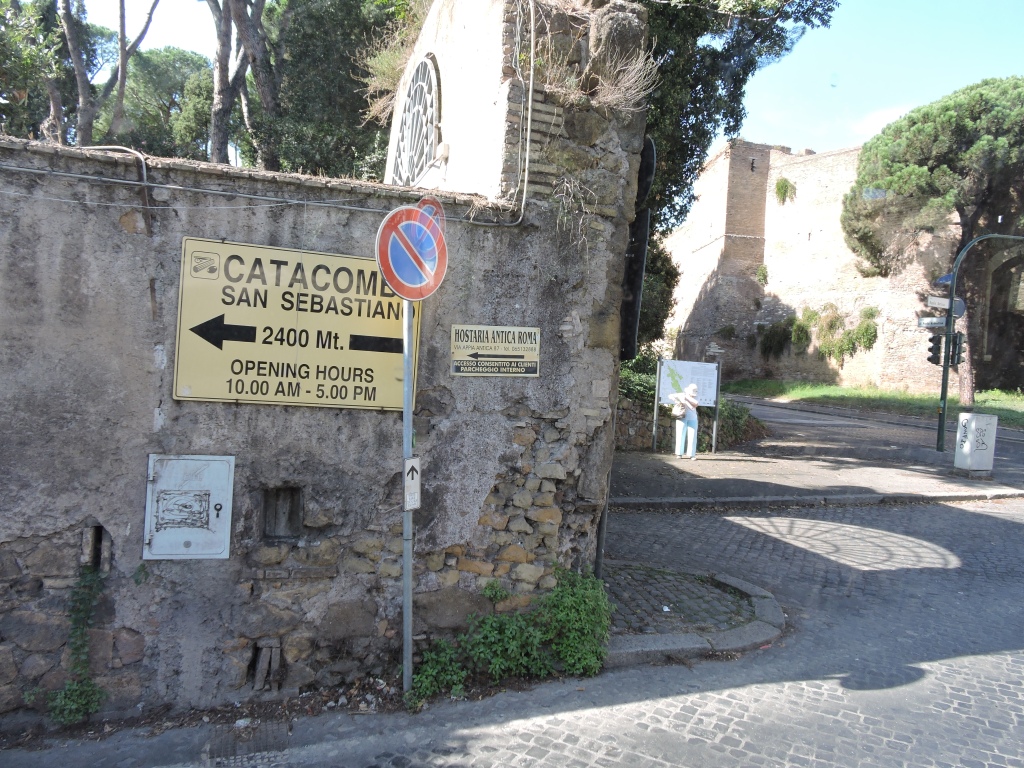
, , ,

Ancient Underground Symbols of Faith

The ancient Roman Empire was home to an estimated 50 to 90 million inhabitants at its height in AD 117. And where there is life, there also is death–and the need to bury the deceased.
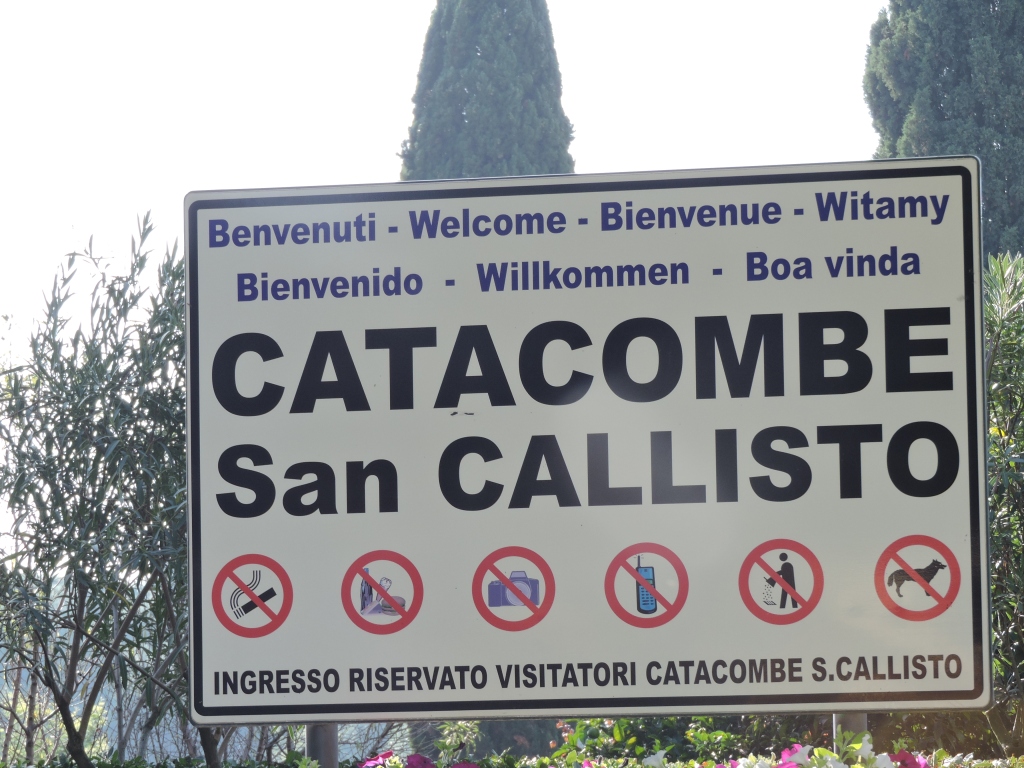
During the first century, most Christians buried their dead in public cemeteries. After the middle of the second century, those who could not afford a tomb began excavating. The multi-level deep, underground cemeteries were named after proprietors or benefactors, such as the Catacombs of Priscilla on Via Salaria and Domitilla on Via delle Sette Ciese.

The name for such burial sites evolved over centuries. Romans called them necropolis, meaning city of the dead. Early Christians preferred the name coemeterium, a place of rest. Around the fourth century, most were called ad catacumbas in reference to the nearby caves. By the ninth century any underground Christian cemetery became known as a catacomb.

Since burial was not allowed within city limits, the 50 to 60 known Roman catacombs are found outside city walls. Narrow steps and passageways wind throughout these dark underground cemeteries descending as many as four stories down. Clothed bodies were wrapped in linen and placed in chambers sealed with a slab bearing their name, age, and date of death, much like our mausoleums of today.
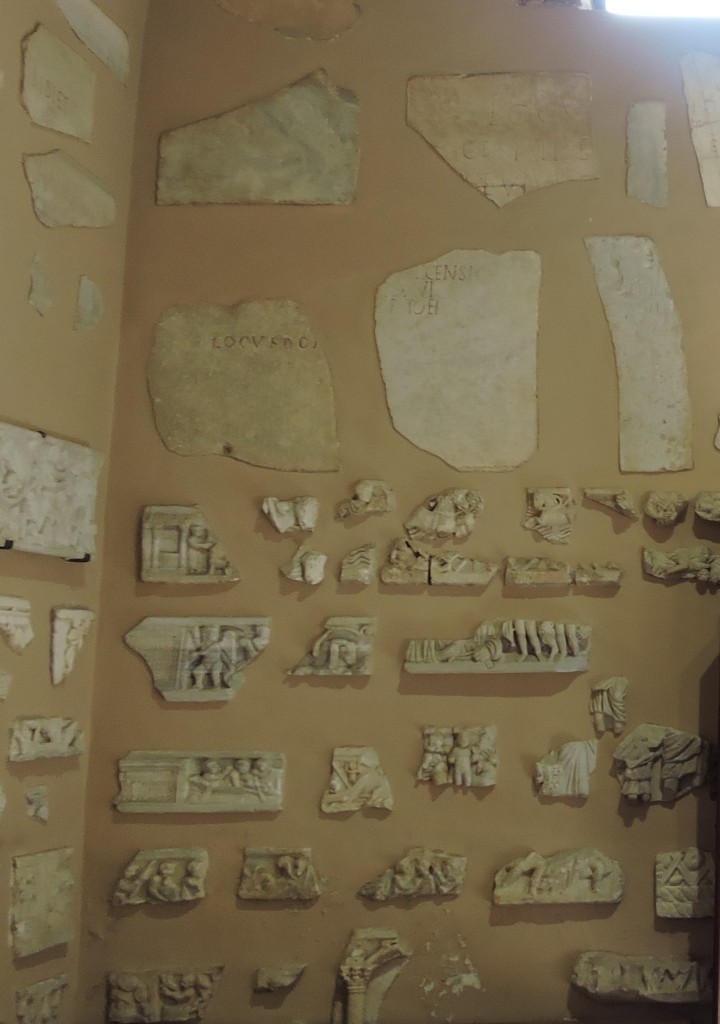
The surrounding walls were adorned with inscriptions, frescos, sculptures, and drawings describing the professions of the deceased, biblical stories, and symbols of faith. The ancient art offers us an important glimpse into the beliefs of early Christians as most remains were buried there before 400 AD.
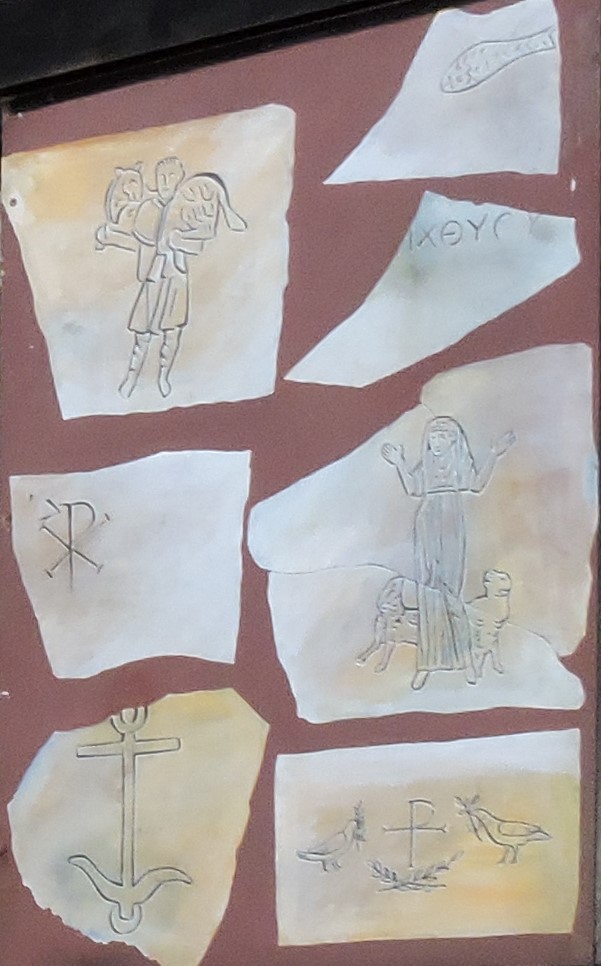
Common images found near these tombs include the Good Shepherd; the Orante, a figure with open arms representing the soul at peace in paradise; the fish, a sign of Christ; and the anchor, a symbol of hope in the promise of the future. Moses striking the rock and the resurrection of Lazarus are also frequently depicted. In addition, the Priscilla catacombs is thought to contain the oldest known painting of Mary with Jesus on her lap, which dates to the early third century,

Visitors are welcome but photos are not allowed in the catacombs. The above photos show some of the replicated art at the entry of the catacombs. Actual images of the ancient art, as well as snapshots of the inside of the catacombs, can be seen here.

*Photos above taken in Italy, 2019

©Mary K. Doyle, 2026

*Have you read The Rosary Prayer by Prayer (note Amazon says hardcover but it is a softcover), Grieving with Mary, Fatima at 100. Fatima Today, Hans Christian Anderson Illuminated by the Message, or Young in the Spirit?

Responses to “Ancient Underground Symbols of Faith”

  1. kagould17

    I was shocked at your population numbers for 117 AD Mary, until I realized this was the total population of the Roman Empire, not just the city of Rome. You can tell a lot about the civilizations by how they treat their dead. I have never been in the catacombs in any city, but have often wandered through ancient cemeteries and visited Neolithic passage tombs. Some think this is a bit macabre, but it can also be enlightening. Have a wonderful day Mary. Allan

    1. Mary K. Doyle

      Thank you for that clarification, Allan. That makes sense. I should have noted that. I’m intrigued with cemeteries, especially the information on headstones.

  2. atimetoshare.me

    very informative article, Mary. Thanks for sharing this with us.

    1. Mary K. Doyle

      You are welcome. Thank you for visiting.

  3. Vero

    Very interesting.

    1. Mary K. Doyle

      Thank you, Vero.

  4. Ernie ‘Dawg’

    This is very interesting. I have always loved walking through cemeteries and looking at the artwork from the past. Would love seeing these too.

    1. Mary K. Doyle

      Thank you, Ernie. I’m also a cemetery lover. I’m intrigued with the info on headstones, or lack thereof. How sad to see a headstone which reads simply, “Wife.” This is too common on some old ones.

  5. Looking for the Light

    WOW

    1. Mary K. Doyle

      Thank you, Melinda. Love to you.

  6. Monkey’s Tale

    Roman catacombs are fascinating aren’t they? And to see some of the ancient art is such a great experience. We actually recently visited a Roman/Greek one in northern Egypt, but only a few decorations remain. Maggie

    1. Mary K. Doyle

      Oh, I’m sorry to hear that, Maggie. The ones in Italy are multileveled and fascinating.

      1. Monkey’s Tale

        It was fascinating, but not as decorated as the other tombs we saw in Egypt. I’d love to see these one too!

  7. Victoria

    The Orante…thank you for providing the name for an image I adore, Mary. Appreciate all that you’ve offered here…love learning from you. ❤️
    (And side note…WP is acting up for me today. I got unsubscribed twice to your blog but think I’m back in flow now. So weird. Happened with your blog and one other. Sigh!)

    1. Mary K. Doyle

      Thank you, Vicki. And sorry about the WP troubles. I appreciate your persistence.

      1. Victoria

        All good…just sorry that it probably looked goofy to you with notifications. 😉❤️😉

  8. luisa zambrotta

    Really interesting!
    I’ve never visited this site!

    1. Mary K. Doyle

      I found it worth looking into, Luisa. You live in such a wonderful country.

  9. lenny unencumbered

    Fascinating! I was only familiar with those in Paris.

    1. Mary K. Doyle

      I didn’t know about the ones in Paris, Lenny. But then people had to be burried somewhere!

  10. Rosaliene Bacchus

    Fascinating, Mary! The catacombs is not high on my list of places to visit. Thanks for sharing the link to the ChurchPop article.

    1. Mary K. Doyle

      Hahaha. I guess I’m intrigued with some odd things, Rosaliene. I loved it.

      1. Rosaliene Bacchus

        That’s great! I get to learn something new 😀

  11. Rebecca Cuningham

    Thanks for this history, Mary. Interesting that all burials were outside the city.

    1. Mary K. Doyle

      How about that, Rebecca. Good things all out houses weren’t that far away from home.

  12. joannerambling

    This was so interesting

    1. Mary K. Doyle

      Thank you, Joanne. We share interest in all things, don’t we?

      1. joannerambling

        Yes we do

  13. arlene

    What a very informative and interesting post Mary. I love the link you wrote here. Thanks for sharing.🥰

    1. Mary K. Doyle

      Thank you for your comment, my friend. Blessings to you.

  14. Nancy Homlitas

    The artwork in the catacombs must be a wonderful window as to what they believed during this time in history.

    1. Mary K. Doyle

      Exactly, Nancy. So many people couldn’t write but illustrations told their stories of faith and beliefs as well as everyday life. Hugs to you, my friend.

Talk to me. I’m curious about your thoughts and comments.