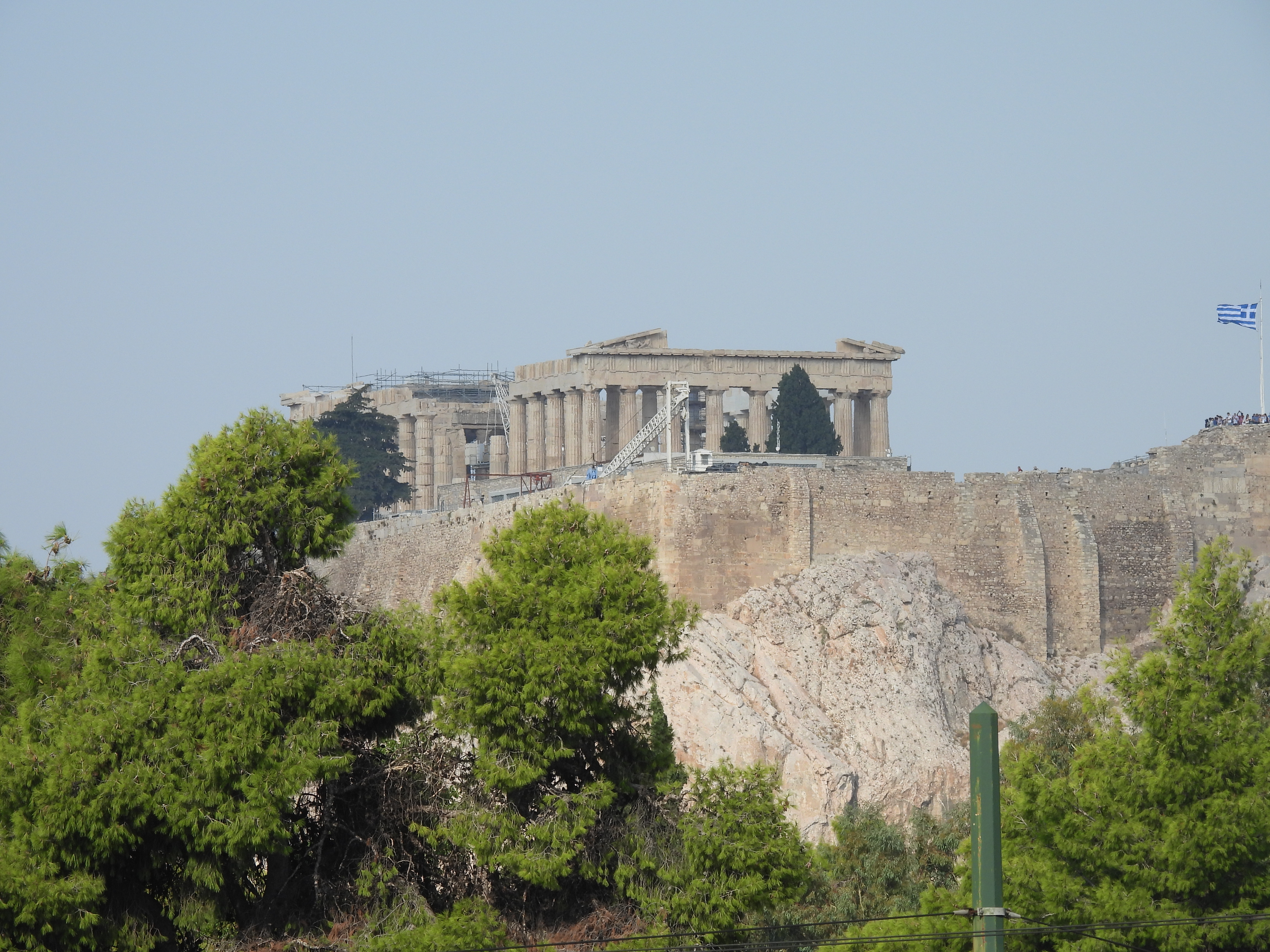
Look up from nearly everywhere in Athens, and we easily can spot the magnificent remains of the Acropolis. In fact, it’s one of the most recognized ancient archeological sites in the world.
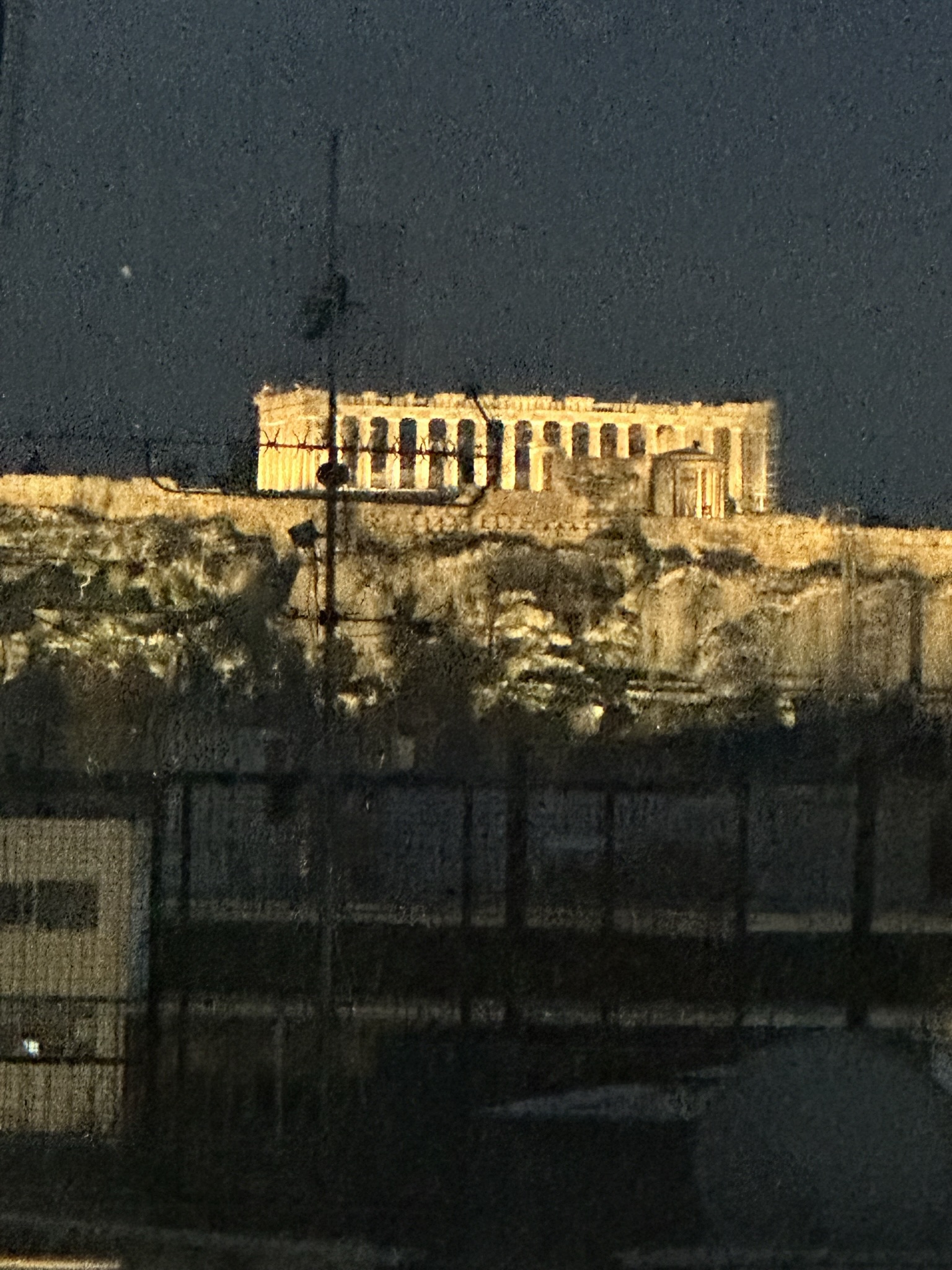
The word “acropolis” describes a settlement, a citadel—sanctuary or refuge—typically located on a hill. Because of its location, it’s considered a defensive site. An acropolis was also used for religious celebrations, the center of the community, and where royalty resided.
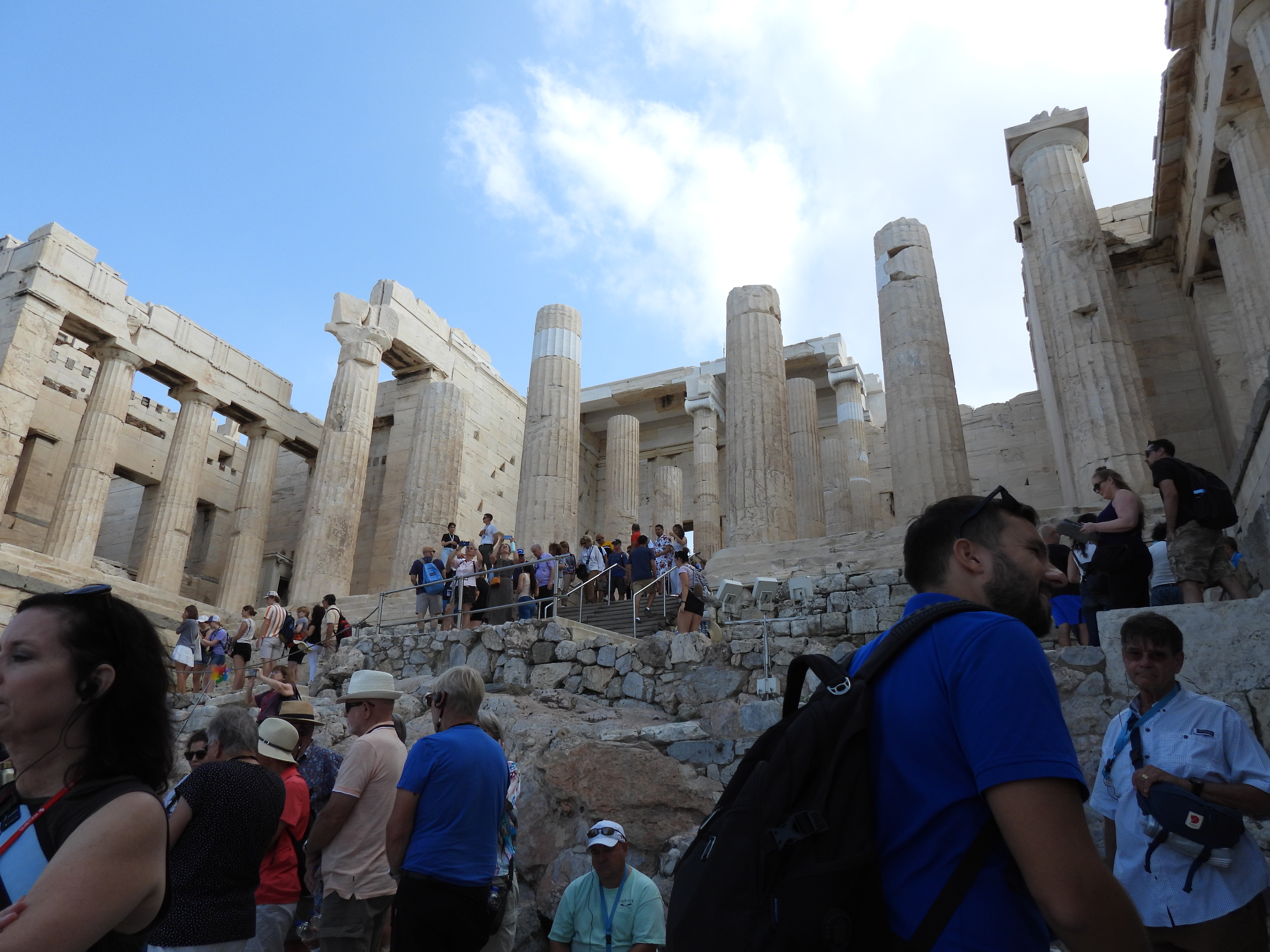
“Acropolis” derives from the Greek akro which means high and polis for city. So, Acropolis literally means high city. The Athenian Acropolis rises 490 feet high and extends over seven acres. Both the Acropolis and the Parthenon Temple are dedicated to Athena, the goddess of wisdom.
Sometimes referred to as the Sacred Rock, the Acropolis is a symbol of ancient Greek civilization and culture. It is the trademark of the capital, and its image is imprinted on souvenirs.
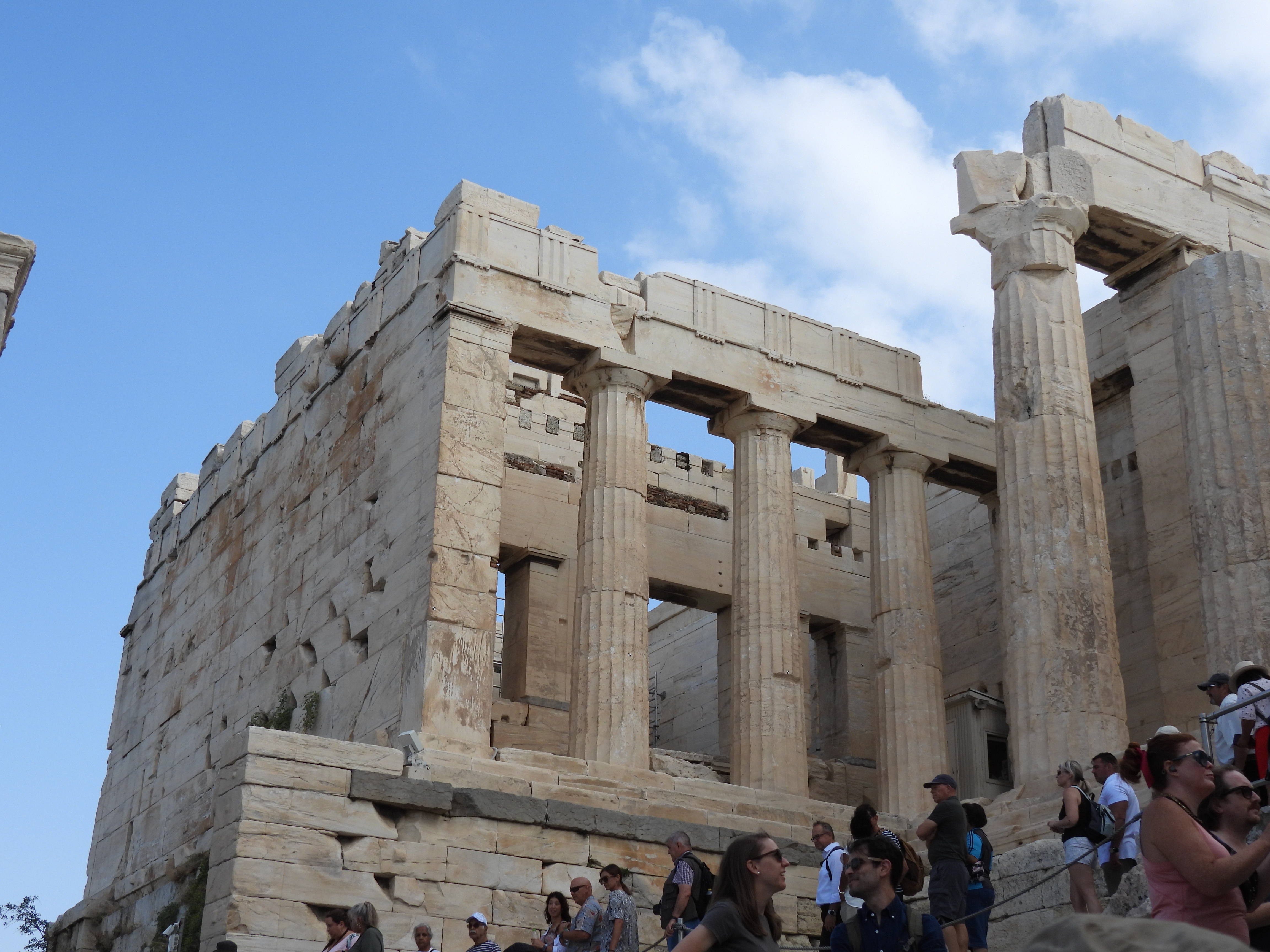
According to World History Encyclopedia, researchers have found evidence of habitation on Athens’ Acropolis since the Neolithic Period (4300 BC—2000 BC). Massive construction on the site took place when the Mycenaeans (1700 BC—1100 BC) inhabited the area. The sophisticated society constructed a series of rooms for storage, bathing, dining, and audiences with the king.
There is said to have been a debate on the acropolis between the goddess Athena and the god, Poseidon, as to who the city and a temple should be dedicated. Poseidon presented the gift of water after striking a rock on the Acropolis. Athena simply dropped a seed on the site which grew into an olive tree. Since there were so many uses for the olive and its oil, Athena was chosen as the patron deity.
During the Greek Dark Ages (800 B.C. to 480. B.C.), religious festivals were held there, and the artifacts of the time reflected the grandeur and dedication of ancient Athens.

However, the site wasn’t as secure as the ancient people believed. Invasions, bombings, earthquakes vandalism, pollution, and environmental factors took their toll on the citadel. In addition, the multiple alterations to the structures through the centuries to accommodate their use as mosques, storehouses, and residences, increased damages.
In 480 BC, Persians invaded and caused considerable destruction. When Athenians regained control of the Acropolis, reconstruction resumed under the direction of the Statesman Pericles. This included the Parthenon, Propylaia, Erechtheion and Temple of Athena Nike.

The Acropolis was controlled by several groups over the following centuries who utilized structures to their needs. The buildings were converted to Christian churches in the sixth century AD, and the Parthenon was dedicated to the Virgin Mary. A Germanic group referred to as Franks took control of the Acropolis from 1204 to 1456 and converted the Propylaia to a residence. Then the Turks took over from 1456-1833. Unfortunately, they stored ammunition in the Parthenon. On September 26, 1687, the Venetians bombarded the building causing massive destruction.
The last insult occurred when the temples were stripped of their most treasured artifacts. In 1801, the Earl of Elgin, Thomas Bruce, removed more than half of the remaining sculptures with permission from the Turkish government who occupied Greece at the time. Bruce sold these sculptures to the British Museum where they remain today against the approval of the Athenian government.

Finally, in 1822 the Greeks regained control of the Acropolis. Restoration began in the early 1900s and continues today. The Acropolis is protected by UNESCO as a cultural site.
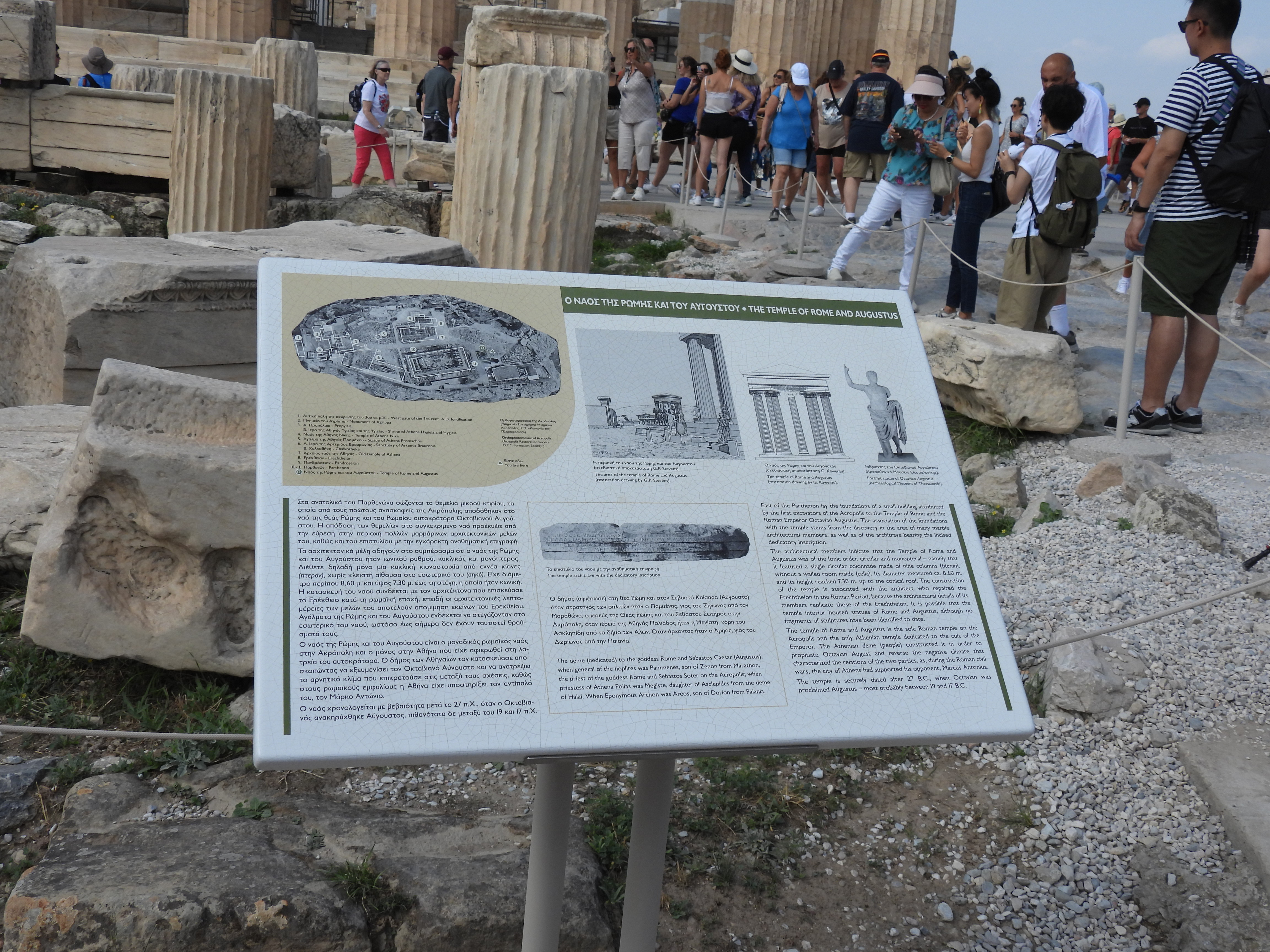
The Acropolis is only accessible from the west. Tourists may visit year-round and purchase tickets at the entrance. Comfortable walking shoes and water are recommended as the grounds consist of extensive walking on uneven paths and many steps to climb.

For more information, see some of the following websites where I gathered information for this post.
Culture Trip, World History Encyclopedia, Greeka, Why Athens, and History.
*Photos and post ©2023, Mary K. Doyle
*Would you like to see more posts on Greece? I’m working on five temples: the temples of the Parthenon, Athena Nike, Propylaea, Erechtheion, and Poseidon. Are you interested? Your “Likes” and comments are greatly appreciated.
 Midwest Mary
I’m curious about your thoughts and comments.